Starbucks can repurchase Emart’s stake at steep 35% discount under liability clause in licensing deal
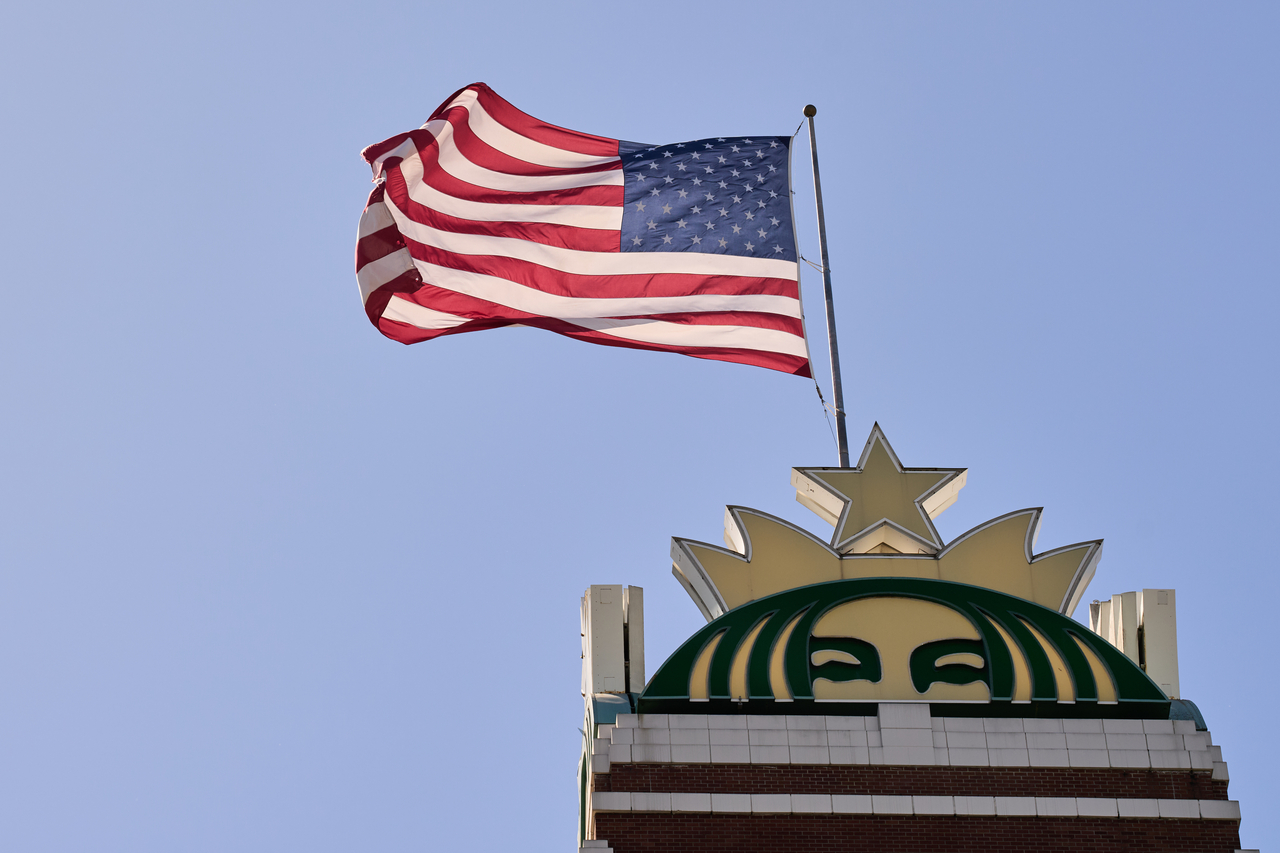
The fallout from Starbucks Korea’s controversial “Tank Day” marketing campaign is drawing renewed attention to a high-stakes ownership agreement that could become a major financial risk for Emart and its parent, Shinsegae Group.
In July 2021, Emart acquired an additional 700,000 shares in unlisted Starbucks Korea from Starbucks Coffee International, the overseas business and licensing arm of Starbucks, for 474.3 billion won ($314 million). This raised its stake to 67.5 percent to secure management control. The remaining 32.5 percent stake was acquired by Apfin Investment, an investment vehicle operated by the Government of Singapore Investment Corporation.
But the licensing agreement signed between Emart and Starbucks includes two call option clauses that allow Starbucks Coffee International to buy back all shares in Starbucks Korea under certain conditions.
Under the first clause, SCI can repurchase the shares at a mutually agreed fair valuation. The second clause is more sensitive for Emart: If the licensing agreement is terminated due to Emart’s liability, SCI can buy back Emart’s 67.5 percent stake at a 35 percent discount to the valuation determined under the same pricing method.
The provision is now drawing heightened attention following Starbucks Korea’s recent marketing controversy, particularly given the coffee chain’s importance as a major profit and cash source for Emart.
Starbucks Korea operator SCK Company posted sales of 3.24 trillion won last year, up 4.4 percent from a year earlier, as its store count expanded to 2,115 locations — one of Starbucks’ largest and most densely concentrated markets globally. But operating profit fell 9.3 percent to 173 billion won and net profit declined 5.9 percent to 142.5 billion won, marking the company’s first earnings decline since 2022 amid rising costs and intensifying competition.
Despite weaker profitability, Starbucks Korea maintained a high dividend payout of 106.2 billion won last year, equivalent to about 74.5 percent of net profit. Emart received roughly 71.7 billion won in dividends, accounting for the vast majority of dividend income received from affiliates, and underscoring Starbucks Korea’s role as a key cash cow for the retailer.
Starbucks headquarters had not responded to inquiries from The Korea Herald as of Wednesday on whether the “Tank Day” campaign could constitute grounds for liability under the contract or whether the company is considering exercising the option.
Starbucks Korea came under intense criticism Monday after launching a tumbler promotion campaign using the phrases “Tank Day” and “Bang on the desk” — expressions widely interpreted as mocking two of the most sensitive moments in Korea’s democratization history.
“Tank Day” was criticized for evoking the military tanks used to suppress the May 18, 1980 Gwangju Democratic Uprising under the Chun Doo-hwan regime. “Bang on the desk” reminded many Koreans of the dictatorship’s infamous attempt to cover up the torture death of student activist Park Jong-chul in 1987.
The company pulled the campaign within hours and issued an apology acknowledging the phrases were inappropriate.
Shinsegae Group Chair Chung Yong-jin moved quickly to contain the fallout, dismissing Starbucks Korea CEO Son Jeong-hyun later the same day before issuing a formal public apology Tuesday.
Starbucks headquarters also described the issue as an “unacceptable marketing incident” and said it is strengthening internal controls, review standards and companywide training programs to prevent similar incidents from happening again.
“The quick decision to dismiss the CEO was probably the minimum Shinsegae Group could do under the circumstances,” said a lawyer familiar with franchise and licensing agreements, who requested anonymity.
“Although the exact terms and thresholds within the contract are not publicly known, severe damage to a global brand’s image can potentially be interpreted as grounds for terminating a licensing agreement,” the lawyer said.
Still, Shinsegae Group appears to believe the incident does not rise to the level of contractual liability. The company reportedly views the controversy as unrelated to conditions typically associated with license termination clauses, such as failure to meet store expansion targets, payment defaults or confidentiality breaches.
Public backlash has continued to spread online, with some consumers posting videos of themselves smashing Starbucks tumblers, tearing up Starbucks merchandise or throwing products into trash bins as part of a growing anti-Starbucks movement.
hwkan@heraldcorp.com