Southern Gyeonggi Province is becoming a key battleground region in the June 3 elections, as a semiconductor boom and a wave of younger voters redraw the politics of a region once seen as conservative-leaning.
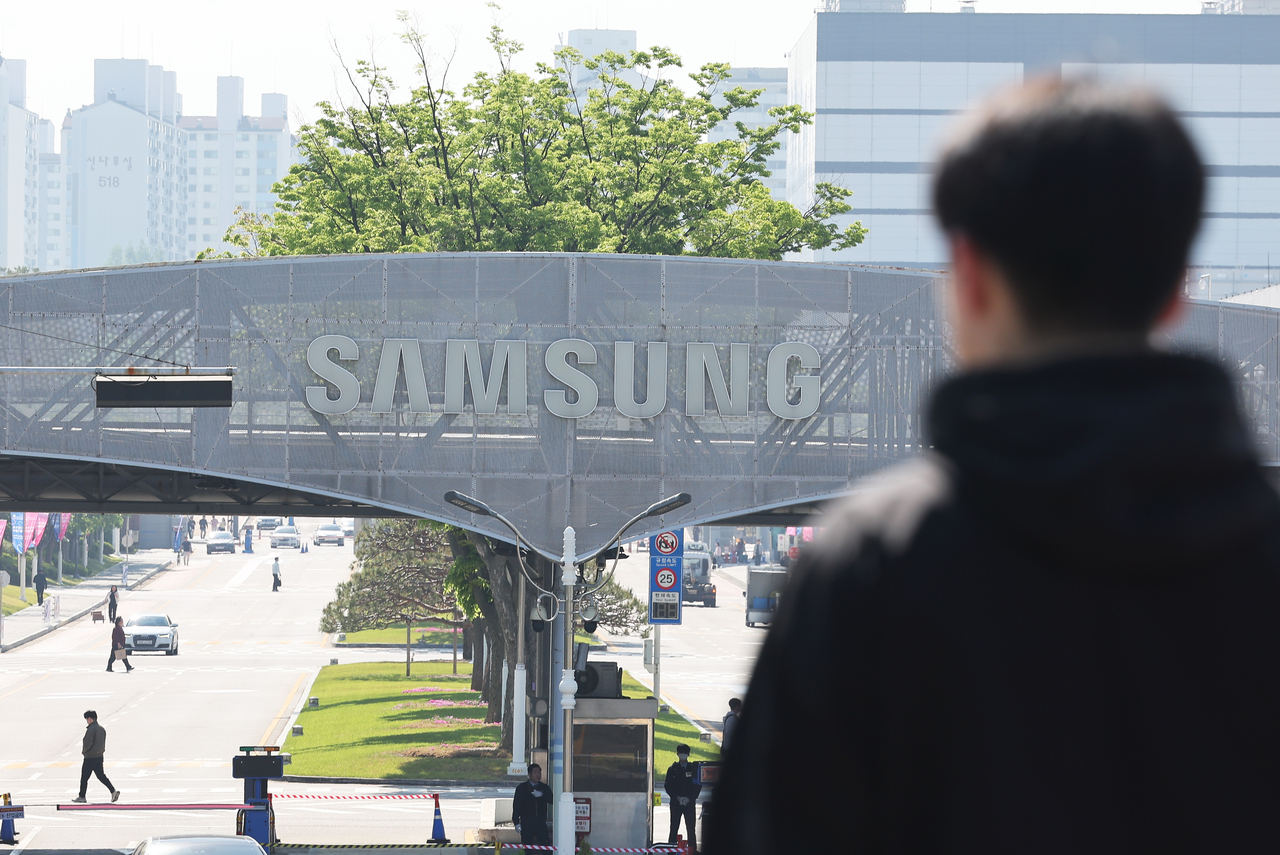
Many constituencies in the south of the province are home to South Korea’s expanding chip mega-cluster, anchored by Samsung Electronics and SK hynix, and have experienced rapid industrial growth, new-town development and an influx of voters in their 30s and 40s.
The region also carries outsized symbolic weight as the political launching pad of President Lee Jae Myung, who was elected mayor of Seongnam and rose to become governor of Gyeonggi Province before winning the presidency.
For the ruling Democratic Party of Korea, these southern Gyeonggi districts are Lee’s political home turf that must be defended. For the main opposition People Power Party, they offer a prime opportunity to challenge the administration’s base.
The stature of the Gyeonggi governorship has risen accordingly.
The Democratic Party seeks a third straight win with Rep. Choo Mi-ae, a six-term lawmaker who has served as party chair and justice minister.
The party reclaimed the governorship in 2018 with Lee, the first time that a Democratic Party-affiliated candidate had won the governorship since former Gov. Lim Chang-yuel left office in 2002. That victory was followed by the election of incumbent Gov. Kim Dong-yeon in 2022.
The People Power Party is set to choose its candidate for Gyeonggi governor on Saturday, following primary voting from Thursday to Friday.
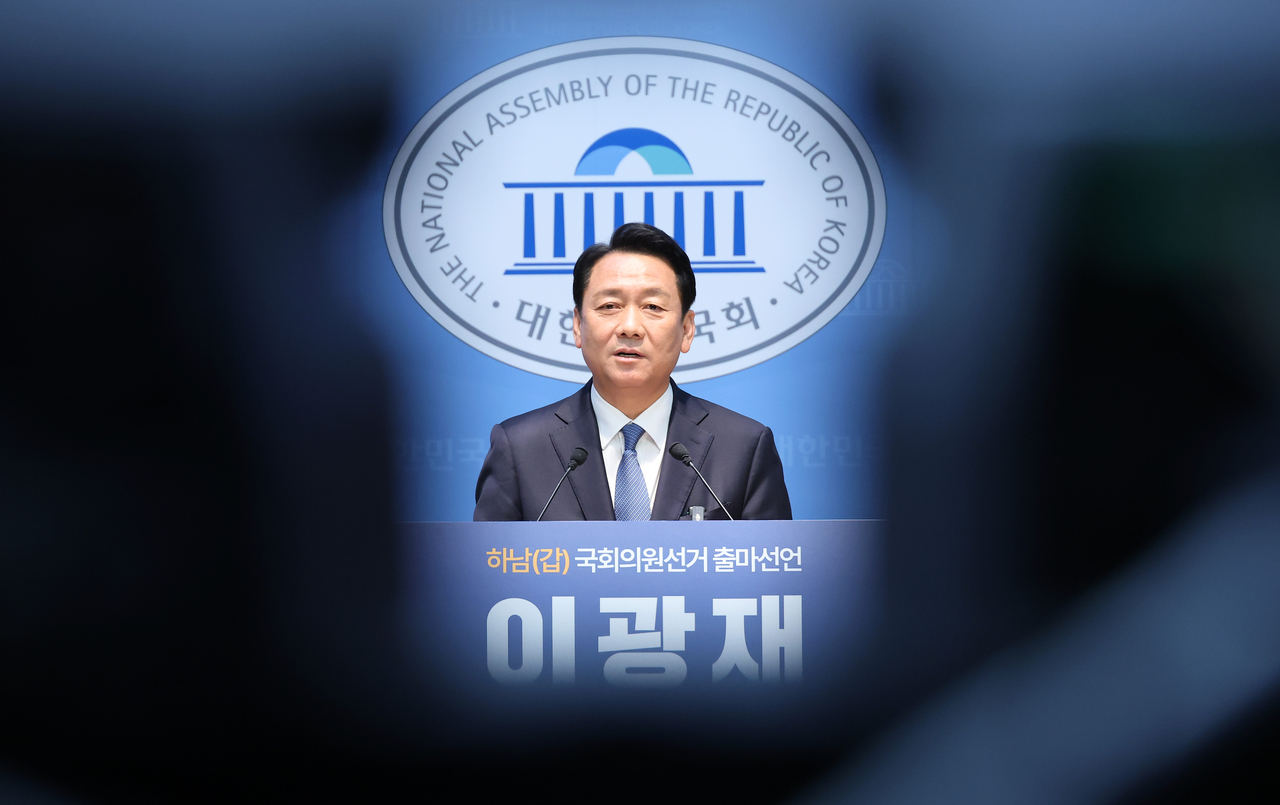
The Democratic Party has also fielded another political heavyweight, former Gangwon Province Gov. Lee Kwang-jae, for the National Assembly by-eleciton in the Hanam-A district.
Lee Kwang-jae said he would “stake my political fate on Hanam’s success” during a news conference to announce his candidacy at the National Assembly on Thursday.
He cited rail and transportation issues, greenbelt restrictions and school districts as key challenges facing Hanam, saying, “The time has come to resolve them. To resolve them, one must have competence” and be able to “move the National Assembly.”
Lee Kwang-jae also cast himself as the right candidate for the moment, noting that President Lee was pushing ahead with his agenda with strong public support, while multiple polls show Choo with a strong chance of winning.
“I will connect Hanam with the National Assembly, Hanam with the government, and Hanam with the Gyeonggi governor to make sure these problems are resolved,” he said.
Campaigning has already intensified. Democratic Party Chair Rep. Jung Chung-rae has visited the southern Gyeonggi region five times in April alone, including stops in Suwon, Anseong and Hanam, stumping for party candidates.
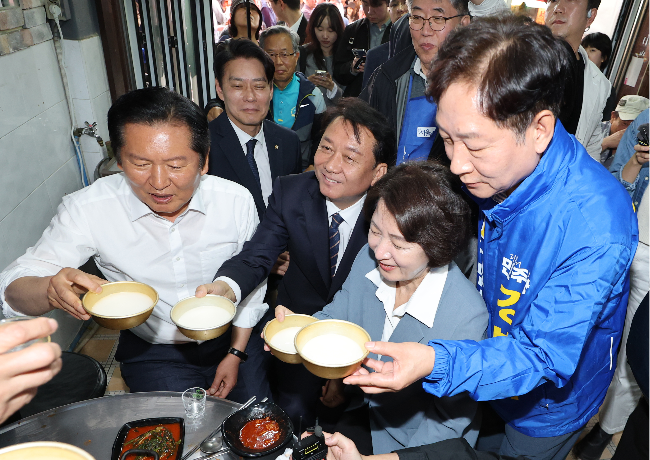
On Wednesday, Jung visited a traditional market in Hanam alongside Choo and Lee Kwang-jae as they sought to broaden voter outreach and rally local support.
“We strategically nominated him (Lee Kwang-jae) here in Hanam because I believe he is the right person to rapidly develop the city to more than twice its current level with his concentrated experience and know-how,” Jung said during the market visit.
By contrast, the People Power Party is still struggling to find a candidate capable of taking on Lee Kwang-jae. Several names have surfaced, but the figure drawing the most attention is former lawmaker Yoo Seong-min.
Pyeongtaek-B district is drawing particular attention as one of the most competitive Assembly by-eelctions. The district combines a major semiconductor base, the US military presence and fast-growing residential areas, making it one of the region’s fastest-changing districts.
Rebuilding Korea Party leader Cho Kuk has already announced his candidacy, facing former lawmaker Kim Yong-nam of the Democratic Party, who left the People Power Party for the Reform Party before later joining the Democratic Party. Also in the race are Yoo Eui-dong, a former three-term lawmaker of the People Power Party, and former prime minister Hwang Kyo-ahn of the Liberty and Innovation Party.
Rep. Lee Un-ju of the Democratic Party underscored that Pyeongtaek was “not a district we can concede to a minor party.”
“Pyeongtaek has Samsung Electronics plants and a US military base, and these are issues that a ruling party lawmaker must defend and manage,” she said in an interview with News 1’s YouTube channel.
Lee also said the mood in Pyeongtaek-B was “quite favorable,” adding, “I believe we can comfortably secure a majority of votes.”
“Pyeongtaek-B is home to many men in their 30s who are interested in stocks, so it will likely align very well with President Lee Jae Myung’s Kospi 6000 race,” she said.
The political shift in southern Gyeonggi Province has been clearest in recent general elections, where the Democratic Party’s steady upward trajectory underscores its growing dominance. The Democratic Party won 23 of 41 seats in the region in 2012, 29 of 44 in 2016, 39 of 44 in 2020, and 41 of 45 in 2024.
dagyumji@heraldcorp.com