Hassabis sees AI ushering in new scientific renaissance, while Korean Go grandmaster urges caution over losing control of AI
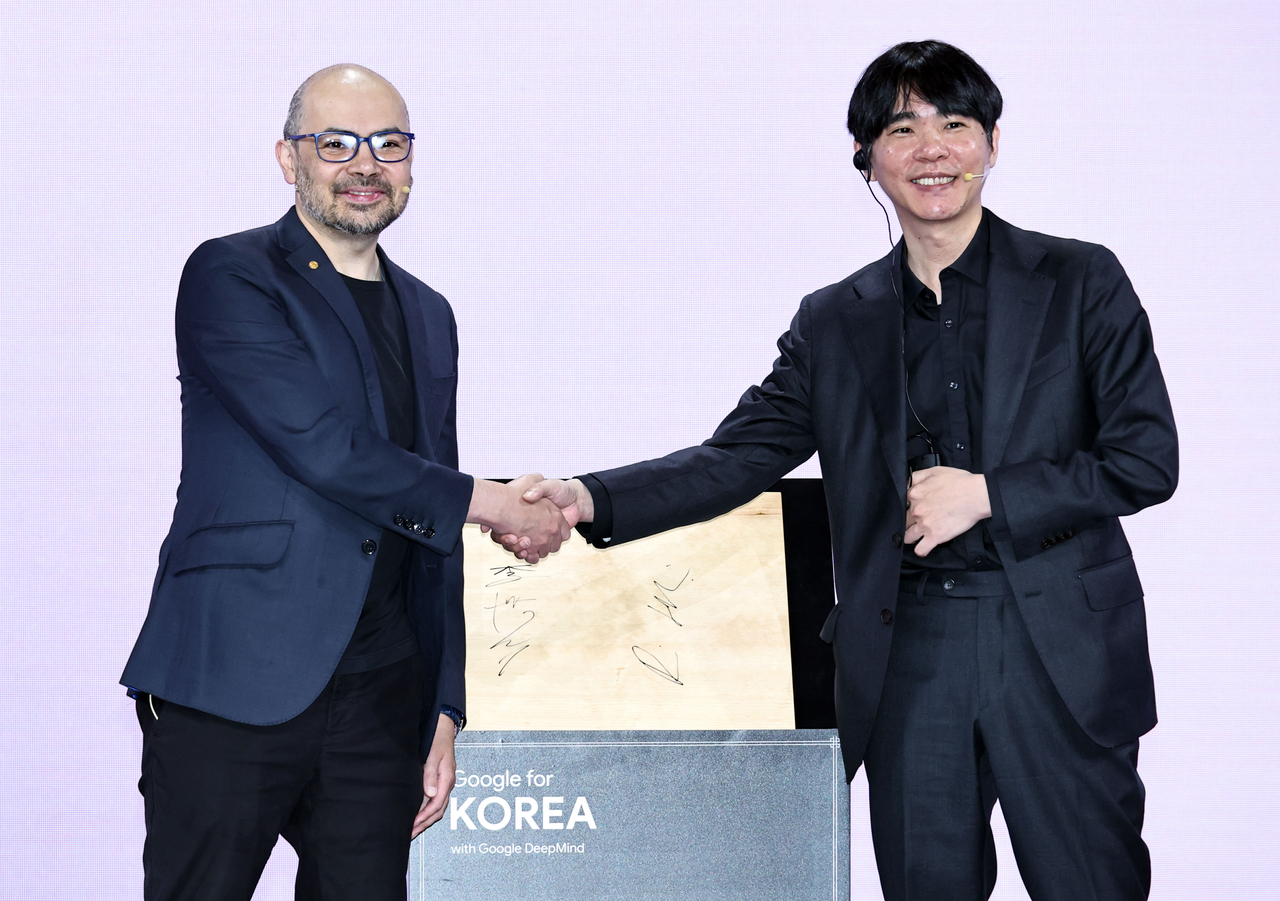
Google DeepMind CEO Demis Hassabis reunited with Go grandmaster Lee Se-dol in Seoul on Wednesday, revisiting their landmark 2016 AlphaGo match that reshaped the trajectory of artificial intelligence.
The two met during a session at the Google for Korea 2026 event held at The Westin Josun Seoul, where Lee joined author and YouTuber Cho Seung-yeon and Hassabis in a discussion reflecting on the historic five-game series.
"It feels like a hundred years have passed in terms of the advances since then," Hassabis said. "We're proud of the legacy the match has left in the technology world, and it's great to be back here where it all began."
He highlighted two defining moments from the series — AlphaGo's move 37 and Lee's move 78 — as symbols of the contrast between machine creativity and human intuition.
Lee said the match reshaped the fundamentals of the game itself. "After AI, the core concepts of Go changed," he said. "Watching AlphaGo made me realize we had only seen a small part of a much broader world."
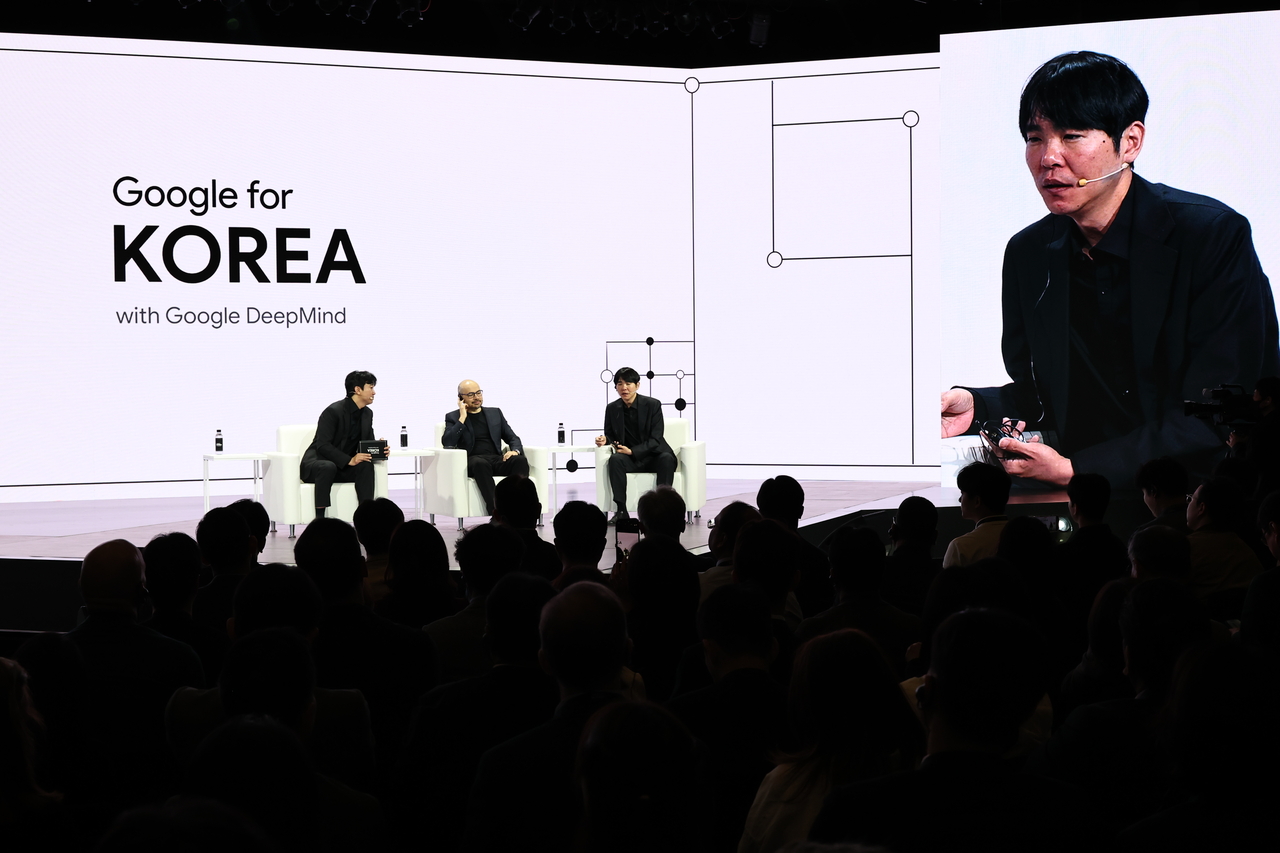
In his opening remarks, Brandon Yoon, Google Korea's new country managing director, described the 2016 match as a symbolic milestone where human creativity and AI capabilities came together.
Hassabis said advances over the past decade have driven progress across scientific fields, adding that AI could help address challenges such as disease and environmental issues.
Hassabis expressed his hope that in the coming decade "AI will be this kind of course multiplier, as you say, for scientists and medics to make incredible breakthroughs."
"We could maybe even solve all of these (societal problems) in the next 10 to 20 years with these types of technologies' help with the environment, new energy sources," he added. "I think there's incredible breakthroughs that are going to be made over the next 10 years in sciences that will kind of usher in a new golden era — a new renaissance of human flourishing."
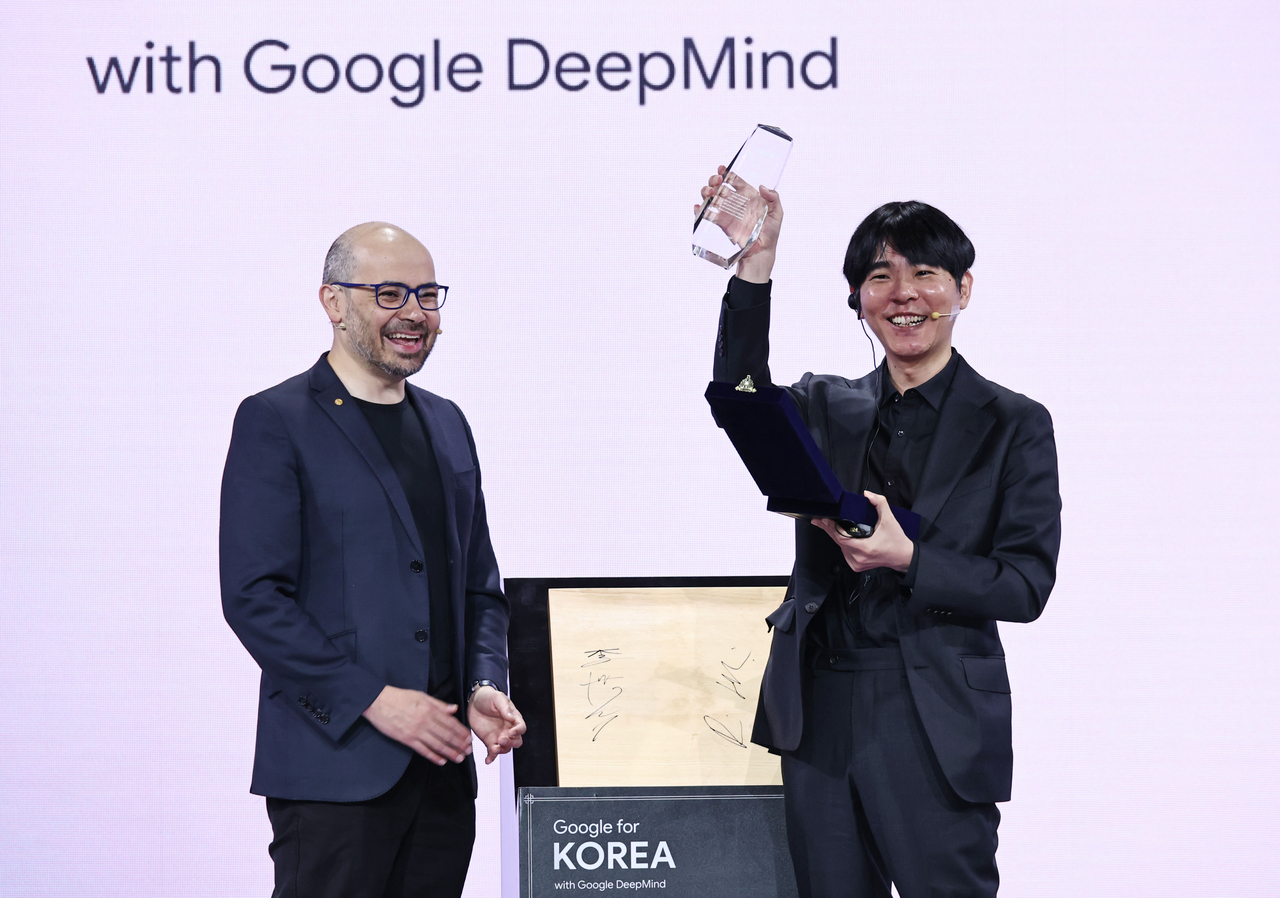
Hassabis described AlphaGo as an early example of an AI agent, adding that such technologies could be extended to everyday applications, including administrative work and brainstorming.
Lee agreed that AI has developed rapidly over the past decade, but voiced caution over its broader implications.
"Back then, seeing AlphaGo made me feel like we had been frogs in a well," he said, invoking an idiom that refers to having a narrow view of the larger world. "AI can be a partner for humanity, but we need to be careful not to lose control."
Google also signaled plans to deepen cooperation with Korea in areas such as semiconductors, robotics and manufacturing.
Hassabis said Korea is consistently forward-looking and has the conditions to emerge as a global leader in advanced technologies, citing strengths in chips, robotics and manufacturing.
The Google DeepMind chief met with South Korean President Lee Jae Myung to discuss expanding AI cooperation, including plans to establish an AI campus in Seoul and support the government's "K-Moonshot" project. The national project aims to combine AI with science and technology to address key national challenges and improve research productivity.
He also held talks with business leaders — Samsung Electronics Chairman Lee Jae-yong, SK Group Chariman Chey Tae-won, Hyundai Motor Group Executive Chair Chung Euisun and LG Group Chairman Koo Kwang-mo — to discuss collaboration in AI.
Earlier Wednesday, a breakfast session titled the "2026 Leaders AI Roundtable" brought together executives from major Korean companies — including Hyundai Motor Group, LG Electronics, CJ ENM, Olive Young and GS Retail — along with Kareem Ayoub, vice president of AI technical strategy at Google DeepMind, to discuss cooperation across industries.
yeeun@heraldcorp.com