New Daejeon plant marks firm's largest life science investment in Asia-Pacific, with further expansion under consideration
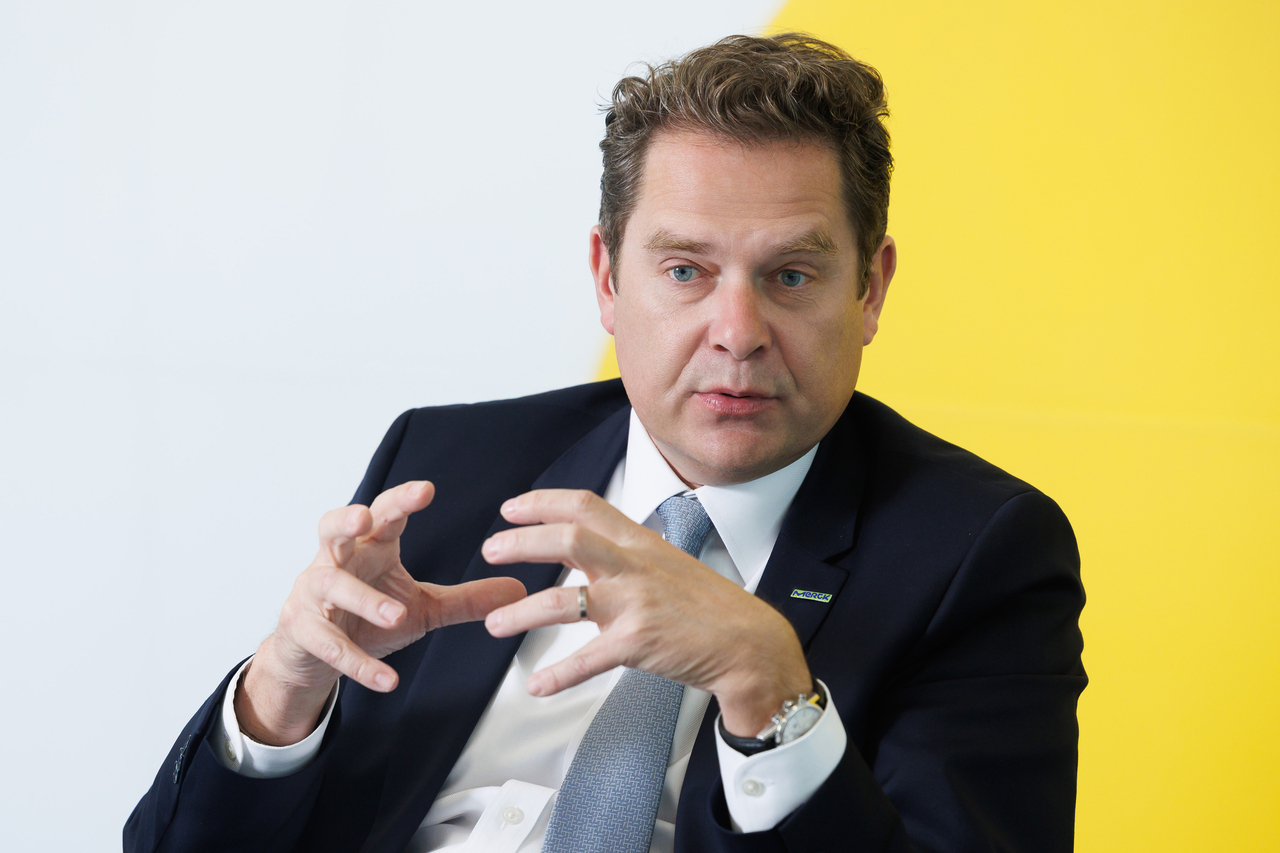
German science and technology giant Merck is betting big on Korea as a manufacturing hub for Asia's booming biopharmaceutical industry, investing 300 million euros ($338 million) in a new production center in Daejeon.
The facility, Merck's largest life science investment in Asia-Pacific to date, is central to its "in-region, for-region" strategy, aimed at reducing reliance on manufacturing sites in the US and Europe while tapping Asia's rapidly expanding biotech market.
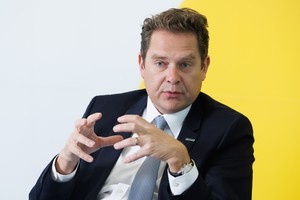
"Asia, including Korea and Japan, is very important to the life science and pharmaceutical ecosystem, and we believe this is where the future is," Jean-Charles Wirth, CEO of Merck Life Science, told The Korea Herald in an interview at the newly opened facility on Oct. 29.
"(Research and development) activity in Asia is growing at a double-digit rate, and the region's share of the global innovative pipeline has grown from 28 percent in 2020 to more than 40 percent," he said. "Investing in Asia is, therefore, almost a no-brainer for Merck."
The investment also reflects lessons learned from the COVID-19 pandemic, when surging demand followed by a sharp downturn exposed vulnerabilities in global supply chains.
Wirth described the industry's pandemic-era boom and subsequent slowdown as "COVID fever" and the "COVID cliff," saying the experience had pushed Merck to adopt a more disciplined approach to investment and demand forecasting.
"Most players didn't see it coming, and none of us were fully ready," he said.
"We learned several lessons from COVID. First, we need to be much more rigorous in how we invest," he added. "During COVID, we were often fighting fires. Having the right data is critical, which is why AI is becoming increasingly important in helping us anticipate new trends and detect anything unusual early on."
Beyond supply chain resilience, Wirth pointed to Korea's growing strength in biomanufacturing and its highly educated workforce as key reasons for choosing Daejeon.
"I first visited Korea in 2011 and I have been truly impressed by the country's evolution since," he said.
"Above all, the level of education Korea provides is quite unique. That is one of the reasons we decided to invest here, as we look for talent in research, manufacturing and technical roles."
Daejeon, home to the Korea Advanced Institute of Science and Technology and major government-funded research institutes, offers access to scientific talent and a cluster of biotechnology companies.
"We wanted to invest in an area where we could attract new talent with strong scientific backgrounds," Wirth said. "Second, we wanted to be close to our customers. Within just a few kilometers of Daejeon, there are some strategic customers."
Merck also aims to strengthen Korea's broader biotechnology ecosystem by supporting smaller companies alongside established manufacturers such as Samsung Biologics.
Through its Advance Biotech Grant Program Korea, now in its fourth year, the company provides selected startups with Merck products worth more than 300 million won ($223,000) to support their research and development.
"Building a strong bio ecosystem means supporting not only large pharmaceutical companies and major CDMOs such as Samsung Biologics, but also small biotechs," Wirth said.
The Daejeon facility is expected to create about 300 jobs by 2028, with production capacity set to increase gradually as demand grows.
Wirth said Merck could add production lines within the next one to five years, potentially expanding into filtration and quality-control testing products. The company will assess market demand before committing to further expansion, reflecting its emphasis on disciplined investment following the pandemic.
"We have a very clear strategy built on three pillars: operational excellence, customer experience and portfolio leadership," Wirth said.
"Based on our market assessment, our new go-to-market model and the investments we have made, we are rather confident about the future."
hwkan@heraldcorp.com