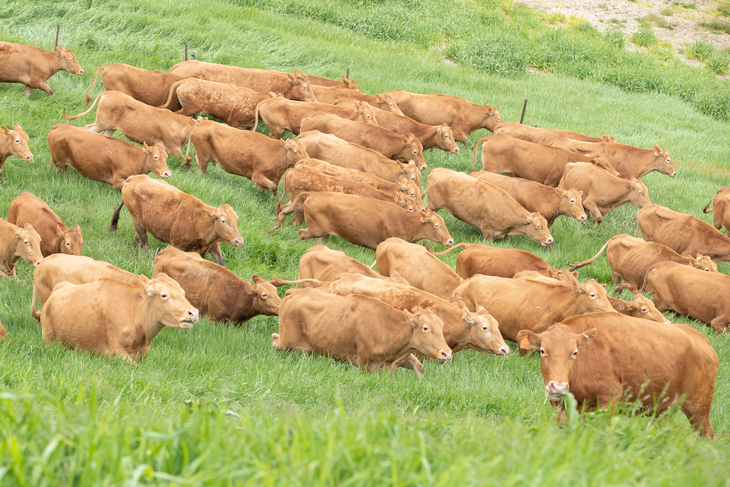
A natural feed additive developed in South Korea has been found to cut methane emissions from hanwoo, Korea’s native beef cattle, by more than 14 percent, clearing the national threshold for low-methane feed certification and raising the prospect of commercialization.
한국에서 개발된 천연 사료 첨가제가 한우의 메탄 배출을 14% 이상 줄이는 것으로 확인되며, 저메탄 사료 인증 기준을 충족하고 상용화 가능성을 높인 것으로 나타났다.
The additive, called MGOsyn, was developed by the city of Jeongeup, North Jeolla Province, and the Microbial Institute for Fermentation Industry as part of efforts to turn livestock carbon reduction technology into a local growth industry.
MGOsyn이라 불리는 이 첨가제는 전라북도 정읍시와 발효미생물산업진흥원이 축산 탄소 저감 기술을 지역 성장 산업으로 육성하기 위한 노력의 일환으로 개발했다.
MGOsyn is a natural compound made from monolaurin, garlic and oregano — ingredients recognized as safe for use.
MGOsyn은 모노라우린, 마늘, 오레가노 등 안전성이 인정된 원료로 만든 천연 화합물이다.
It is designed to suppress methane-generating pathways in the rumen, the first stomach chamber of ruminant animals such as cattle.
이 물질은 소와 같은 반추동물의 첫 번째 위인 혹위 메탄 생성 경로를 억제하도록 설계됐다.
Researchers developed the additive over the past four years by analyzing more than 100 candidate substances, including microorganisms, natural materials, seaweed and chemical compounds, before selecting key ingredients and optimizing the formula.
연구진은 미생물, 천연물질, 해조류, 화학물질 등 100여 종의 후보 물질을 분석한 뒤 핵심 성분을 선정하고 배합을 최적화하는 데 4년을 투입했다.
In simulated rumen fluid tests, the additive reduced methane generation by up to 61 percent, according to research published in November last year in the international journal Frontiers in Microbiology.
국제 학술지에 지난해 11월 게재된 연구에 따르면, 반추위 모사 액체 실험에서 이 첨가제는 메탄 발생을 최대 61%까지 줄였다.
A feeding trial on hanwoo cattle conducted by Sunchon National University, a state certification institution, found that MGOsyn reduced methane emissions by an average of more than 14 percent compared with conventional feed.
국가 인증 기관인 국립순천대학교가 실시한 한우 사양 실험에서도 MGOsyn은 기존 사료 대비 평균 14% 이상의 메탄 배출 저감 효과를 보였다.
The result exceeds the national certification threshold of 10 percent.
이 결과는 국가 인증 기준인 10%를 상회하는 수준이다.
Jeongnong Bio, a participating company in the project, is preparing to apply for national certification for low-methane feed.
사업 참여 기업인 정농바이오는 저메탄 사료 국가 인증 신청을 준비 중이다.
If approved, MGOsyn is expected to become the first low-methane feed based on domestic technology.
인증을 받을 경우 MGOsyn은 국내 기술 기반의 첫 저메탄 사료가 될 전망이다.
Jeongeup said commercialization of the product could reduce greenhouse gas emissions by 520,000 metric tons a year.
정읍시는 해당 제품이 상용화되면 연간 52만 톤의 온실가스 감축 효과가 있을 것으로 기대했다.
The city plans to move the research toward industrial use through on-farm demonstrations, commercialization, expanded corporate participation and technology transfers.
시는 실증 시험, 상용화, 기업 참여 확대, 기술 이전 등을 통해 연구를 산업화 단계로 발전시킬 계획이다.
“This is a case showing that locally led science and technology can lead to real industrial applications,” a city official said.
시 관계자는 “지역 주도의 과학기술이 실제 산업화로 이어질 수 있음을 보여주는 사례”라고 말했다.
“We will gradually pursue corporate cooperation and technology transfers to support field application and commercialization of the technology.”
이어 “현장 적용과 상용화를 위해 기업 협력과 기술 이전을 단계적으로 추진하겠다”고 밝혔다.
Tip words
1. additive: 첨가제
2. threshold: 기준치, 임계값
3. commercialization: 상용화
4. compound: 화합물
5. suppress: 억제하다
6. rumen: 혹위
7. conventional: 기존의, 전통적인
8. industrial: 산업의
khnews@heraldcorp.com