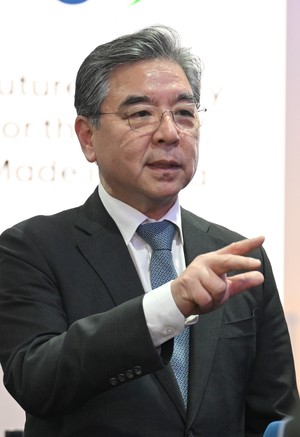
Public spending repositioned as tool for industrial policy and competitiveness
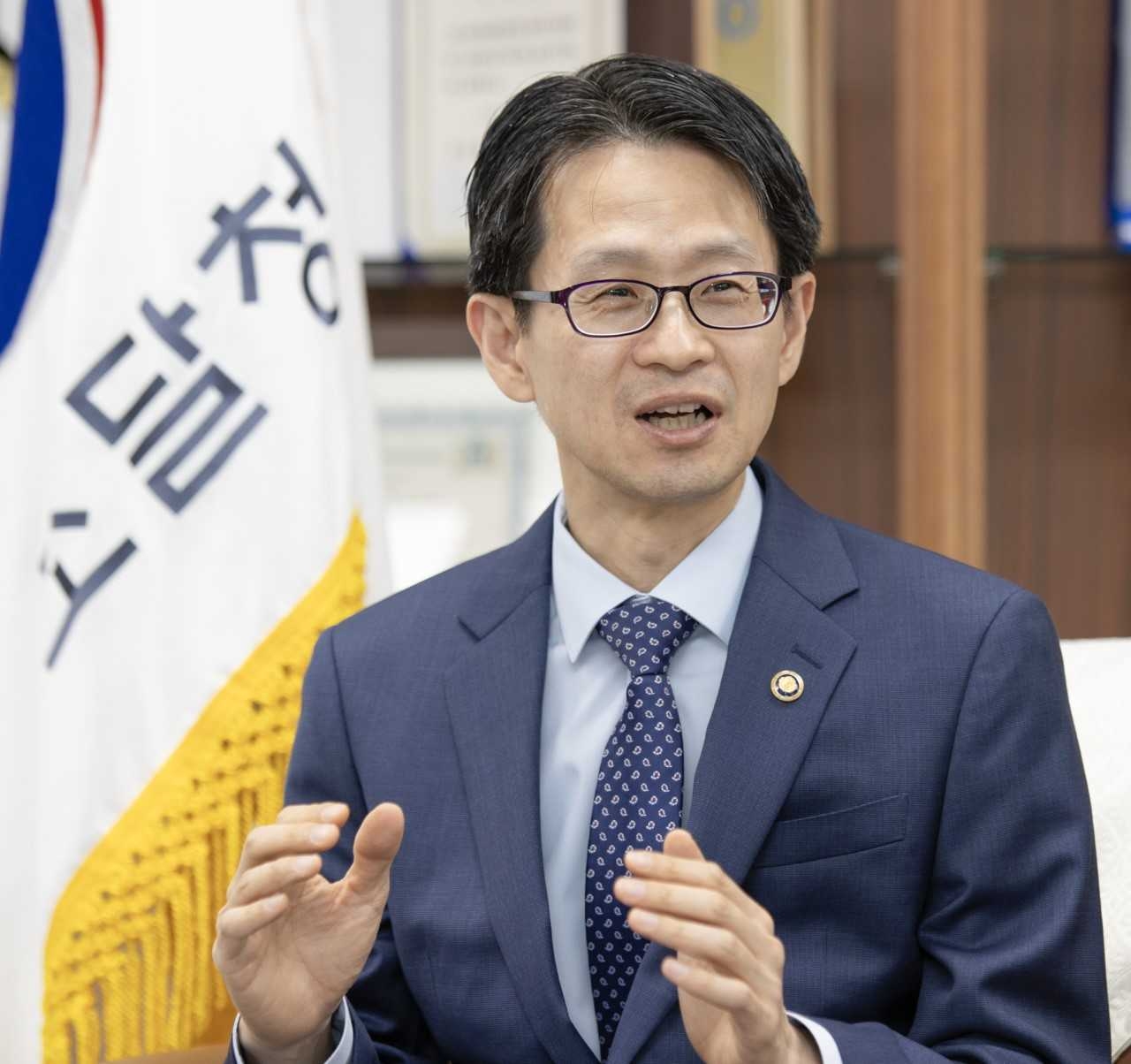
South Korea’s public procurement system is undergoing a quiet but consequential shift — from a back-office function focused on price and efficiency to a frontline policy tool shaping industrial strategy, supply chains and emerging technologies.
At the center of that transition is the Public Procurement Service, which oversees roughly 225 trillion won ($160 billion) in annual public spending — equivalent to about 9 percent of the country’s gross domestic product.
In a recent interview with The Korea Herald, the agency’s chief, Baek Seung-bo, outlined how procurement is being repositioned as a strategic lever to drive growth in artificial intelligence, robotics and climate technologies, while maintaining its core mandate of transparency and value for money.
“Public procurement must evolve with the economy,” Baek said. “It is no longer just about buying goods efficiently — it is about using government purchasing power to support innovation, strengthen supply chains and create new markets.”
From efficiency to strategy
Traditionally, public procurement has focused on securing goods and services at the best price while ensuring fairness and transparency. That is still the case, but its role is expanding.
As geopolitical tensions reshape global supply chains and as rapid advances in AI and digital technologies transform industries, procurement is increasingly being used as a policy instrument.
“Amid rising uncertainty — from supply chain disruptions to energy shocks — the strategic role of procurement has become more important than ever,” Baek said.
The shift is particularly evident in what officials call “strategic procurement,” where government demand is used deliberately to support national priorities, from carbon neutrality to industrial competitiveness.
Government as first buyer
A cornerstone of that strategy is “innovation procurement,” under which the government acts as a buyer of new technologies, helping companies overcome the “valley of death” between development and commercialization.
The practice has been significantly scaled up. Public purchases of innovative products have grown from about 400 billion won in 2020 to more than 1 trillion won in 2024.
One key mechanism is pilot procurement, where the government purchases early-stage products and allows public institutions to test them in real-world conditions. Companies receive feedback and performance data, which can be used to refine products and build a track record.
“It creates a virtuous circle,” Baek said. “Companies improve their technology, build credibility and then expand into the broader market.”
The program has already produced postive outcomes. Floor-mounted pedestrian signals — now common at crosswalks — were once designated as an innovative product. Within five years, they helped reduce accidents by 40 percent and grew into a market worth more than 700 billion won.
Officials say such examples demonstrate how procurement can create entirely new industries, rather than simply supporting existing ones.
AI takes center stage
The next phase of innovation procurement is expected to be driven by artificial intelligence.
With global competition intensifying, the government aims to use its purchasing power to accelerate the adoption of AI technologies across public services while supporting domestic developers.
“AI leadership will determine national competitiveness,” Baek said. “Public procurement can serve as a catalyst by becoming the first and most reliable buyer.”
To that end, the agency plans to introduce a dedicated evaluation track for AI products, reflecting the unique characteristics of the technology — including reliability, model performance and risk management.
It is also easing entry barriers for AI firms by simplifying registration procedures for the government’s online procurement platform and providing preferential treatment in bidding.
In parallel, the agency is pursuing what it calls an “AI transformation” of procurement itself, deploying AI tools across the entire process — from price analysis and bid evaluation to contract management and supply chain monitoring.
The goal is not only to improve efficiency but also to enhance decision-making in increasingly complex procurement environments.
Reforming the rules
Alongside these initiatives, the government is pushing ahead with regulatory reform to make the procurement system more flexible and market-oriented.
Under a program dubbed “Procurement Reboot,” authorities are reviewing dozens of rules that have long governed the sector, many of which have become outdated.
One of the most closely watched changes is the move to grant greater autonomy to local governments in procurement decisions.
Until now, local authorities were required to purchase many goods through centrally managed contracts. The reform will allow them to choose between centralized and independent procurement, depending on what offers better value.
While the change is expected to enhance competition and efficiency, it has also raised concerns about potential side effects, including excessive price competition and reduced opportunities for small businesses.
To address these risks, the agency plans to roll out the reform in phases, starting with pilot programs and introducing safeguards such as stricter oversight and transparency requirements.
Balancing growth and fairness
Despite the growing emphasis on strategy and innovation, officials stress that the core principles of procurement — fairness, transparency and quality — remain non-negotiable.
“The foundation of public procurement is trust,” Baek said. “We must ensure that all processes are transparent and that companies compete on a level playing field.”
At the same time, procurement is increasingly being used to support broader social goals, including carbon reduction, job creation and support for small and disadvantaged businesses.
The challenge, the PPS chief acknowledged, is to balance these multiple objectives without compromising efficiency.
Leading through change
Eight months into the role, Baek said his management philosophy centers on four principles: field-oriented decision-making, responsiveness to change, leadership and a positive workplace culture.
“Procurement happens in the market, not behind desks,” he said. “Listening to companies and public institutions is essential to designing effective policies.”
That approach has involved frequent engagement with stakeholders, from small businesses to large public agencies, as well as continuous monitoring of policy implementation on the ground.
Looking ahead, Baek sees procurement as a key lever for Korea’s next phase of economic growth — particularly in fostering technological leadership.
“Public procurement has a direct impact on people’s lives and business operations,” he said. “By using it strategically, we can support innovation, strengthen competitiveness and help the economy take its next leap forward.”
kwonhl@heraldcorp.com