Park Hong-geun cites low debt ratio, tighter spending, growth focus
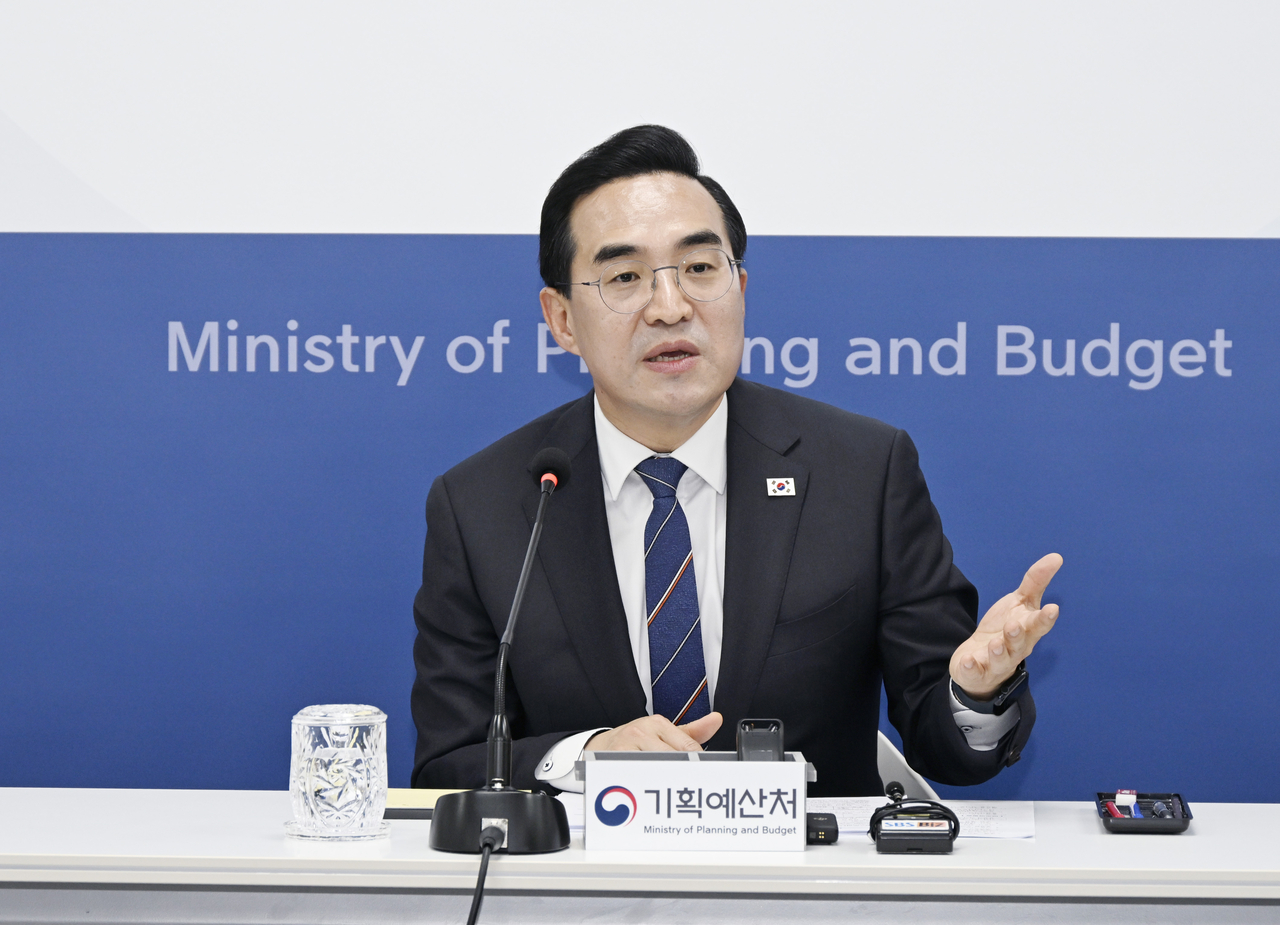
South Korea's budget minister pushed back against the International Monetary Fund's warning over the country's rising debt burden, saying Korea's debt ratio remains low by advanced-economy standards and that the government is "strictly managing" fiscal spending.
At his first press conference since taking office last month, Planning and Budget Minister Park Hong-geun said Korea's debt level was "lower compared to many key countries," brushing aside concern over the IMF's latest Fiscal Monitor report.
The report projected Korea's debt-to-GDP ratio would rise to 63.1 percent by 2031, the highest level the IMF has so far projected for the country, and flagged the increase as "significant," placing Korea alongside Belgium. Korea's debt ratio currently stands at 54.4 percent, close to the 54.7 percent average for nonreserve-currency economies.
Park also argued that IMF debt forecasts had often proved too high. "IMF projections had often overshot actual figures," he said, citing the institution's 2021 forecast that Korea's debt-to-GDP ratio would reach 61.5 percent in 2024, versus the actual 49.7 percent.
With concern centered on the pace of the projected increase, Park said the government was "managing strictly with various instruments in place," including a record 27 trillion won ($18.3 billion) in spending restructuring this year and, for the first time, restructuring mandatory spending in next year's budget planning.
What matters more in improving the debt ratio, Park said, is not simply cutting spending, but spending effectively. "Potential growth rates in the future will differ based on how we actively and efficiently invest," he said, adding, "Right now is the right moment when we must put in all efforts to invest properly to raise the growth rate. The role of fiscal is clear in that respect."
Park cited Sweden and the Netherlands as examples of countries that brought down their debt ratios by expanding GDP rather than focusing solely on the size of the debt itself. "As in those cases, I believe it is important for Korea as well to build that virtuous cycle into its fiscal strategy," he said.
Asked whether the government would use additional tax revenue to repay national debt, Park responded briefly, saying any such repayment would be carried out "based on legislated procedures."
On the possibility of a second supplementary budget, Park said it was too early to discuss, as the first package, drafted in response to economic fallout from the recent Middle East conflict, has yet to be executed after clearing the National Assembly two weeks ago.
"The first budget has been planned incorporating the possibility that the situation (in the Middle East) may drag on, and it is too early for anyone to judge whether conditions will worsen further," he said. "What we need to do now is maximize the effect of the already-approved supplementary budget through swift execution."
jwc@heraldcorp.com