New York museum undergoing multiyear $1.5 billion revamp to show crosscurrent of cultures, says Met director, CEO Max Hollein
Ten 19th-century landscape painting scrolls known collectively as "Chilbosan" ("Seven Jeweled Mountain") in the collection of the Metropolitan Museum of Art in New York City will undergo conservation and be remounted in their original format as a 10-panel folding screen at the Leeum Museum of Art in Seoul.
Announced early last week, the two-year project is the latest instance of cooperation between the US museum and the Overseas Korean Cultural Heritage Foundation, an affiliate of the state-run Korea Heritage Service, which selected the work as part of its Conservation and Utilization Support Program.
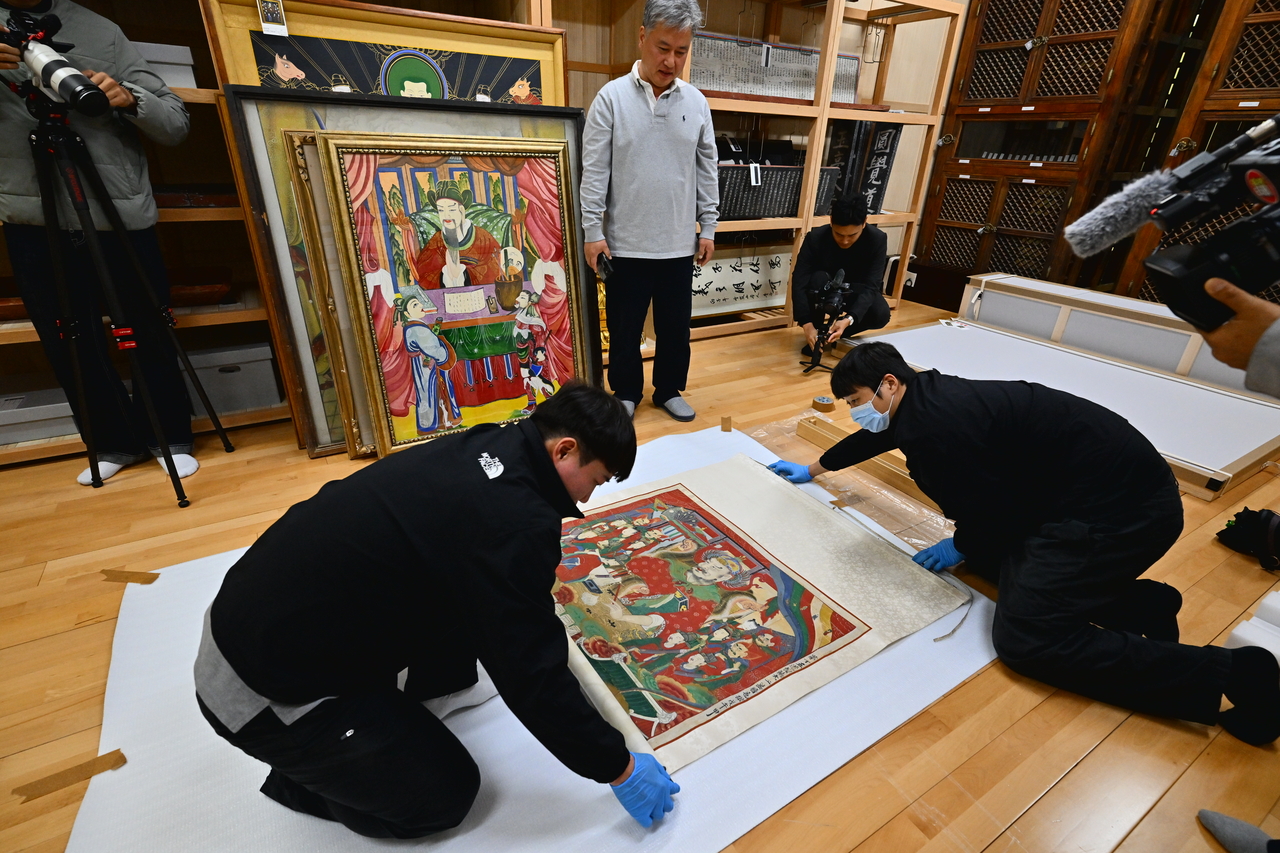
The OKCHF was also actively engaged in talks that led to the return of "Tenth King of Hell" (1798) from the Met to Sinheungsa, a temple of the Jogye Order of Korean Buddhism in Sokcho, Gangwon Province, last November.
Sinheungsa and the Sokcho Committee for the Return of Cultural Heritage approached the Met in 2023 about the return of the Buddhist painting, thought to have been taken out of the country during US military rule over South Korea that followed the Korean War (1950-1953). The OKCHF joined the negotiation in 2024, which led to the return of the painting, one of the series of 10 paintings depicting the "Ten Kings of Hell" who judge the fate of the dead in the Buddhist worldview.
Prior to that, six of the "Ten Kings of Hell" were repatriated from the Los Angeles County Museum of Art in 2020, while three remain at large.
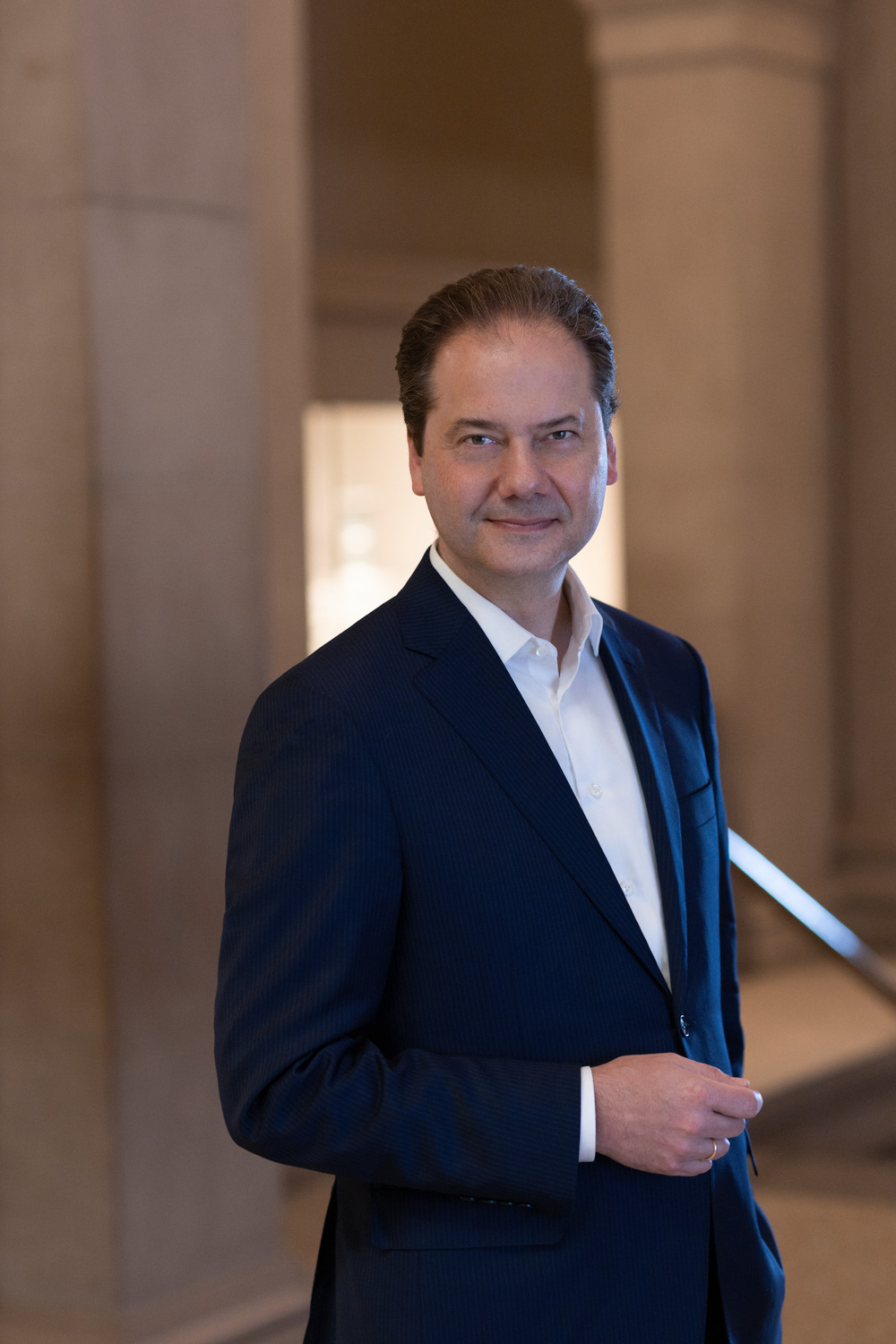
"The return of the 'Tenth King of Hell' really reflects or represents the Met's commitment to responsible collection stewardship and how we work together with partners from countries to make sure that objects find their rightful owners," said Max Hollein, CEO and director of the Met, during a Zoom interview from New York with The Korea Herald in late January.
"We were able to collaboratively investigate the questions surrounding it (the painting) and trying to find out more about how did the screen leave Korea? Of course, we knew how it came to us," he said.
The Met purchased the "Tenth King of Hell" in 2007. The scroll was exhibited as part of the museum's "Korean Art" and "Arts of Korea" exhibitions in 2012 and 2008, respectively.
"It (the investigation) allowed us to really put together a certain understanding of how this object got removed and we came to the conclusion that this is a work that should be in the rightful ownership of the temple," the Austrian art historian said.
The return of "The Tenth King of Hell" was the first instance of repatriation of Korean art from the Met.
Hollein said he made it a point to be in Seoul for the return ceremony. "We wanted to make sure that a return is not just a clandestine or silent affair but that we are able to really accentuate and celebrate the cooperative nature of such a return," he said.
"I think it cements, also, the Met's role vis-a-vis Korean culture. We are proud to represent Korean culture here in New York at the Met and in special Korean galleries. But we also want to make sure that we only show works of which we are the rightful owners."
The Arts of Korea Gallery at the Met opened in 1988 with funding from the Korea Foundation and the Samsung Foundation for Culture. Highlights of the Korean art collection at the museum include celadon pieces, Buddhist paintings of the Goryeo Kingdom (918-1392) and porcelain and lacquer of the Joseon era (1392-1910).
"We have a dedicated large gallery for Korean art that basically shows the development of Korean art through ancient times until now. But we also have Korean works in musical instruments, photographs, modern and contemporary art and drawings and prints departments, also in the Costume Institute and more," he said.
"What you see is an institution that has been deeply engaged with Korean art from very early on. Regarding contemporary art, we've made major next steps to collect and, I think what's even more important, to really present Korean art in a meaningful way," Hollein said.
More Korean contemporary art

The Met is expanding its collection of Korean contemporary art with recent acquisitions of works by Lee Bul, Yee Soo-kyung, Kim Min-jung and Lee U-fan, according to Hollein.
The museum acquired a large ceramic sculpture by Yee Soo-kyung, "Translated Vase" (2017) from the "Translated Vase" series that formed a central part of the 2025 exhibition "Monstrous Beauty: A Feminist Revision of Chinoiserie," curated by Iris Moon, an associate curator at the Met.
Four large-scale sculptures by Lee Bul were installed at the Met's iconic niches from September 2024 to June 2025, as the fifth in the museum's annual Genesis Facade Commission series supported by the luxury brand of Hyundai Motor Group. "Long Tail Halo" series marked the artist's first major US exhibition in 20 years.
Hollein foresees the Met more actively collecting and exhibiting Korean contemporary art.
"It is an important part of not only the narrative of Korean culture but really also the important narrative of the art of the 20th and 21st centuries," he said.
A new expanded wing for "the art of our time" is being built at the Met and frequent visits by the Met personnel, including the CEO, to Korea are being made to not only connect with the art scene, but also to collect Korean contemporary art, Hollein said.
Living museum
How does a museum covering 5,000 years of art from around the world continue to expand its collection?
"We see ourselves as a growing museum. You have an institution that has, depending on your count, 1.5 million to 2 million objects. And we continue to collect, we continue to grow through various ways and in all different areas," Hollein said.
The Met acquired over 66,000 objects in 2025.
He stressed the importance of the expertise of the Met's curators in the museum's collecting. "We have about 140 curators who make sure that we look at what is really relevant for our collection to tell the narratives that the Met should be telling about the cultures of the world and about the connection of the cultures of the world," Hollein said.
Pieces are acquired through endowments that are restricted to acquisitions, through fundraising and also through gifts. "We get a lot of artworks that we would like to have at the museum gifted from collectors as part of their philanthropic commitment towards this institution," he said.
The Met is currently undergoing a major multiyear revamp.
Breaking ground in the middle of the year will be the new Tang Wing for modern and contemporary art. As the museum is not able to expand its campus physically, much of the current wing structure will be demolished to make way for the new wing, designed by Mexican architect Frida Escobedo. The new Tang Wing, with 8,000 square meters of gallery space, is expected to open in 2030, according to Hollein.
During the construction period, parts of the modern and contemporary art collection will be presented at different locations within the museum. Also planned are two internationally traveling exhibitions of important works of the 20th century collection.
While venues for the two shows have not been announced, cities in Asia, including in Korea and China, seem to be likely candidates. "We are very interested to continue to travel shows and continue to be engaged in Asia," Hollein said.
The multiyear revamp was conceptualized 6 1/2 years ago, according to Hollein, as the museum thought about the next decades.
"We identified about a quarter of our gallery system that we wanted to renew. We wanted to have new scholarship being presented there. We wanted to also architecturally renew them," he said. "So we embarked on a major reimagination of the Met's galleries."
Currently, the Met comprises 21 wings built over 150 years with very different architectural styles. The revamp began in the last two years and will continue until 2031, with an investment of about $1.5 billion.
The concept is to show how cultures are connected to other cultures and how they are connected to other times.
"It's really also a way to show the crosscurrents of cultures and to be able to show different cultures in their own identity with their own idiosyncrasies, but also with their joint legacy coming from a spirit of exchanges and cross inspiration," he said.
Today's museum
Today's museums, according to Hollein, "bring people together with objects with thoughts, experiences and with one another."
"The museum as a great place of community and a place of joy and excitement together and as part of a really profound experience with art, not so much only with admiration, but really also with deep experiences and emotional reactions," he said. "I think that's one of the major changes that museums have undergone."
Museums today are also no longer defined by their physical entity, Hollein argued. "You can experience a museum without coming to the museum," he said, not only through digital platforms and sending the museum's works to other places.
"'Museum' is no longer a physical, static definition. It's much more a disseminator and engager with culture," he said.
Yet, Hollein made it very clear that the Met would not be opening satellite museums abroad.
While the Met is very interested in international collaborations and relationships, Hollein said, "As a permanent physical presence, we only want to be in New York City because basically the Met is a museum of the world and for the world. You will continue to see the Met as a truly international museum, as a truly universally engaged museum and without any intention of building another satellite somewhere else."