S. Korea, UAE agree to oil supply chain deal, including alternative routes, Cheong Wa Dae says
South Korea has secured an additional 18 million barrels of crude oil from the United Arab Emirates, whose leadership pledged to give Seoul top priority in oil supplies, amid a global supply crunch triggered by the Middle East crisis.
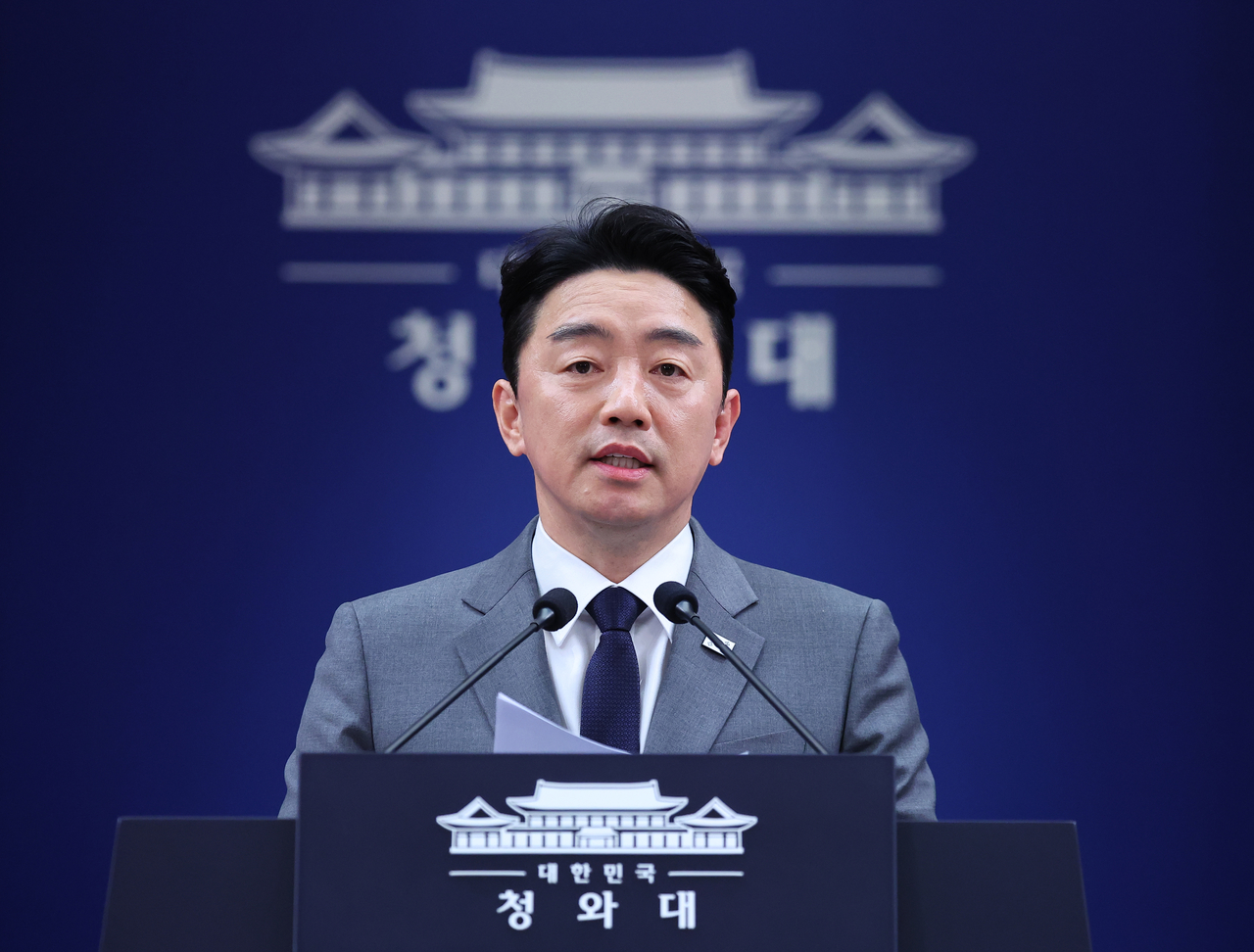
Kang Hoon-sik, the presidential chief of staff, made the announcement Wednesday, hours after returning from his trip to the UAE on Monday and Tuesday as President Lee Jae Myung’s special envoy for strategic economic cooperation.
Kang underscored that “the UAE has pledged to give South Korea top priority in oil supplies amid the global emergency in crude oil supply and demand.”
“The country made it clear that no country would receive crude oil ahead of South Korea and that Korea is its ‘No. 1 priority’ for oil supply,” Kang said during a press briefing at Cheong Wa Dae.
“Accordingly, we have secured a total of 18 million barrels of crude oil through various supply routes,” he added.
The shipment will include 6 million barrels carried by three UAE-flagged tankers and an additional 12 million barrels transported by six South Korean vessels, bringing the total to 18 million barrels.
Including the previously secured 6 million barrels from the UAE announced by Kang on March 6, South Korea has procured a total of 24 million barrels of crude oil from the UAE under emergency arrangements since the recent outbreak of war in the Middle East, which began with joint US-Israeli strikes on Iran on Feb. 28.
“What I can say now about the oil supply situation is that we have avoided the worst-case scenario, and we can be certain that the Republic of Korea will not face a situation where crude oil supplies are cut off,” Kang said, referring to South Korea by its official name.
Speaking at the briefing, Kang also disclosed that an additional vessel carrying naphtha is now en route to South Korea.
Kang said the Strait of Hormuz was effectively shut, making alternative supply lines urgently necessary, as about 70 percent of South Korea’s crude imports normally pass through the waterway.
Against that backdrop, Kang underscored that “the energy agreement is expected to make a significant contribution to stabilizing the current oil supply crisis.”
“Beyond short-term supply, we also agreed to strengthen long-term cooperation to guard against potential disruptions in energy supply chains,” Kang said. “To that end, the two sides agreed to sign an MOU (memorandum of understanding) on oil supply chain cooperation, which includes exploring alternative supply routes for crude oil procurement, and it is expected to be signed soon.”
On his X post about Kang’s trip to the UAE, Lee said, “I was worried given the risks, but you did well. The results are also beyond expectations.”
Swift return to UAE
During the visit, Kang met with President Mohamed bin Zayed Al Nahyan, Khaldoon Khalifa Al Mubarak, chairman of the Abu Dhabi Executive Affairs Authority and his counterpart as the UAE’s presidential envoy overseeing bilateral ties with South Korea, and Sultan Ahmed Al Jaber, UAE minister of industry and advanced technology and chief executive of the Abu Dhabi National Oil Co., among others.
Speaking at the briefing, Kang said he met with the UAE president and delivered a letter from President Lee "expressing concern over the recent Middle East situation and conveying his solidarity and condolences to the people of the UAE."
Kang expressed gratitude to Al Nahyan for his full support in ensuring the swift and safe return of South Korean nationals stranded in the UAE amid the airspace closure, asking that continued attention be given to the safety of those still residing in the country.
Kang’s trip to the UAE came less than three weeks after his previous visit on Feb. 25, as he and Al Mubarak have continued to communicate through a hotline since the onset of the Middle East war.
“Cheong Wa Dae views this (oil supply) as an extremely urgent matter, and it was that sense of urgency that led to the decision to visit the UAE,” Kang said when asked about the rationale behind his return trip.
Kang also stressed that “it would not be appropriate to link this issue to defense industry cooperation,” when asked whether any discussions had taken place on arms-related matters in connection with the oil supply. “There were specific requests on our side for practical cooperation, and the UAE accepted almost all of them swiftly,” Kang added.
Kang underscored that “through this visit, South Korea and the UAE, which forged a special strategic partnership, reaffirmed that they are true friends who stand by each other in difficult times.”
dagyumji@heraldcorp.com