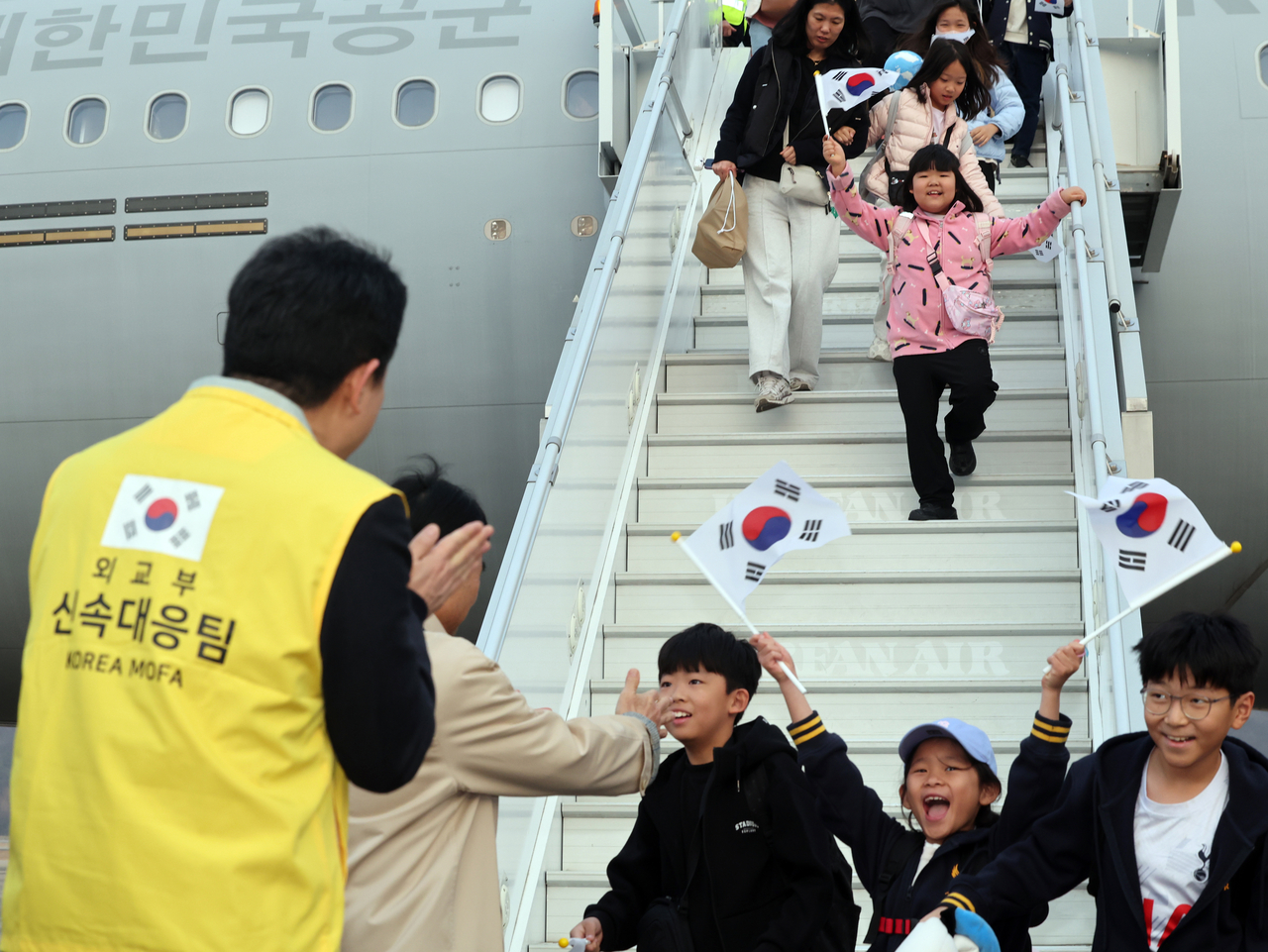
The Seoul Metropolitan Office of Education said Tuesday it will provide psychological support, child care services and guidance on South Korea’s education system for students and parents returning from the Middle East following the outbreak of conflict involving Iran.
The office said it would offer a one-stop support service to help students reintegrate into Korean classrooms and navigate the country’s education system. Parents can request assistance through the education office’s hotline (1396), which will then connect them to the relevant department.
Through the service, families will receive information on nearby kindergartens and schools, while students’ grade placement will be determined based on their academic history at overseas institutions.
In cases where official transcripts are unavailable due to the sudden nature of their departure, the office said it may allow alternative documents, such as student IDs, report cards, awards or admission letters, to be used to determine reenrollment and grade level.
The use of alternative documents follows guidelines set by the Education Ministry in 2020, when overseas students returned amid the COVID-19 pandemic.
Students may also be referred to mental health professionals at the office’s counseling center upon request to help address conflict-related trauma. Child care services will also be provided for younger children.
Seoul Education Superintendent Jung Geun-sik said the office would spare no effort to help returning students quickly readjust to daily life and resume stable school routines.
“We will ensure that every student is protected within a strong support system,” Jung said.
The plan is part of broader support measures for students returning from the Middle East.
The Korean Council for University Education said on March 10 that it would ask universities to ease requirements for returning students applying through a special admission track for overseas Koreans.
Under current rules, applicants must have resided abroad for a certain period. However, the council said it would urge universities to recognize students as having remained overseas for the 2026 spring semester even if they return to Korea ahead of schedule.
The eased requirements will apply to Koreans returning from eight Middle Eastern countries under travel advisories issued by the Foreign Ministry, including Iran, Bahrain, the United Arab Emirates, Qatar, Kuwait and Oman, as well as parts of Saudi Arabia and Jordan.
The Ministry of Education said it expects most universities to reflect the eased regulations starting with admissions for this year’s fall semester.
“Students who were forced to return abruptly due to unexpected conflict should be able to return to normal life as soon as possible and continue their education in a stable environment,” Jung said.
seungku99@heraldcorp.com