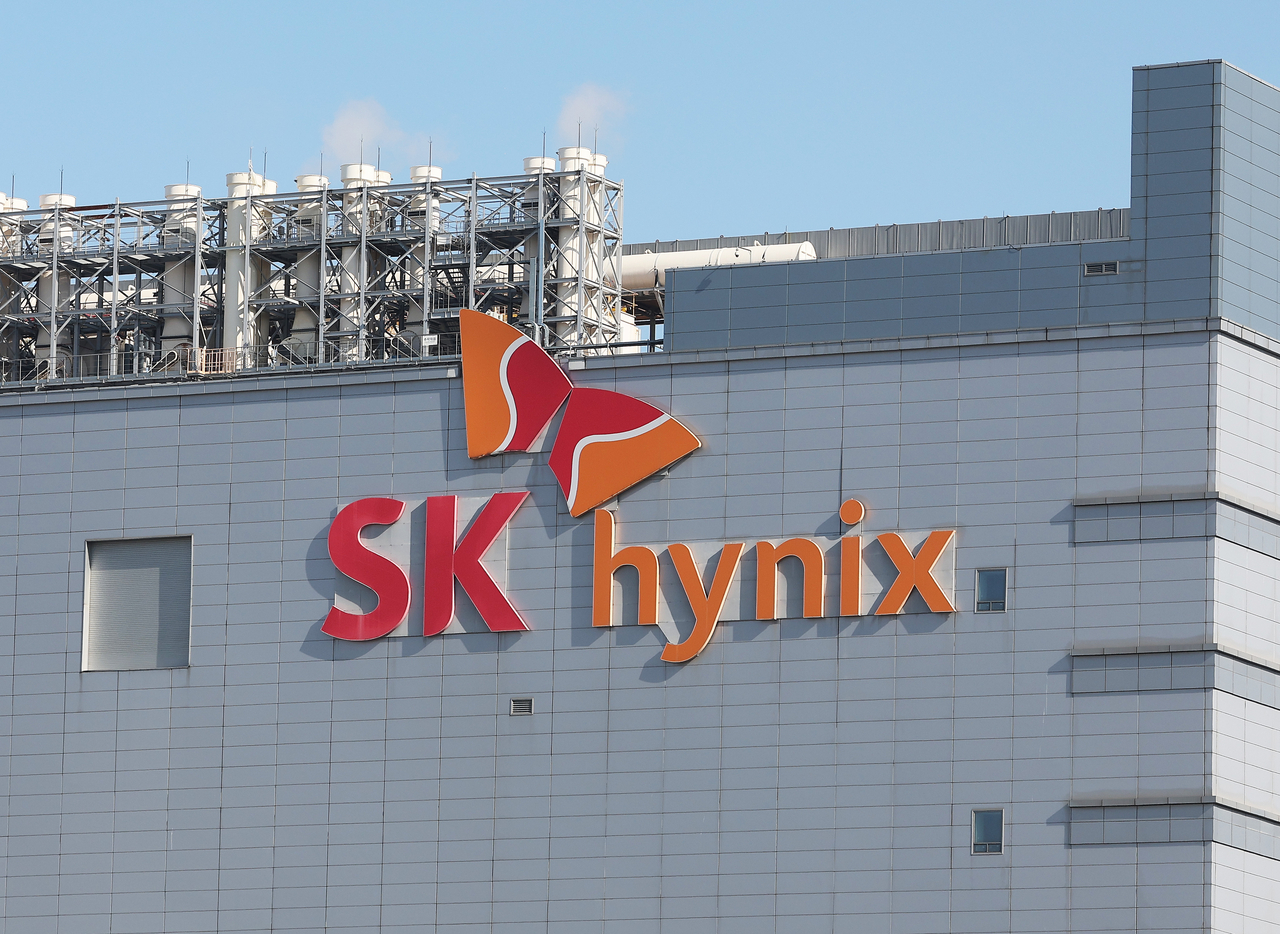
SK hynix posted its highest-ever research and development spending last year, approaching the 7 trillion won ($4.66 billion) mark as the company accelerates investment in next-generation artificial intelligence memory technologies.
According to an audit report disclosed through the Financial Supervisory Service’s electronic disclosure system on Sunday, SK hynix spent a total of 6.73 trillion won on R&D in 2025.
The figure marks a sharp increase of 35.9 percent from the 4.95 trillion won spent a year earlier, setting a new company record.
Investment gathered pace toward the end of the year. After spending 3.05 trillion won in the first half, the chipmaker added nearly 3.7 trillion won in the second half alone, underscoring its push to maintain technological leadership in advanced memory.
The aggressive spending comes as the company rides a wave of booming earnings driven by the global artificial intelligence boom. SK hynix recorded more than 47 trillion won in operating profit last year — the highest ever among Korean companies.
Market expectations remain bullish. Some industry watchers project that the chipmaker could reach operating profit of 200 trillion won this year if AI-driven memory demand continues to surge.
The surge in R&D spending reflects SK hynix’s strategy to strengthen its position in high-bandwidth memory, or HBM, a key component used in AI accelerators.
The company is currently the largest supplier of HBM to Nvidia, the dominant player in the AI accelerator market. However, competition is expected to intensify in the upcoming sixth-generation HBM4 market, with rivals moving aggressively to catch up.
Samsung Electronics invested a record 37.7 trillion won in research and development last year, signaling its own push to lead the next phase of AI memory technology.
Last month, Samsung also announced the world’s first mass production and shipment of HBM4, a move widely viewed as an attempt to reshape the emerging market.
SK hynix, meanwhile, is expected to soon complete optimization work for HBM4 with Nvidia. The company anticipates securing roughly two-thirds of Nvidia’s HBM4 supply this year.
Beyond HBM development, SK hynix plans to continue advancing DRAM process miniaturization and stacking technologies in order to retain its technological edge.
The next generation of HBM is becoming increasingly complex, with memory manufacturers required to participate in logic processes and advanced packaging integration.
To address these challenges, SK hynix is developing new packaging technologies and pursuing cooperation models with foundry partners.
Speaking at an internal company event last month, SK hynix CEO Kwak Noh-jung emphasized the need for constant vigilance despite the company’s strong performance.
“To become a first-class company, we must learn from the best,” Kwak said. “We should maintain a sense of crisis and focus on our fundamental competitiveness, while taking pride in our achievements without becoming complacent.”
yeeun@heraldcorp.com