Korea, Philippines seek to expand nuclear cooperation, eyeing restart of long-dormant Bataan plant
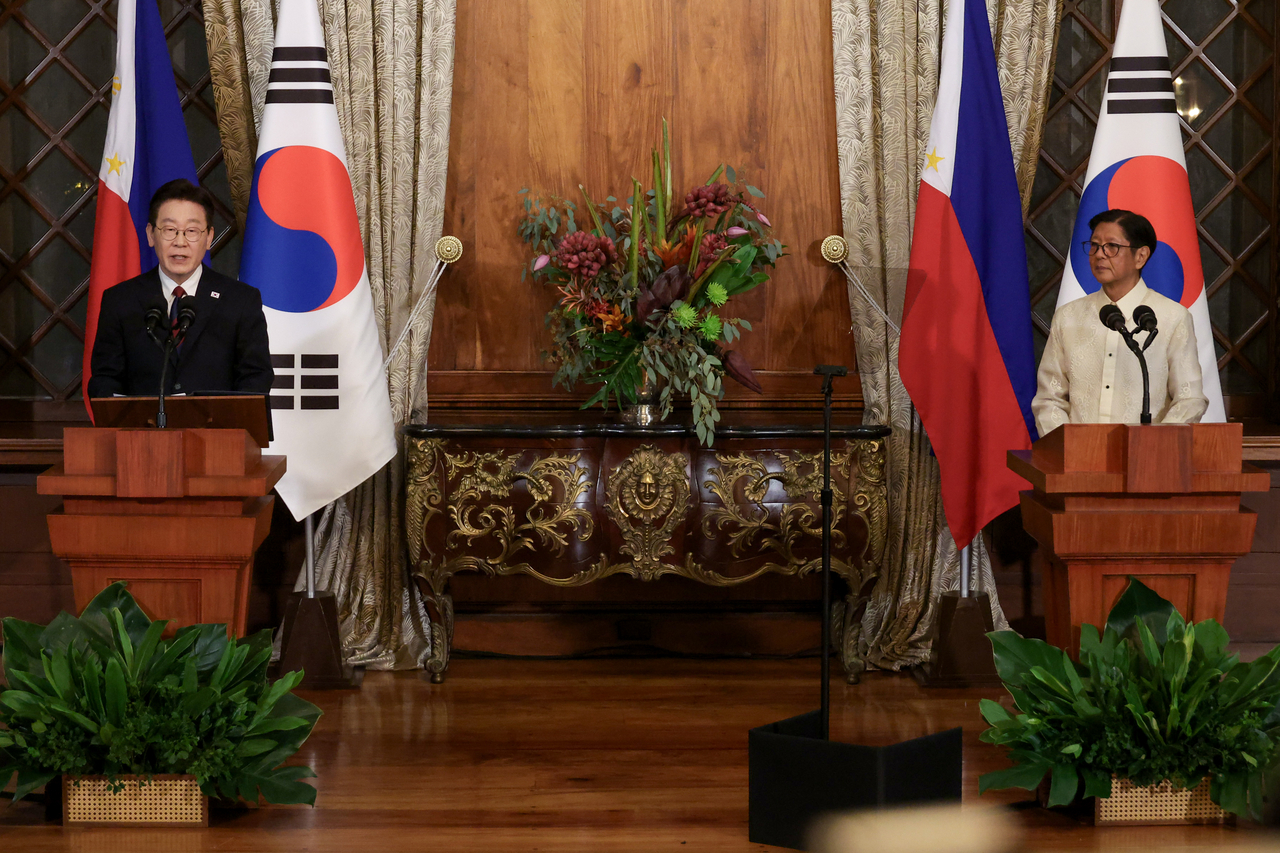
The respective leaders of South Korea and the Philippines agreed to step up cooperation in strategic sectors, including infrastructure and defense, while widening the partnership into emerging areas like nuclear energy and critical mineral supply chains.
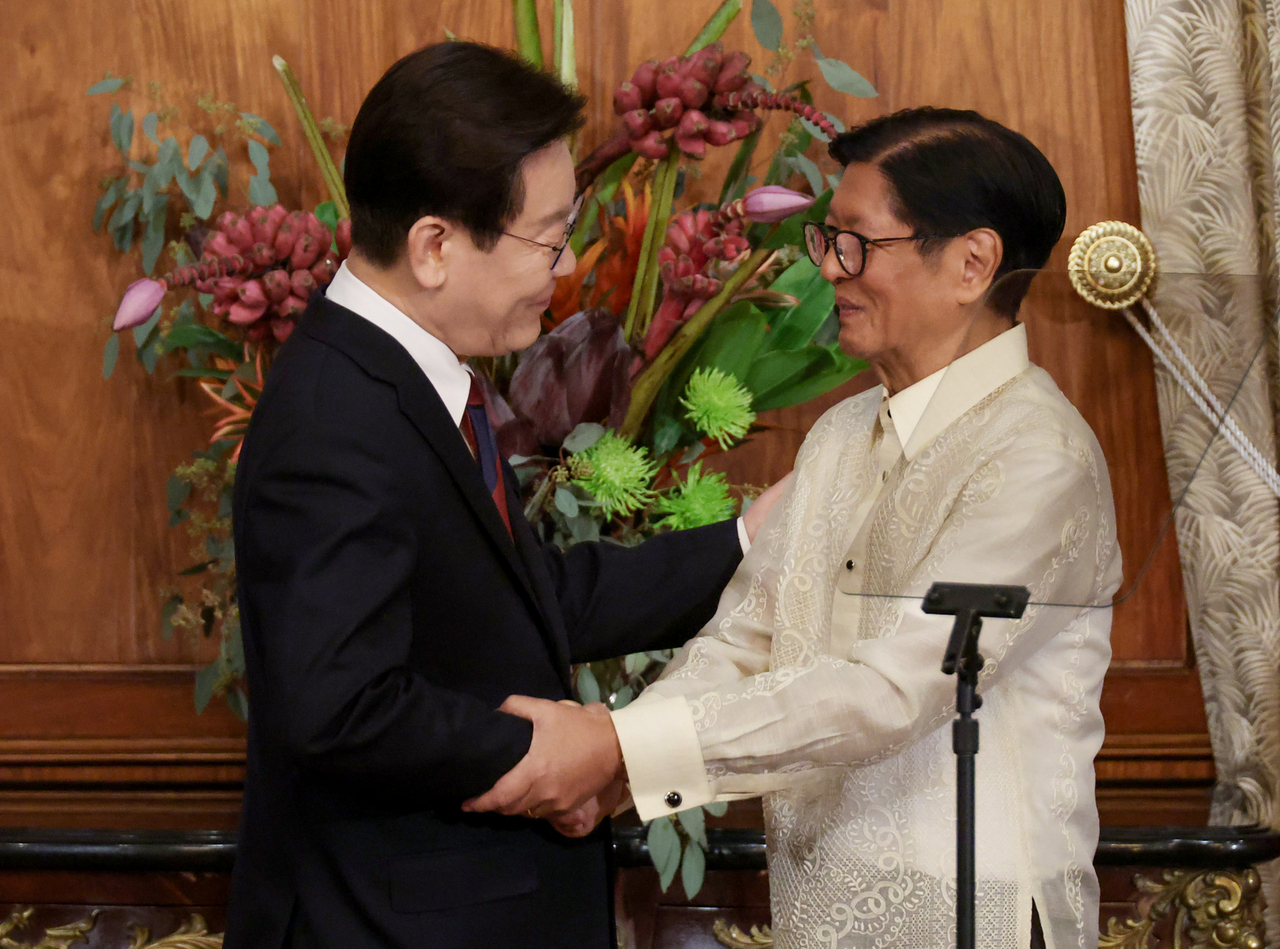
South Korea's President Lee Jae Myung and Philippine President Ferdinand Marcos Jr. met for the summit at the Malacanang Palace in Manila on Tuesday, which marks the 77th anniversary of the establishment of diplomatic relations on March 3, 1949.
"President Marcos and I agreed to further strengthen substantive cooperation in fields such as trade, infrastructure and defense, based on the two countries’ ‘strategic partnership,’" Lee said during a joint news conference following the summit.
"We agreed to further expand cooperation between the two countries in new growth areas such as shipbuilding, nuclear energy, supply chains and AI and digital technologies."
"The two countries will seek a path of common prosperity while jointly responding to the rapidly changing economic and security environment," Lee underscored.
Lee voiced strong support for Manila’s flagship infrastructure development drive as part of a bilateral pledge to "further strengthen cooperation in strategic industries such as infrastructure and defense."
"I told President Marcos that I strongly support the infrastructure policies he is prioritizing and that Korea will closely participate as well," Lee said, referring to Marcos’ "Build Better More" program, a big-ticket infrastructure spanning 2022-2028. "The president also responded with a welcome."
In the field of arms industry cooperation, Lee said, "We will work together to support the active participation of Korean defense firms in the Philippine military modernization program, based in particular on the implementation arrangement on defense materiel procurement between the two countries."
On the occasion of the summit, Seoul and Manila also amended their defense procurement arrangement, expanding the list of eligible contractors to improve bidding conditions for Korean firms, while adding provisions on weapons maintenance and follow-on logistics support to broaden the scope of bilateral cooperation in the arms industry.
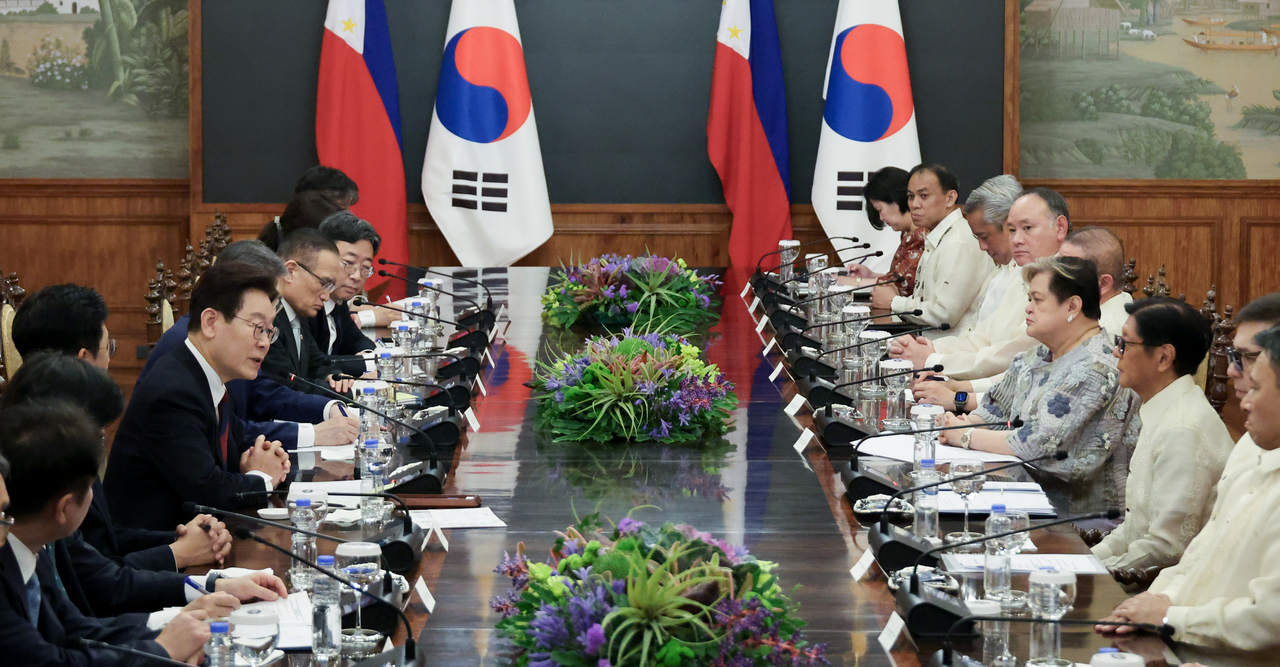
Shipbuilding, nuclear, critical minerals
On cooperation in specific sectors, Lee stressed that the potential for bilateral cooperation in shipbuilding is "limitless" for the partnership of major shipbuilding powers — with South Korea ranking second and the Philippines fourth in the world in terms of shipbuilding output.
"The more closely the two countries work together, the stronger the competitiveness of our shipbuilding industries will become, creating synergies for shared growth," Lee said.
Lee also pointed out that "the two sides agreed to strengthen substantive cooperation in the nuclear energy sector as well."
South Korea and the Philippines have been focusing their nuclear energy discussions on the possible restart and completion of the long-dormant Bataan Nuclear Power Plant.
Seoul and Manila signed a memorandum of understanding on a joint feasibility study for the potential resumption of construction at the Bataan plant on the sidelines of a bilateral summit in Manila in October 2024. Completed in 1984, the Bataan facility has never entered commercial operation and has remained idle for decades due to safety concerns and political circumstances.
"Based on the results of the feasibility study on the potential restart of the Bataan Nuclear Power Plant and the memorandum of understanding on cooperation in introducing new nuclear power projects, the two countries will position themselves as optimal partners in nuclear energy cooperation," Lee said.
On the occasion of the Korea-Philippines Business Forum to be held Wednesday, Korea Hydro & Nuclear Power, the Export-Import Bank of Korea and the Philippines' Manila Electric Co. plan to sign a memorandum on new nuclear cooperation, according to Cheong Wa Dae.
The memorandum aims to promote joint development of business and financing models related to the introduction of new nuclear power plants in the Philippines.
Lee underscored that the two sides "agreed to further expand practical cooperation on critical minerals and related supply chains."
"Korea has advanced technologies, while the Philippines is rich in mineral resources, which makes the two countries ideal partners in the critical minerals sector," he said.
The Philippines ranks among the world’s top five in nickel and cobalt reserves, each of which is key to the electric vehicle battery supply chain.
As a key outcome of the summit, Lee said Seoul and Manila "have taken steps to ensure that bilateral trade and investment can expand further based on the Korea-Philippines FTA." Lee added that the two countries "have significantly addressed the difficulties faced by businesses," citing memorandums on cooperation in intellectual property and agriculture signed that day.
On the security front, Lee said that "the two countries agreed to continue their cooperation to promote peace and stability in the region as long-standing friendly countries and strategic partners."
"At today’s talks, President Marcos and I discussed regional developments as well as the recent situation in the Middle East, and expressed hope that stability and peace in the Middle East will be swiftly restored," Lee said.
"Above all, I would like to express my appreciation to President Marcos for his strong support for our government’s efforts to resume dialogue for peace and stability on the Korean Peninsula."
Lee underscored that "Korea will actively support the Philippines’ role as this year’s chair of ASEAN," referring to Association of Southeast Asian Nations regional bloc.
dagyumji@heraldcorp.com