Municipal Excellence
In Gimpo, a city defined by geography as much as ambition, a new global identity is taking shape.
Flanked by rivers and canals, bordered by the Han River to the north and positioned directly across from North Korea, Gimpo has long occupied one of the most symbolic spaces on the peninsula.
Today, it is leveraging that symbolism, along with rapid population growth, expanding transport links and rising international mobility, to reimagine itself as a global-facing city built on livability, cultural access and cross-border potential.
Within the Global Thinkers framework, Gimpo’s strengths align clearly with two categories: International Living Standard, shaped by a fast-growing foreign resident population, and Global Cultural Gateway, reflected in its aviation links and tourism initiatives.
Also, as the chair city of the National Multicultural Cities Council, Gimpo leads a coalition of 28 member municipalities, amplifying successful practices and ensuring that multicultural and foreign resident policies function meaningfully at the community level.
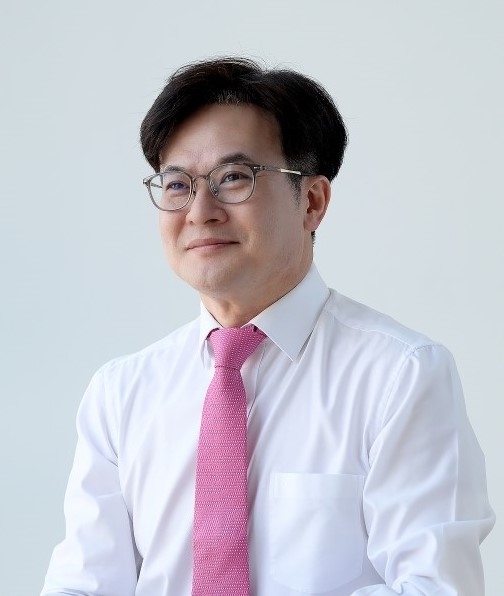
“We are creating a city where differences are not something to be managed, but a source of strength,” Gimpo Mayor Kim Byung-soo said during an interview with The Korea Herald.
International Living Standard
City designed for global residents
Gimpo’s evolution into a global living environment is grounded in demographic reality. The city is now home to one of the fastest-growing foreign resident populations in the region, and the number of youth with multicultural backgrounds continues to rise year after year.
This shift has reshaped the city’s governance priorities, pushing Gimpo to support multicultural families as one of the city's most developed policy areas. Married migrants, often raising bicultural children while navigating employment and social integration, are a core focus of the city’s welfare and education programs.
"The city’s long-term vision begins with ensuring that foreign residents can live without inconvenience and access public services as naturally as Korean citizens," Kim emphasized.
One of Gimpo’s most urgent priorities is the rapid increase in school-age youth with multicultural backgrounds. As of April 2025, there were 2,115 such students, marking an 8 percent increase from the previous year, according to education data.
Kim described the current period as the “golden time” for a coordinated response. “A child’s opportunities must not be determined by their starting point. Gimpo is building a city where every child grows up able to dream the same dreams," he said.
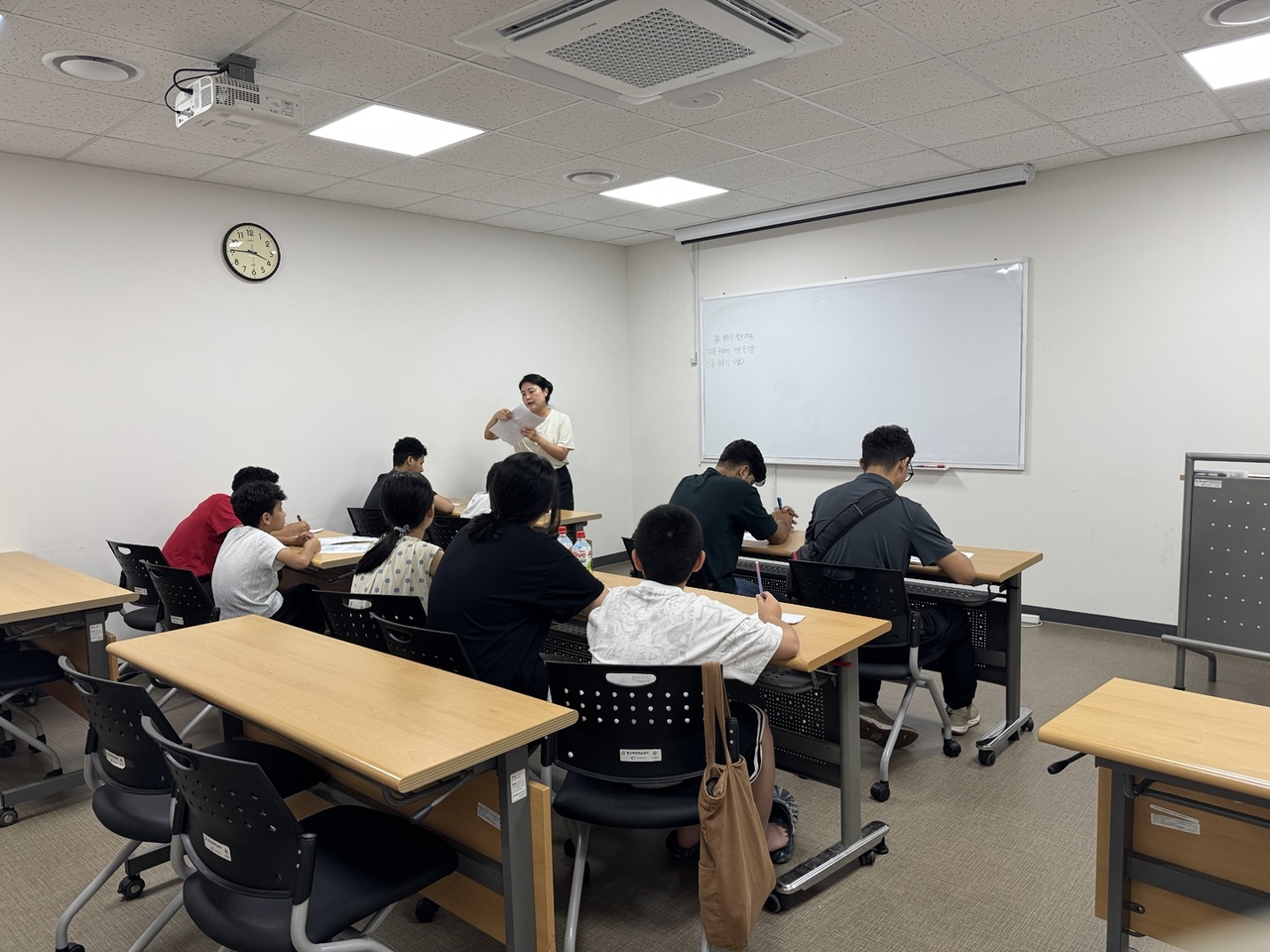
Gimpo has placed education at the center of its integration strategy. Through programs developed under its education development special zone initiative, the city now provides Korean language classes, subject-specific learning support, arts and sports programs, and psychological counseling, integrating them into a single pathway for stable growth.
Beginning this year, the city will also open evening classes for students in middle and high school to strengthen their academic Korean language skills and reduce gaps that often widen during adolescence.
To address barriers in navigating Korea’s complex school system, Gimpo operates tailored college admissions briefings for youth with multicultural backgrounds, explaining the high school credit system and university entrance process in accessible terms for both students and parents.
In a major policy milestone, Gimpo became the first city in Korea to send elementary school enrollment notices directly to households with children of foreign nationalities, eliminating a blind spot in access to national education. This initiative later expanded throughout Gyeonggi Province, marking a structural improvement in ensuring that learning rights are upheld for all children, the city explained.
Recognizing that student well-being is tied to the stability of their families, Gimpo operates a broad system of household-level support as well.
For married immigrants within five years of arrival, the city provides in-home Korean language education, while the Gimpo Family Center and local libraries offer level-specific Korean classes. Children from multicultural families, including those in higher grade levels, receive both Korean tutoring and learning assistance to prevent early-stage learning delays.
The city also operates a network of multicultural family supporters, who accompany new migrant families to public offices, hospitals and banks to ease their adjustment to administrative processes. Additional parenting hubs operate co-parenting programs that reduce the burden of childcare.
Global Cultural Gateway
A borderland city turns geography into opportunity
If Gimpo’s living-standard initiatives strengthen its internal capacity, its tourism and cultural vision push the city outward, positioning it as a gateway between Seoul and the world.
Gimpo International Airport remains the most visible anchor. As Seoul’s secondary aviation hub and the closest major airport to the city center, it draws steady flows of Japanese and Taiwanese short-haul travelers as well as domestic tourists.
The city has begun aligning municipal tourism strategy with airport mobility, participating in the K-Stopover program, which encourages international travelers to spend one or two nights in surrounding regions during layovers.
According to the administration, this program has already become a strategic entry point for attracting new visitors.
“Through the K-Stopover initiative, Gimpo can showcase its tourism resources to travelers who may not have originally planned to visit the city," Kim noted.
Nature-based tourism is one of the city’s strongest assets. Surrounded by rivers and canals on all sides, Gimpo offers scenery rarely found in the capital region.
Visitors can encounter expansive wetlands, migratory bird habitats, restored ecological parks and views of the northern landscape, including the North Korean fields visible across the Han River. These vantage points provide opportunities for peace-themed tourism, ecological tours and bicycling routes that connect riverside trails across the metropolitan area.
But geography is only part of the story. The city is also investing in cultural and urban tourism. Han River cruise access, waterfront redevelopment and the expansion of local festivals, such as music, craft and agricultural events, reflect Gimpo’s strategy of building tourism that is both regional and international in appeal.
Kim’s vision reflects this direction, as he believes “tourism development must highlight Gimpo’s unique identity as a place where land, river, history and modern mobility intersect.”
Shopping and retail consumption are also emerging as core pillars. With Gimpo Airport, the Lotte Mall complex and growing commercial districts, the city sees rising demand from foreign visitors and aims to expand its role as a leisure-consumption destination linked closely to Seoul’s western corridor.
Balancing borderland symbolism and global ambition
What distinguishes Gimpo in the Global Thinkers assessment is the city’s rare combination of geographical symbolism, rapid urban growth and policy orientation geared toward international coexistence.
Few Korean cities sit at the crossroads of agricultural heritage, aviation connectivity, inter-Korean visibility and multicultural demographic change.
Within this convergence, Gimpo is positioning itself as a city defined not by its borders but by its openness. The administration underscores this vision directly: “Gimpo’s goal is to become a future-oriented city that embraces diversity, strengthens global exchange and expands opportunities for all residents, Korean and international alike.”
From the transformation of the Gimpo Plains to the rise of aviation-linked tourism and the expansion of multicultural policy, the city is reshaping how both residents and visitors understand the region.
Whether through foreign-resident support, global mobility programs or cross-border tourism potential, Gimpo is steadily crafting a narrative of a city stepping into the global conversation.
By
Choi Jeong-yoon (jychoi@heraldcorp.com)
Lee Hong-seok (gilbert@heraldcorp.com)
jychoi@heraldcorp.com
gilbert@heraldcorp.com