Seoul is watching to see whether Lee’s direct-to-the-public style — a break from his predecessors — can succeed in the presidency
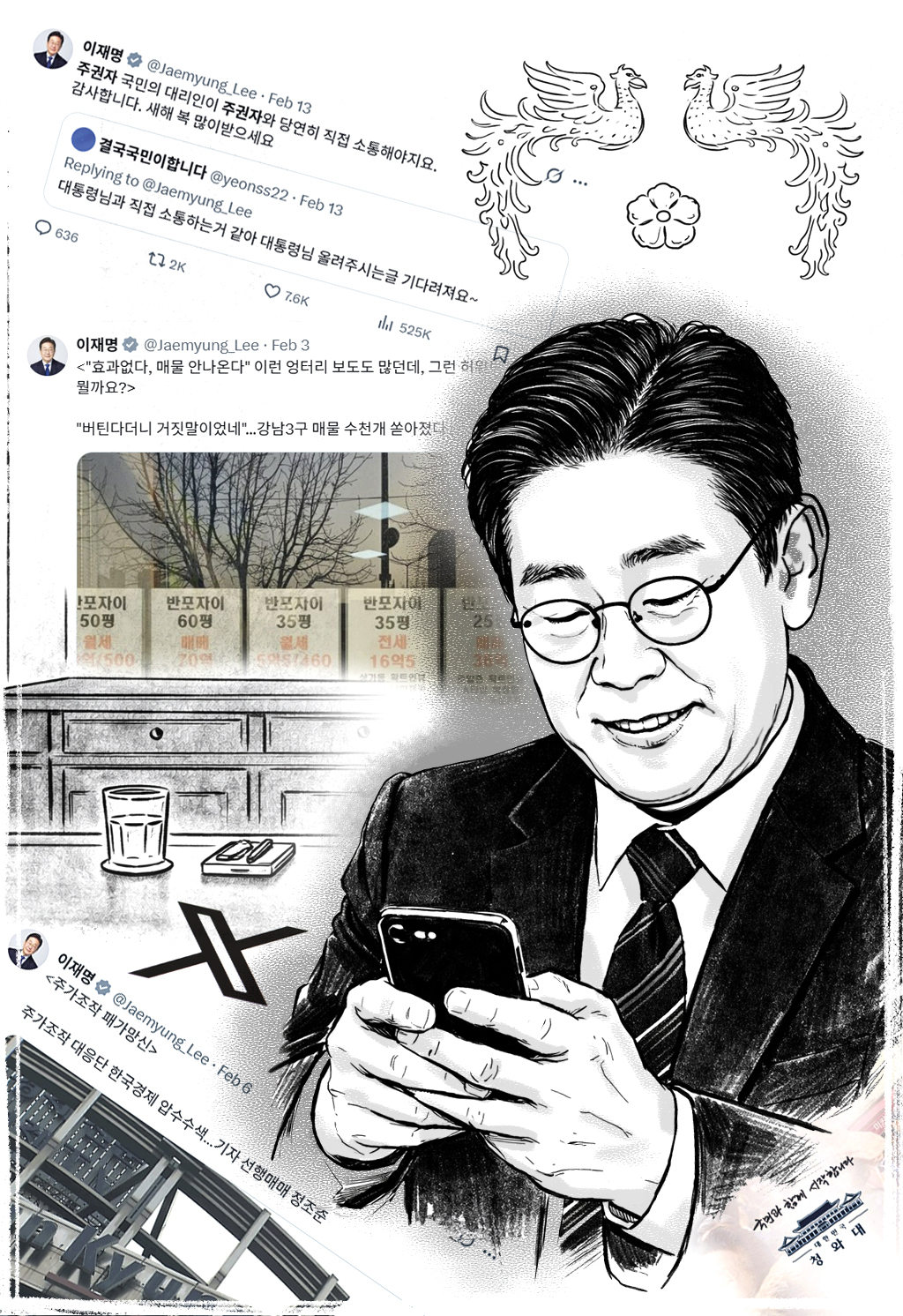
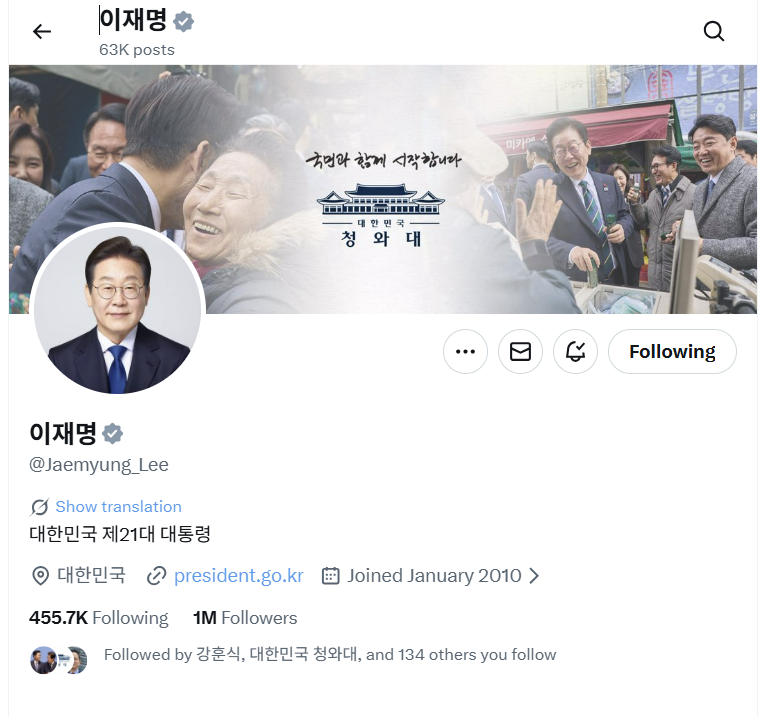
President Lee Jae Myung is governing the way he rose: by going straight to the public on social media.
What began in his days as Seongnam mayor in 2010 as a megaphone against what he called distorted media coverage — and the silence that often met his requests for corrections — has become a governing tool at Cheong Wa Dae.
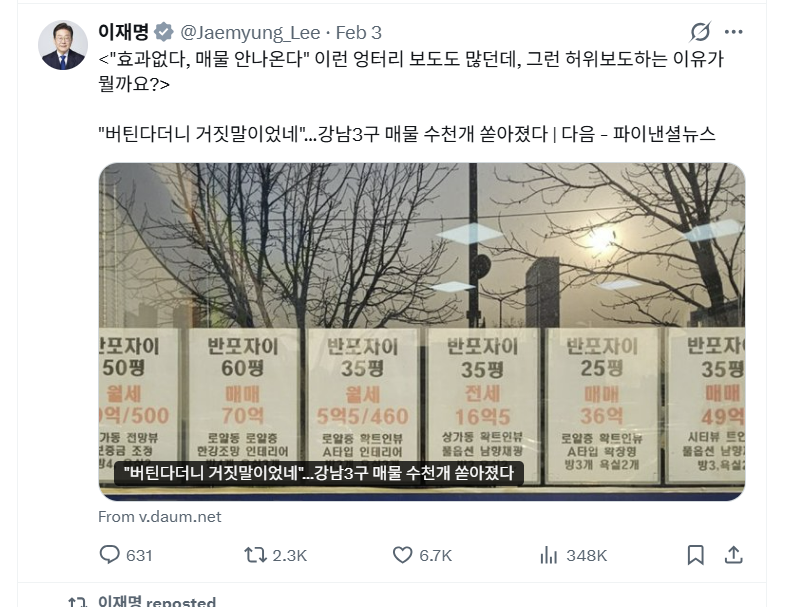
Since January, his use of the platform X has become more direct, using it to weigh in on, and at times to set the agenda on, key domestic issues, including efforts to stabilize housing prices.
The more proactive social media approach has raised hopes for a more responsive presidency — a break from what critics call South Korea’s long-standing “imperial presidency” — even as it has prompted concerns about backlash and whether it can be sustained over a five-year term.
Can the playbook that powered Lee’s rise work in the presidency?
Why Lee turned to social media
For Lee, social media has never been a mere outreach tool. Social media is the core instrument of governance and political ascent — a platform he credits with carrying him from Seongnam City Hall to the presidency and, in his telling, keeping him alive politically.
Lee has said he turned to social media as an alternative channel after concluding that rebuttals and explanations offered through traditional media were either ignored or distorted.
“So we thought, ‘We need our own independent speaker,’ and that is how it began as a counterattacking tool,” Lee said in a 2015 media interview. “Now, however, it is being used very usefully as a multipurpose tool — for rebuttal, for promotion, for political messaging, for receiving citizens’ suggestions and for communication.”
Lee added, “As for Twitter, I tend to use it quite a lot,” referring to the precursor to X.
Lee used social platforms to issue real-time administrative directives during his years as Seongnam mayor and later as Gyeonggi governor — a well-known example came in 2014, when he posted a photo of a damaged roadside ventilator cover and instructed officials to repair it.
That worldview remained intact on the presidential campaign trail.
“Would I have survived without this direct communication with the public through social media?” Lee asked during a live YouTube broadcast in May 2025, weeks before the early presidential election. “I would have been wiped out long ago by the media’s distorted and false information. I would have been ground to dust.”
Lee underscored, “This is my lifeline.”
How debate over Lee’s X presidency took off
Lee has used X earlier, more intensely and more strategically than most other politicians — even outpacing US President Donald Trump in treating it as a core political platform, though the opposition accuses him of borrowing from Trump’s playbook.
That pattern appeared to shift after his inauguration last year, when his activity tapered off and the account was used mainly to relay official schedules and summit diplomacy.
Since January, however, Lee has used X not just to comment on policy, but to drive the agenda — posting his views directly on issues such as the proposed sugar levy, housing prices and local government consolidation.
Real estate policy, in particular — including the Lee administration’s plan to reinstate heavier capital gains taxes on owners of multiple homes in principle starting May 10 — accounts for about a quarter of the roughly 130 posts he has made this year as of Thursday morning, excluding reposts.
The main opposition People Power Party has taken issue with Lee's often sharply worded use of X — as well as his real estate policies in general — and Lee has used the platform to hit back at the conservative opposition.
“Does the People Power Party believe owners of multiple homes should not be regulated — and that they should be protected while existing preferential treatment, including financial and tax benefits, is maintained?” Lee wrote in a Feb. 16 post amid public debates on social media with opposition leader Rep. Jang Dong-hyeok.
The shift is sharpening debate in Seoul over the benefits — a break from the country’s imperial presidency tradition and past leaders often criticized for being distant and uncommunicative — and the risks of a presidency that increasingly operates in real time online.
President Lee’s approval rating has climbed to its highest level, but public views are split on his communication style.
A Gallup Korea survey conducted Feb. 10-12 found 63 percent approving of Lee’s job performance, compared with 26 percent who disapproved. Among positive responses, “communication” was the fourth most-cited reason. Among negative responses, “authoritarian or unilateral leadership” also ranked fourth.
The upsides
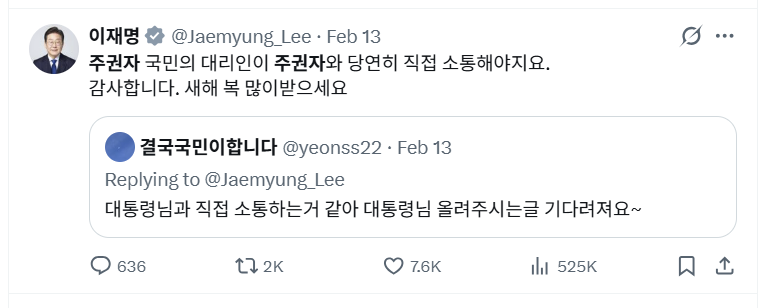
That split captures the double edge of Lee’s direct style — but it also helps explain why many observers see clear upsides in his frequent, unmediated use of X.
Choi Jin, director of the Institute for Presidential Leadership in Seoul, said the public mood currently favors such direct engagement.
“It is an era in which people want to communicate directly — not through indirect or roundabout channels,” Choi told The Korea Herald. “Because past presidents were widely seen as uncommunicative and authoritarian, there is real demand for President Lee’s more de-authoritarian, direct style.”
Lee Jae-mook, a professor of political science at Hankuk University of Foreign Studies, pointed out that the approach can enhance transparency from the public’s perspective.
“If the nation’s top official — who also heads the executive branch — personally explains policies on housing, the economy and other key issues in detail, it is the most transparent approach and helps satisfy the public’s right to know, producing clear positive effects.”
Lee Jun-han, a professor of political science and international studies at Incheon National University, said posts also serve as internal signals to the bureaucracy — a way of nudging ministries into action.
“These are not things you can just throw out unless the materials are fully prepared. And that preparation is not done by him alone — it would be moving up through the stages from the government ministries,” the professor said. “In that sense, it may also have the effect of making the civil service bureaucracy work, align around policy direction, and stay on edge.”
The professor said the messaging helps shape political optics, casting Lee’s agenda as forward-looking and policy-centered amid partisan gridlock that has slowed legislation on improving livelihoods.
“The advantage is that it reflects an atmosphere of confidence, and if current party politics at the National Assembly are conflict-oriented and past-oriented, the president’s agenda is future-oriented and strongly policy-driven,” the professor said.
For a president who has repeatedly emphasized the need to accelerate legislative and administrative processes, social media has become an instrument of pressure as well as communication.
Lee Kyu-youn, senior presidential secretary for public relations and communications, acknowledged that the president’s frequent X posts partly reflect frustration with bureaucratic pace.
“In order to keep doing things that are visible — things the public can experience and feel firsthand — the administration needs to move with speed,” the secretary said in a Feb. 20 radio interview with Catholic Peace Broadcasting Corp. “So it seems (President Lee) feels the pace is not coming along as well as he expects. So I think there is also the effect of strong prodding in those areas.”
The downsides
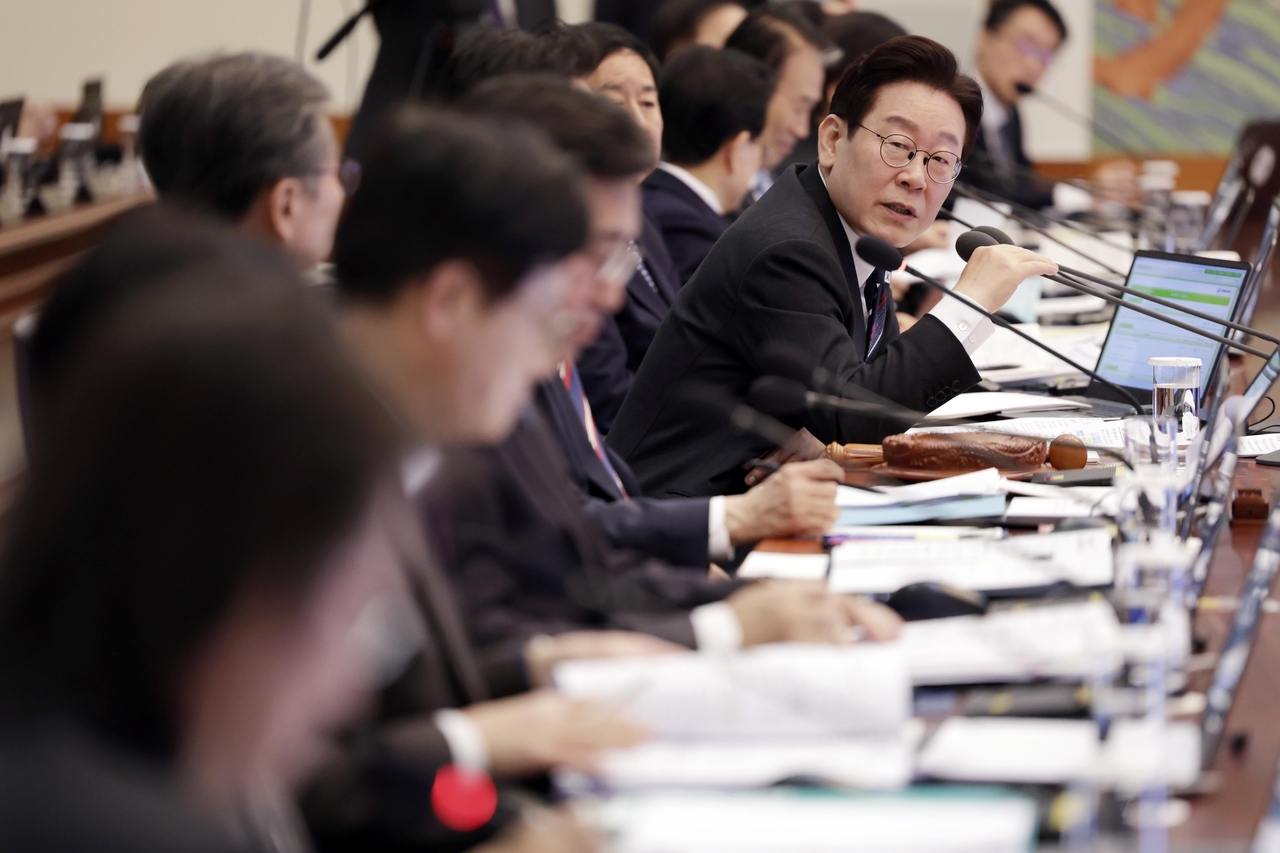
Yet the very speed and directness that make Lee’s approach effective also underpin the biggest concerns.
The presidential use of social media without sufficient prior coordination with ministries and aides could erode policy credibility and trigger confusion in the market and broader society — risks observers say should be carefully avoided.
“If the president actively promotes on social media outcomes that have been sufficiently coordinated, there should be no issue,” Lee Jae-mook said. “But if the official policy track and what the president posts online end up pulling in different directions, that could become problematic. The key is simply to ensure that this part is well coordinated.”
Lee Jun-han pointed out “the problem is that if this is not carefully refined, it could end in failure,” noting that some initiatives require legislation or budget allocations — meaning X posts should come only after prior internal coordination in such cases.
“It could also tilt toward populist, popularity-seeking moves,” the professor said. “And because it can set up a confrontational frame between the president and the opposition, the focus may shift away from the public interest and instead turn into a political fight. That is the downside as I see it.”
Choi Jin echoed the concern, pointing out that direct presidential messaging on major national agendas could rapidly politicize policy debates.
“When weighty policies prepared over a long period are communicated instantaneously through social media, people tend to respond emotionally rather than make cool-headed judgments.”
In addition, Choi pointed out that heavy use of social media could lead to executive bodies and aides relying too much on the president's words instead of taking initiative, gradually eroding their functions.
That dynamic, analysts say, leaves Lee’s X presidency at a crossroads: How to keep the gains of governing in public while building guardrails against its risks.
“If we want to preserve the strengths of social media politics and sustain its effectiveness over time, we have to start managing and adjusting those downsides and risks from now on," Choi said, saying that the risks need to be handled now if the benefits are to be maximized.
Fine-tuning presidential social media strategy
Sharing that view, Cho Jin-man, a professor of political science and diplomacy at Duksung Women’s University, explained that the impact of Lee's social media posts could lose their sharpness later in his term.
Pointing out that presidents' approval ratings generally decline over the course of their time in office, Cho said the effectiveness of social media as a tool to push government bodies into action could decrease over time.
His biggest concern, Cho added, lies in the side effects of what political scientists call “going public” — a strategy in which presidents appeal directly to citizens rather than working through institutional channels.
“Presidents can pursue a going-public strategy by mobilizing public opinion. But if that happens too frequently, it can undermine institutional politics and ultimately lead to outcomes that are not desirable for a presidential system. They won’t proactively exercise delegated authority and take action,” Cho said. “As that pattern sets in, the president’s messages may no longer be transmitted as effectively as they were early in the term.”
Cho acknowledged that the incentives for politicians to leverage social media are inherently strong — particularly for Lee, whose rise was aided by his adept use of such platforms. However, Cho stressed that it remained unclear whether the social media formula that proved effective in Lee’s earlier roles — including as Seongnam mayor — will translate seamlessly to the presidency.
The issue is not whether the president should abandon social media, but how its use should evolve as the administration matures.
“Once the presidency moves beyond the early phase, social media messages should be more deliberated internally and presented in a more refined form,” Cho said.
Some analysts argue the public should also update its expectations.
“It seems many people automatically think, ‘If someone has become president, shouldn’t he be more reserved?’ when they see the president’s frequent X posts,” political commentator Lee Kang-yun said, calling the perception the product of “long-standing habits.”
“We are living through a time when the shift in communication methods symbolized by social media is enormous. If the tools have changed, the way we think about communication should change as well.”
dagyumji@heraldcorp.com
![[Graphic News] Korea’s marine waste up 20% in 4 years](https://wimg.heraldcorp.com/news/cms/2026/10/27/news-p.v1.20261027.091c35e4ae1a4bb2a598a9138e673a7b_T1.gif?type=h&h=800)