France ranks as Korea’s third-largest foreign investor
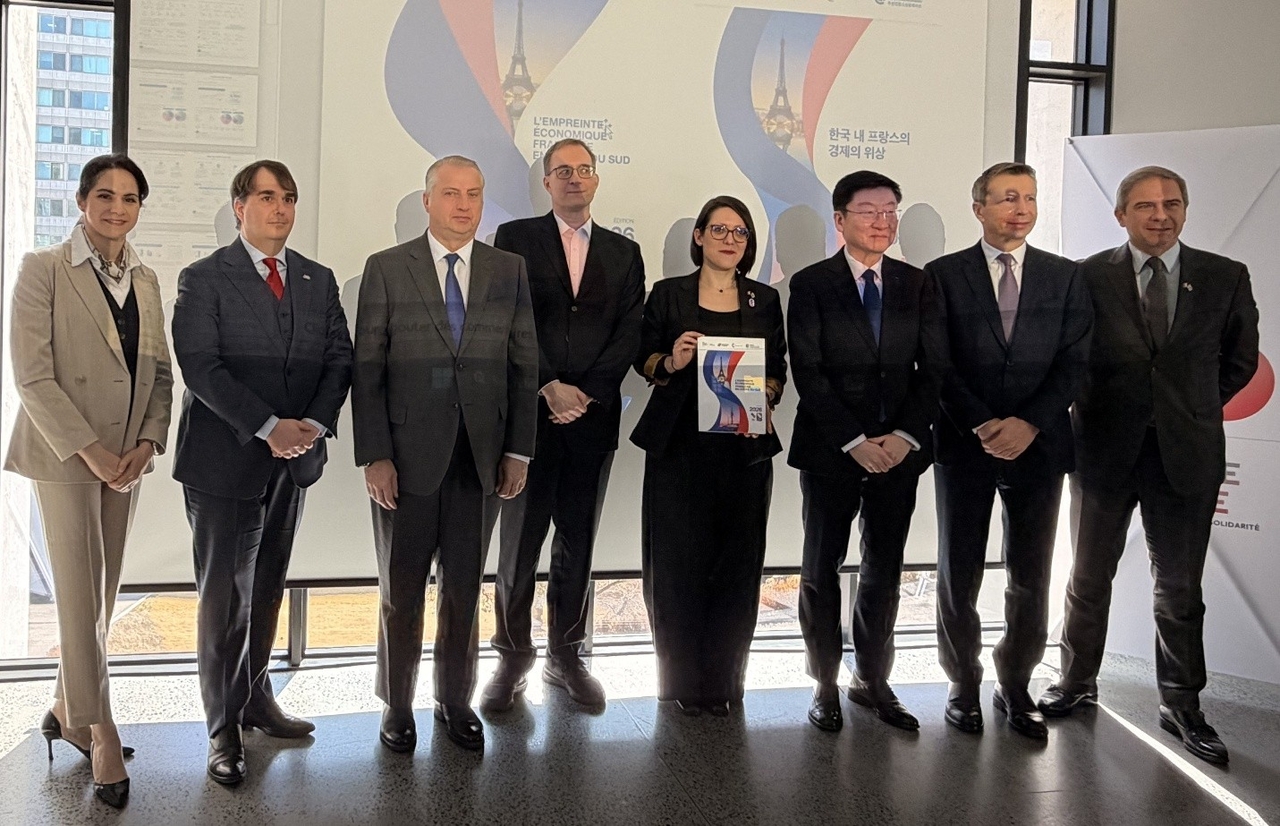
French companies employ about 33,000 people in South Korea, underscoring France’s deep footprint in the local economy, according to a report released Wednesday by the French-Korea Chamber of Commerce and Industry.
The report found that roughly 38 percent of those employees work in the luxury and cosmetics sector, highlighting the dominance of French brands in Korea’s high-end consumer market.
As of November last year, around 220 French companies operated local offices in Korea. Of the 46 French firms listed in the Forbes’ Global 2,000 ranking of the world’s largest public companies, about 80 percent have entered the Korean market.
LVMH, which owns brands such as Christian Dior and Louis Vuitton, is the largest French employer in Korea, with about 4,000 direct and indirect workers. Automotive parts supplier Valeo follows with around 3,500 employees, while carmaker Renault employs some 3,200.
Citing data from French Customs, the report said 6,355 French companies exported to Korea as of 2024. Bilateral trade reached 13.7 billion euros ($16.2 billion), with France accounting for 6.9 billion euros in exports. France is Korea’s largest supplier of cosmetics, perfume and wine.
However, officials noted that official trade figures may understate France’s real economic contribution.
“When measured in value-added terms, a significant share of France’s exports to Korea transits through third countries,” said Julien Herveau, vice chair of the FKCCI, at a press conference held at the French Embassy in Seoul.
Herveau said the actual value of French exports to Korea could be more than 50 percent higher than reported, as 70 percent of shipments consist of equipment and intermediate goods used in Korean manufacturing — placing French firms at the core of Korea’s strategic industrial value chains.
According to data from the Korea International Trade Association, France ranks as the third-largest foreign investor in Korea.
The FKCCI also addressed concerns surrounding Korea’s “Yellow Envelope” bill, an amendment to labor law aimed at strengthening union rights and expanding worker protections.
“What is essential now is to establish a clearly defined framework, provide clarification and ensure a smooth transition to avoid uncertainty for investors,” FKCCI Chair David-Pierre Jalicon said.
The chamber said French businesses have formed a task force with Korean authorities to discuss the potential impact of the revised law, which is set to take effect on March 10.
hwkan@heraldcorp.com