Privacy Display delivers immediate impact, while Exynos, price justify scrutiny
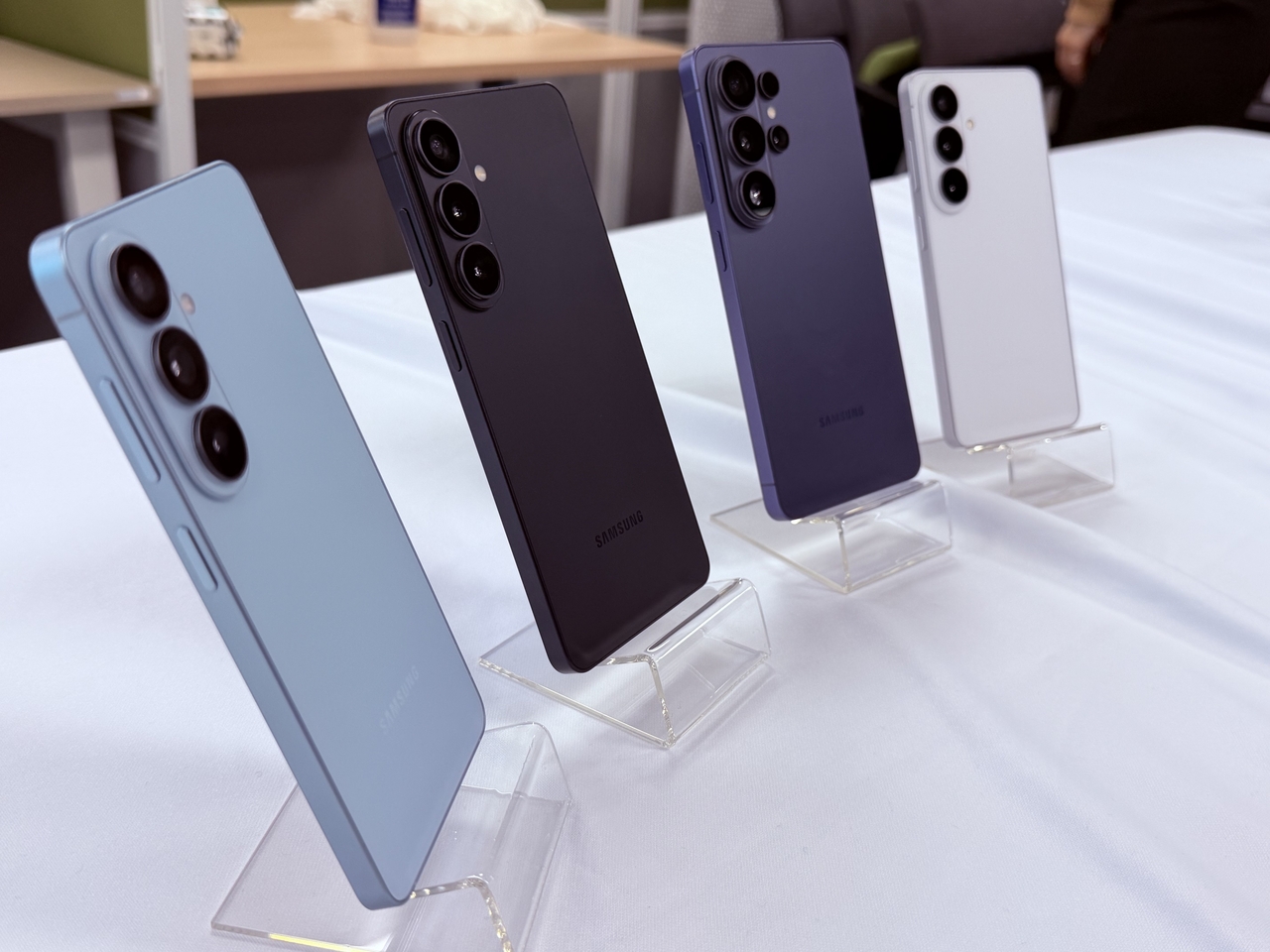
Samsung's Galaxy S26 Ultra has a screen that goes dark when someone tries to peek at it. It sounds like a gimmick. It isn't.
The Korea Herald had a chance to test the Galaxy S26 series at Samsung's Seoul press room Thursday, hours after the lineup's global debut in San Francisco. About 30 minutes of hands-on time followed a 40-minute product briefing, which was enough to put some claims to the test and not nearly enough for others.
The Ultra screen that knows when to hide
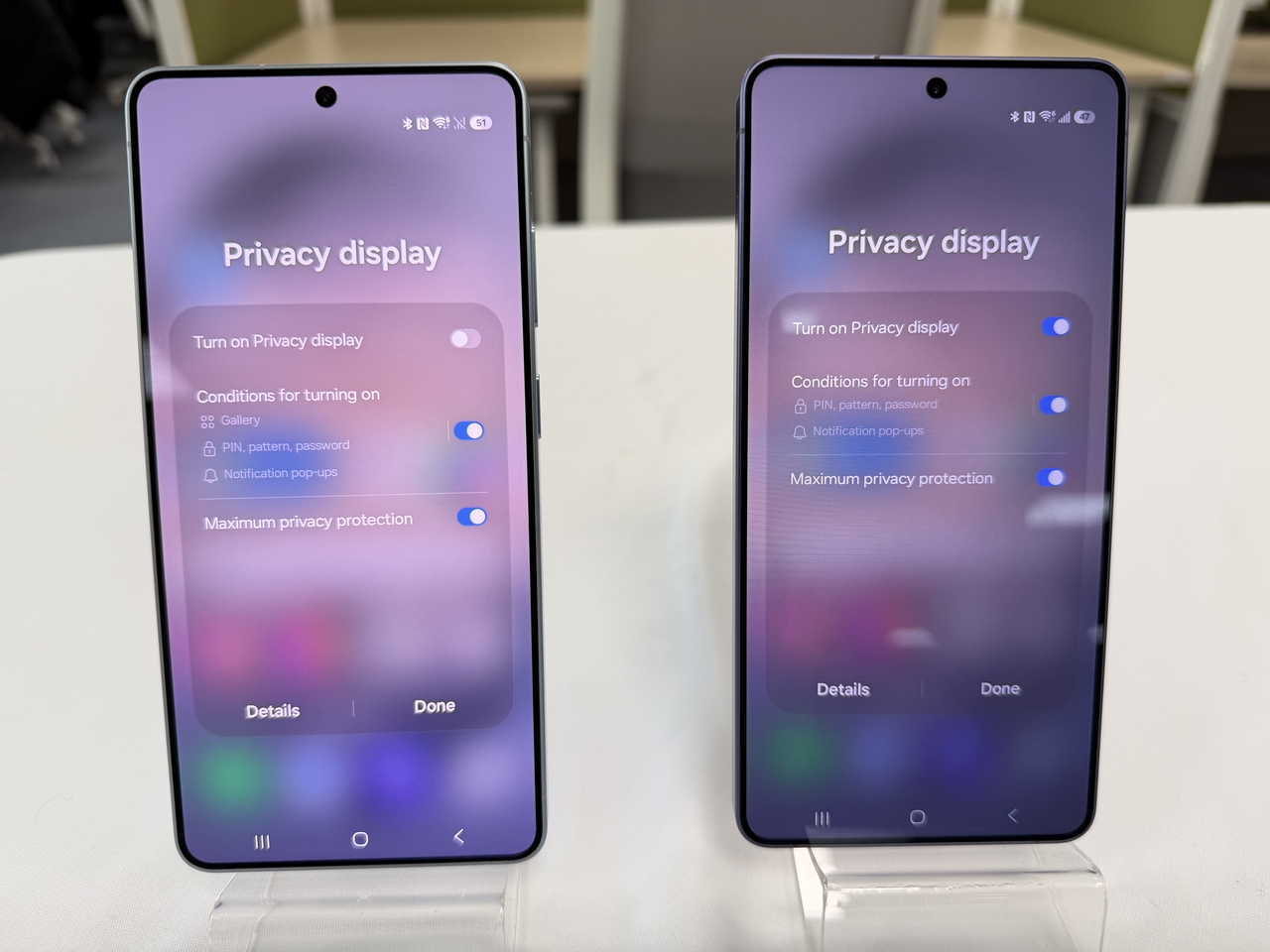
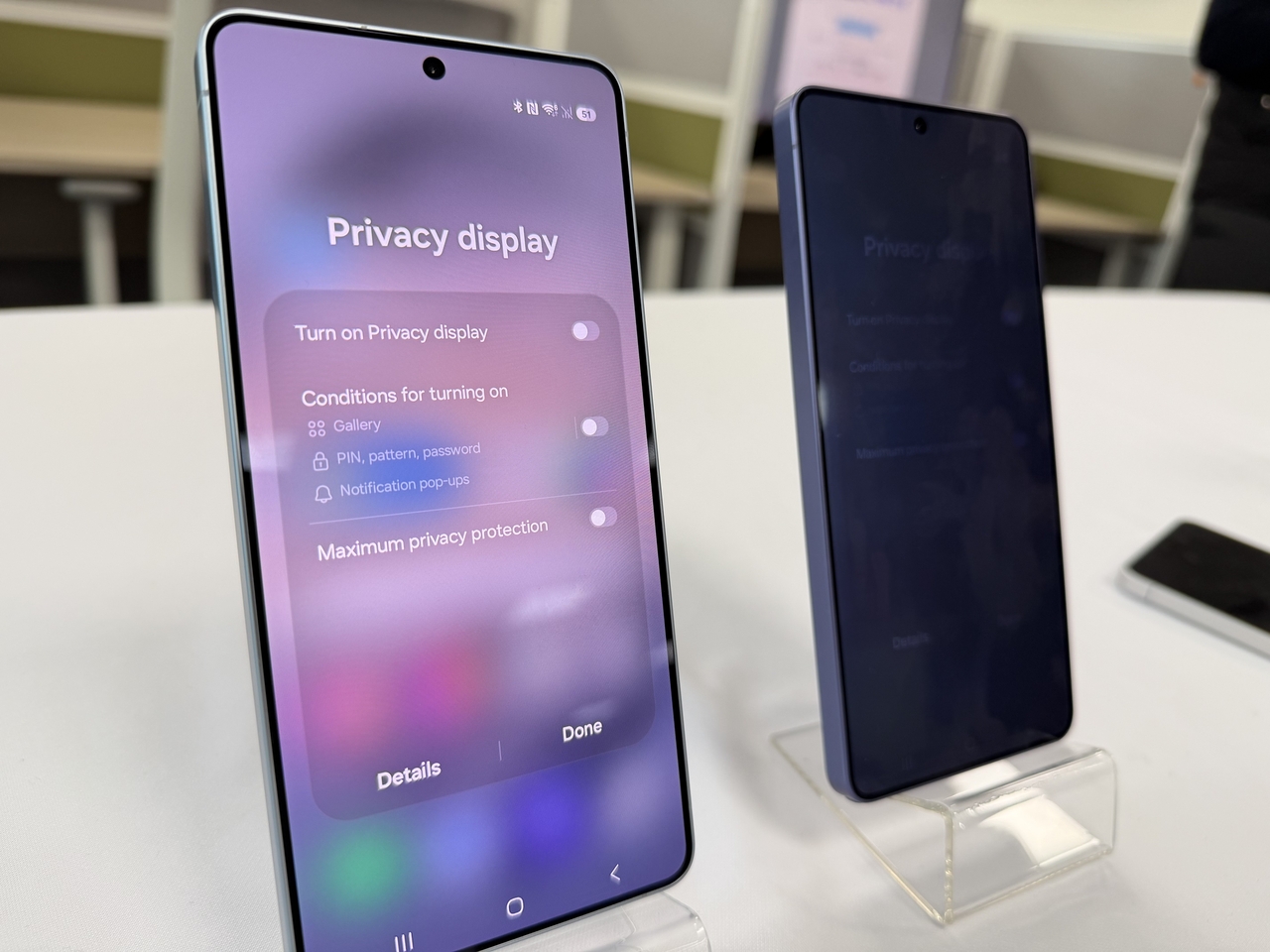
The S26 Ultra's Privacy Display uses two types of OLED pixels: wide-firing ones visible from any angle, and narrow ones that focus light straight ahead. Activate the feature, and the wide pixels dim. From directly in front, the screen looks largely normal — from the side, near-black.
This is not a privacy film that degrades the image and only blocks visibility from the sides. Samsung's version operates at the individual-pixel level, blocks all four directions, and, most critically, can be applied selectively to certain apps or parts of the screen.
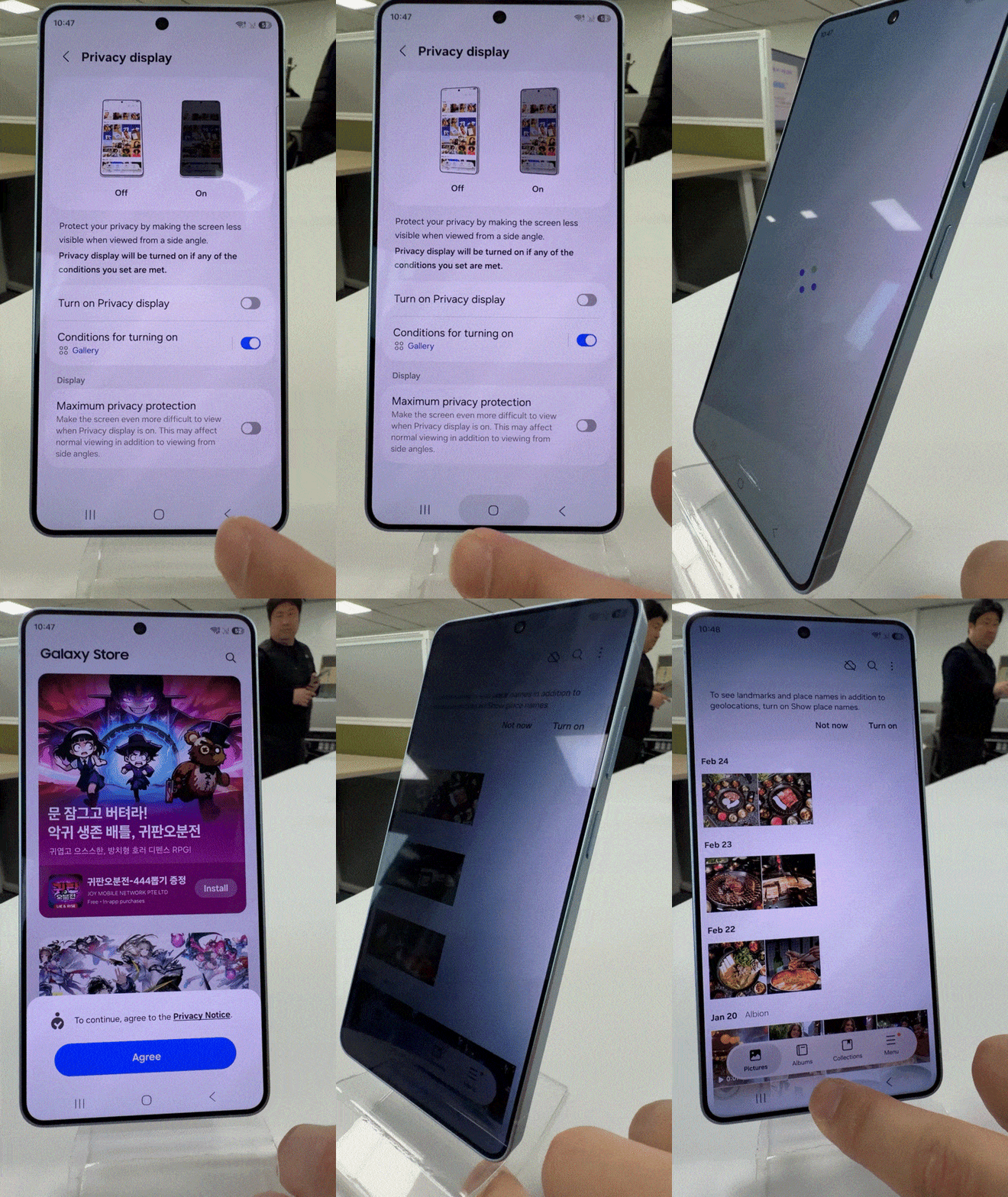
For example, setting it to activate only for the Gallery app took seconds and worked as promised. Open the gallery, screen dims for anyone beside you. Exit, back to normal.
It can also kick in only when entering a PIN or only for notification pop-ups. The brightness reduction from the front was barely noticeable — no muddiness, no grayish tint.
Anyone who has ever angled their phone away on a crowded subway or cupped the screen while typing a banking password will understand the appeal.
The Ultra's other changes: meaningful but narrow
Beyond Privacy Display, the most tangible hardware upgrade in the Ultra is in the camera optics. The 200-megapixel main lens widens to f/1.4 from f/1.7, capturing 47 percent more light, while the 50-megapixel 5x telephoto opens to f/2.9 from f/3.4 for a 37 percent gain. Both should make a visible difference in low-light shooting.
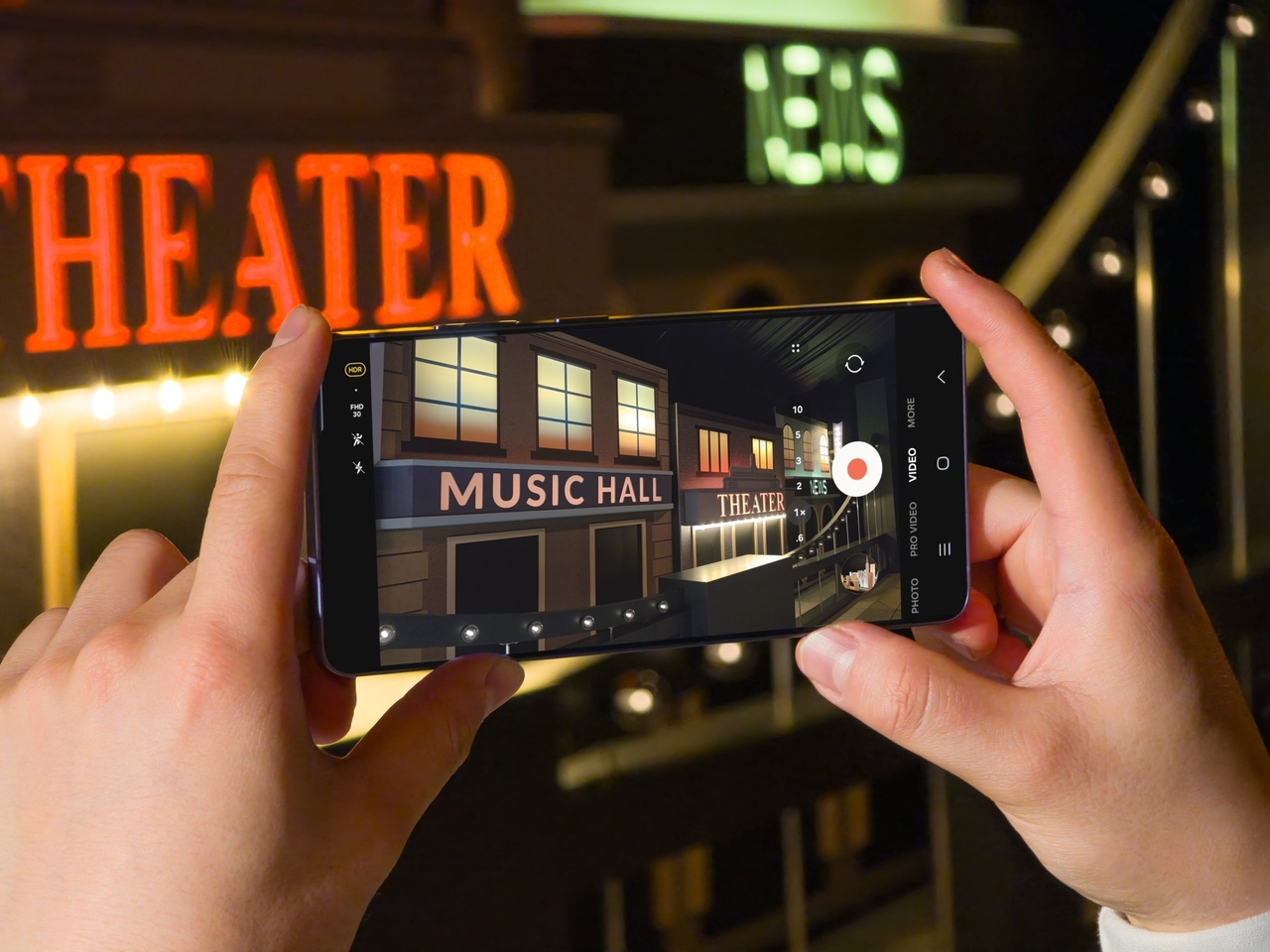
Beyond those two lenses, however, most camera improvements Samsung demonstrated at the briefing, including enhanced Nightography video and upgraded front-camera processing, rely on software and computational gains rather than new optics.
The Ultra also charges faster (75 percent in 30 minutes), sheds some weight (214 grams, down from 218) and slims to 7.9mm from 8.2mm in a new Armor Aluminum frame.
What the briefing room can't tell you
Samsung pitched the S26 as an "agentic AI phone," but features like Now Nudge and Gemini's automated taxi-booking only ran on scripted demos, not real accounts, making them difficult to evaluate properly.
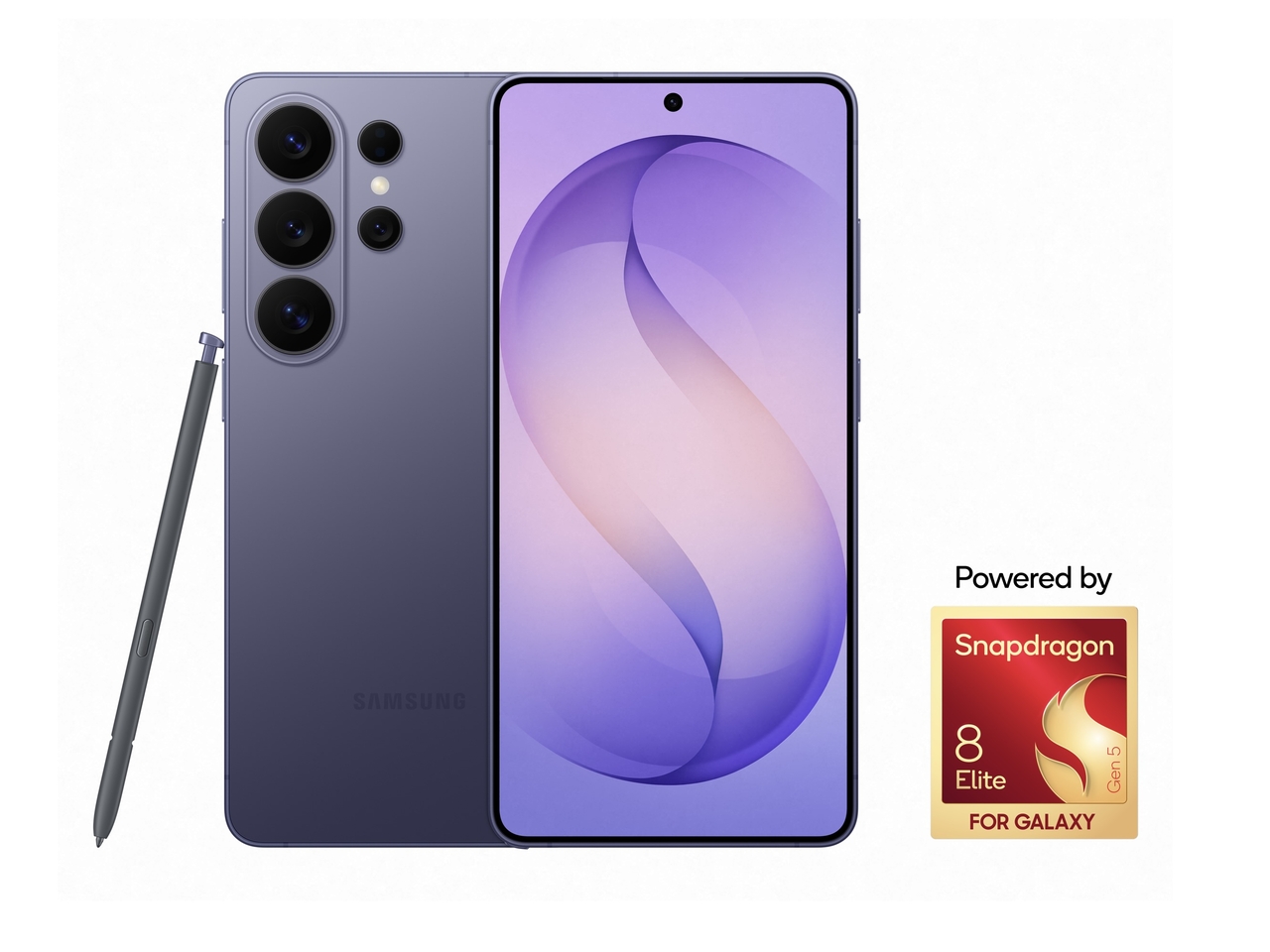
Then there's the Exynos question. The standard S26 and S26+ ship with Samsung's in-house Exynos 2600 in Korea, Europe and other international markets, while the Ultra runs Qualcomm's Snapdragon 8 Elite Gen 5 for Galaxy worldwide. Both were in the briefing room, but 30 minutes in a controlled setting reveals nothing about sustained performance or heat.
Prerelease benchmarks suggest the Exynos trails the Snapdragon chip by about 15 percent in peak single-core speed while nearly matching multicore results. Samsung had framed the 2nm chip as built for efficiency and thermal stability. It is a reasonable pitch, but one that only weeks of real use can prove.
The non-Ultra models share the S26 lineup's AI and software improvements, but they receive no camera hardware changes from the S25 series. The S26 also gets a modest battery bump to 4,300mAh from 4,000mAh and a slightly larger 6.3-inch display, up from 6.2 inches. Both now start at 256GB storage, with Samsung dropping the 128GB tier entirely.
The bottom line
All three S26 models cost 99,000 won ($70) more than their predecessors in South Korea. In the US, the base configuration of Ultra holds at $1,299.99, but the base S26+ rises $100 to $1,099.99 and the base S26 increases $40 to $899.99 for the 256GB model.
For the Ultra, Privacy Display alone justifies the trip to the store. It is a refreshing hardware innovation that impresses within seconds, with no learning curve and no personalization period required.
The non-Ultra models are largely software updates at higher prices, with no new camera hardware, no Privacy Display, and only cosmetic tweaks to match the Ultra's rounder aesthetic. For Korean buyers, the bigger question is what's inside: the Exynos 2600, Samsung's first 2nm chip and its return to the flagship lineup after a three-year absence. Whether it matches the Snapdragon experience will have to wait for the March 11 launch.
Preorders open domestically on Feb. 27. In the US, all three models are available for preorder today at Samsung.com, Amazon, Best Buy and other major carriers.
mjh@heraldcorp.com