First price hike in three years as Samsung doubles down on agentic AI and built-in privacy
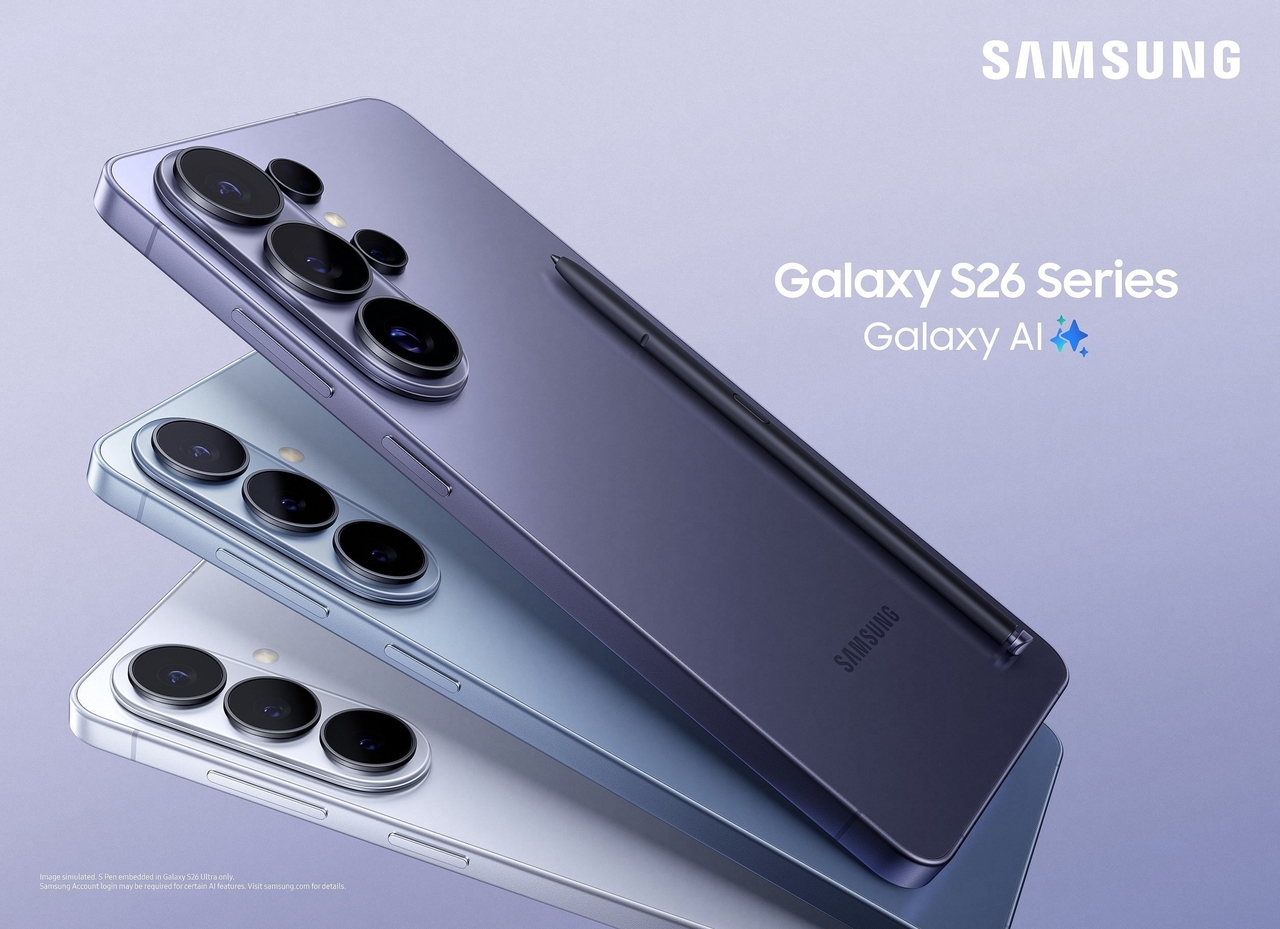
Samsung Electronics on Thursday unveiled the Galaxy S26 series, raising prices for the first time in three years as it seeks to draw customers with more autonomous, “agentic” artificial intelligence in a maturing smartphone market.
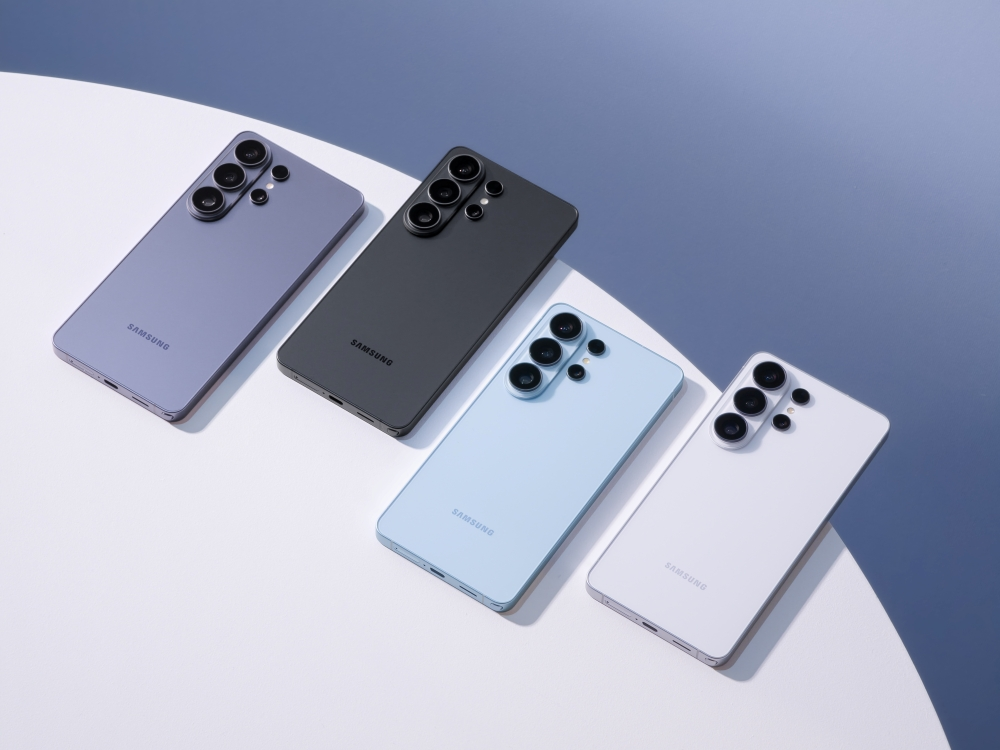
At its Galaxy Unpacked 2026 event in San Francisco, the company introduced the Galaxy S26, S26+ and S26 Ultra, branding them as its third-generation AI smartphones. The launch comes as global handset growth has plateaued and manufacturers face mounting cost pressure from surging memory and processor prices driven by AI data center demand.
In South Korea, prices for the 256GB base models have risen by 99,000 won ($70) across all three variants compared with the Galaxy S25 series. The Galaxy S26 Ultra now starts at 1,797,400 won, the S26+ at 1,452,000 won and the standard S26 at 1,254,000 won.
In the US, pricing increases are selective but significant. The Galaxy S26 starts at $899.99 for 256GB, about $40 more than last year’s comparable model. The S26+ jumps $100 to $1,099.99, with its 512GB version rising to $1,299.99. The S26 Ultra holds steady at $1,299.99 for 256GB, but its 512GB and 1TB models climb by $80 and $140, respectively.
“Samsung has been advancing the mobile experience so more people can feel the real value of AI in their daily lives,” said Roh Tae-moon, Samsung Electronics’ co-CEO and head of the Device eXperience division. “With the Galaxy S26 series, built on powerful hardware, we’re making AI intuitive and easy for anyone to use.”
Betting on AI and privacy to justify the jump
Where the Galaxy S24 introduced on-device AI tools and the S25 broadened their use, the S26 centers on AI systems designed to understand context and take action with minimal prompting.
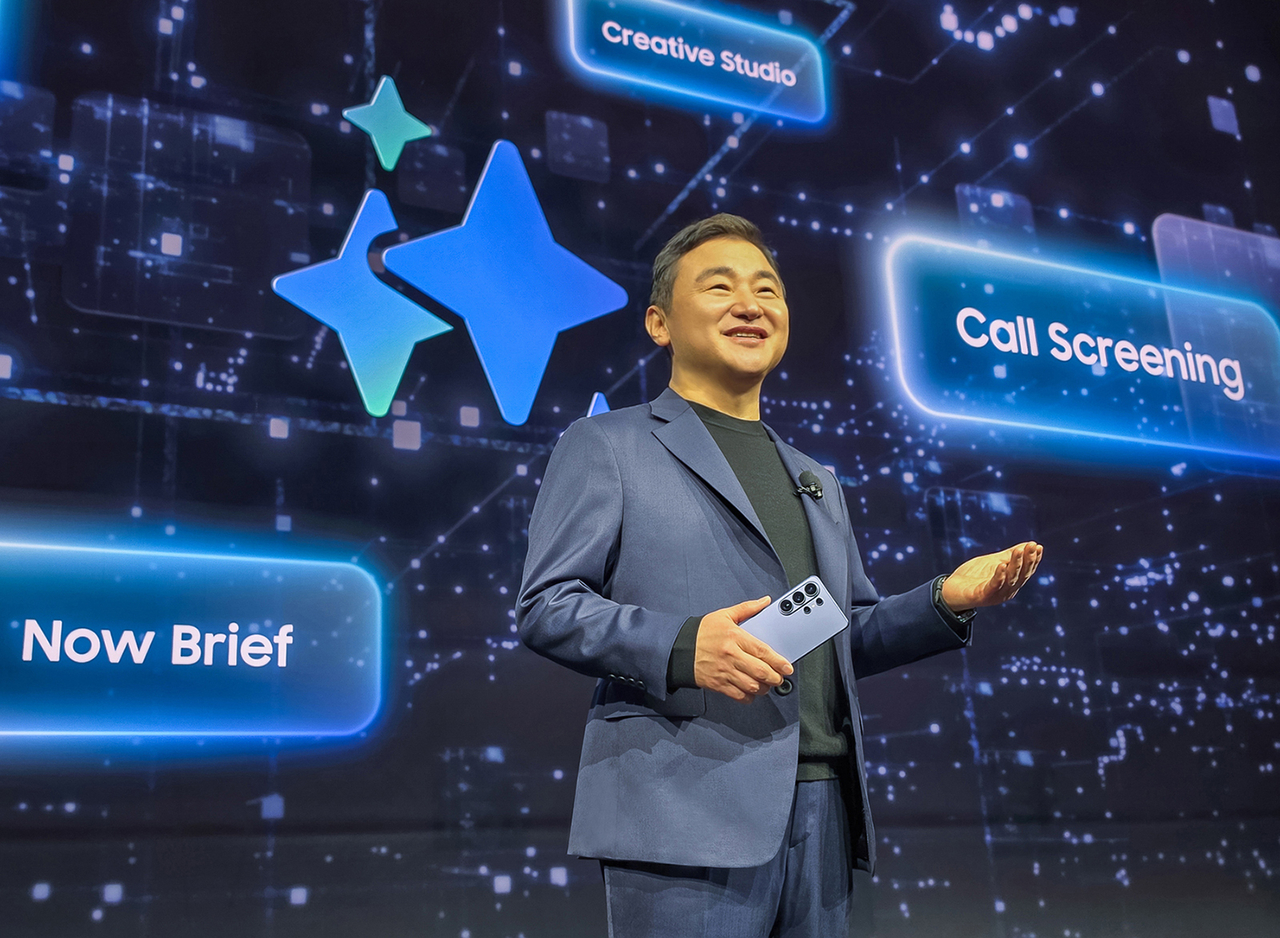
Samsung framed the S26 as an “Agentic AI Phone,” capable of anticipating user intent and executing multi-step tasks across apps. Users can choose from multiple AI agents, including Samsung’s Bixby, Google’s Gemini and Perplexity, and activate them through a side button or voice command. In Samsung’s example, asking Gemini to book a taxi allows the AI to complete the reservation, with the user confirming at the final step.
In one demonstration, Gemini analyzed a family group chat about ordering pizza, selected items from a delivery app and prepared the order for final confirmation. “The industry calls it agentic AI. I just call it getting stuff done,” said Sameer Samat, president of the Android ecosystem at Google, who joined the stage to highlight deeper collaboration between Samsung and Android.
The new “Now Nudge” feature surfaces context-based suggestions in real time, such as recommending photos to share in a chat or alerting users to scheduling conflicts. An upgraded “Now Brief” analyzes usage patterns to generate personalized summaries, while enhanced call screening provides real-time transcription and AI summaries.
Samsung also expanded its AI search and editing tools. The updated Circle to Search can identify multiple objects at once, enabling users to find and shop for entire outfits in a single gesture. In the camera app, upgraded Photo Assist allows natural language prompts to modify images, such as adding a missing subject or adjusting clothing. A new AI-powered document scanner removes fingers or wrinkles from scanned pages and automatically compiles them into a single PDF.
Camera capabilities remain a key differentiator. The S26 Ultra features a 200-megapixel wide camera and a 50-megapixel telephoto lens with a wider aperture for improved low-light photography.
Privacy is also a bigger focus as AI features increasingly handle personal data. The S26 Ultra’s built-in “Privacy Display” narrows the screen’s viewing angle so it stays clear to the user but appears darkened from the side, helping prevent shoulder surfing in public places. Unlike attachable privacy films, it is integrated into the display itself and can automatically activate when entering passwords, making payments or opening selected apps, with the option to hide only notification pop-ups rather than the entire screen.
Won-Joon Choi, Samsung’s chief operating officer, emphasized that AI-driven services must be backed by strong security safeguards, noting that sensitive data is protected by the company’s hardware-based security vault and controlled access architecture.
Samsung said the S26 series will receive seven years of security updates.
Dual-chip strategy returns
The Galaxy S26 series also brings back Samsung’s in-house Exynos processor to its flagship lineup after a three-year absence. Samsung had relied exclusively on Qualcomm chips for the Galaxy S23 through S25 generations following performance and production yield issues with earlier Exynos models.
With the S26, the standard Galaxy S26 and S26+ will be powered by the new Exynos 2600 in select markets, including South Korea. The chip is manufactured using Samsung’s 2-nanometer gate-all-around process, a next-generation technology designed to improve power efficiency and thermal management.
The flagship S26 Ultra, however, will use Qualcomm’s Snapdragon 8 Elite Gen 5 for Galaxy in all markets. According to Samsung, the processor delivers a 39 percent boost in neural processing unit performance, along with CPU and GPU gains of up to 19 percent and 24 percent, respectively, over its predecessor.
A redesigned vapor chamber and enhanced cooling system are intended to maintain stable performance during AI-intensive tasks and gaming, while the Ultra model supports up to 31 hours of video playback and faster charging speeds up to 75 percent in 30 minutes.
Domestic preorders will run from Feb. 27 to March 5, with global sales beginning March 11 in about 120 countries, including the United States, the United Kingdom and India.
mjh@heraldcorp.com