City rolls out training academies, creator clusters and open-licensing IP policies to build a full content ecosystem

Located just off the coast in Suncheon, South Jeolla Province, the Suncheonman National Garden has established itself as one of the most loved tourist sites in the country.
Rebranding the city is a tall order, but Suncheon succeeded with the then-relatively novel concept of a garden expo in 2013. It garnered international fame by hosting the Suncheonman International Garden Expo that year, and again in 2023.
The Suncheonman National Garden attracts over 4 million visitors each year and welcomed 70,000 tourists in just five days around this year's Lunar New Year holidays.
Suncheon's next goal is to expand in a wide range of cultural industries, such as webtoons, animation and festivals, providing workspaces for creators while fostering the next generation through subsidized education in the region.
According to municipal officials, sales in the old downtown area tripled during the garden expo period, and surrounding infrastructure such as accommodations in Echo Village and the Garden Workation program — combining workspace and lodging inside the garden — saw usage surge.
With its reputation as an eco-city firmly in place, Suncheon is now pushing to establish a new growth engine in culture and entertainment.
"The webtoon and animation industry is a ‘funnel-less, eco-friendly’ sector — one that doesn't need factories and one that people can easily access in their everyday lives. Its scalability is limitless, and it is a future-oriented industry that can create high-value jobs. This is why Suncheon set its eyes on it," city officials said.
Animation, webtoon cluster
A key part of Suncheon's new push is creating an environment for the content industry, both in the Suncheonman National Garden and in the city center.
The Global Webtoon Hub Center, located in Jangcheon-dong, currently hosts webtoon companies such as Kenaz and Ono Korea, while Locus Animation has set up operations at the Suncheon International Wetland Center inside the National Garden.
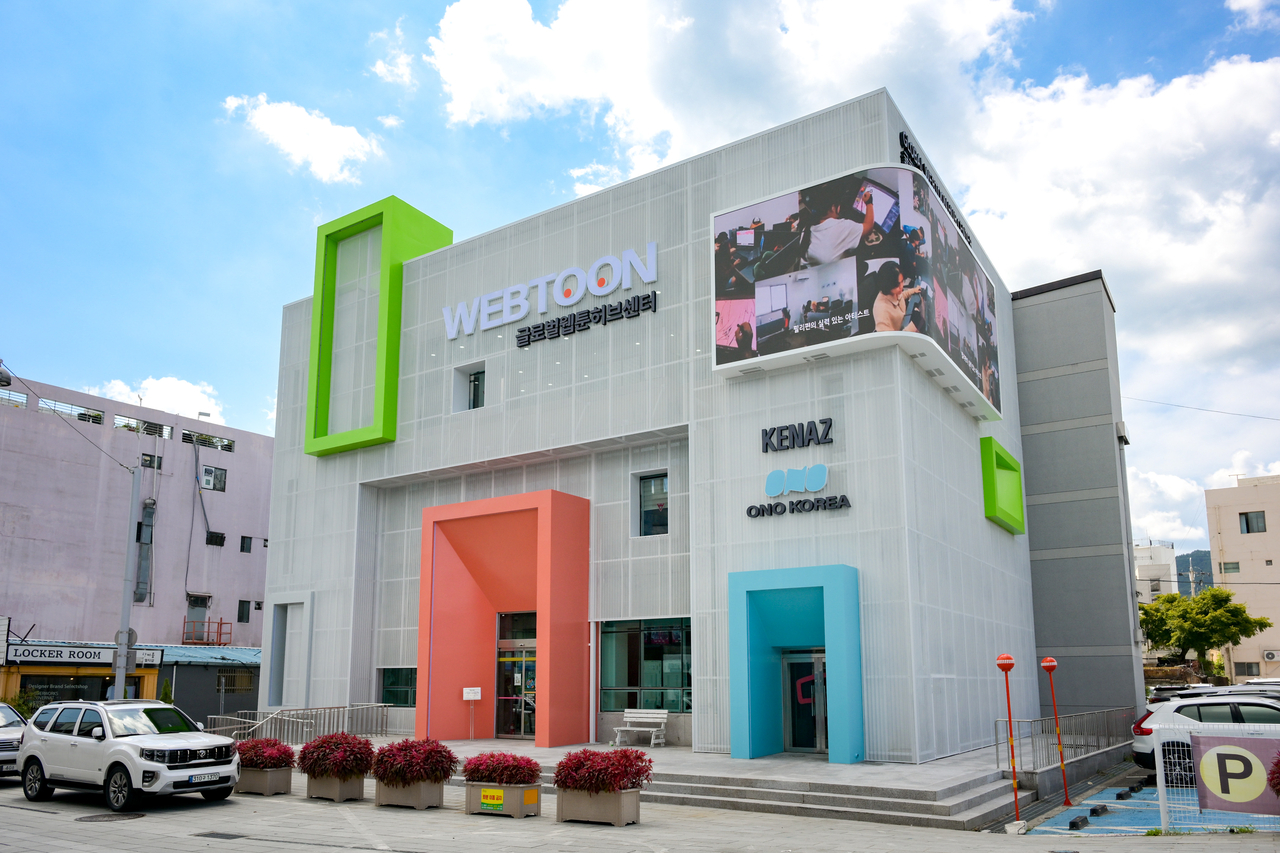
Over 30 companies in the webtoon and animation industry have relocated to the city, particularly to the old downtown area.
According to the city, the entertainment district in the old downtown has been repurposed as offices, workstations and studios for young content creators. This was carried out through cooperation between the city and building owners, who joined efforts to revitalize the area.
Suncheon, a city of 275,000 residents, has been recognized for its efforts to breathe new life into the area. It ranked No. 1 among 120 nonmetropolitan cities and regions across the country in an assessment of the recovery capacity of local regions by the Hankyoreh Economic and Social Research Institute last year.
Wantsland, a production base in the Jungang-dong area, is another hub for content creators in animation, webtoons and publishing.
Public involvement and IP industry
The city is also making efforts to involve the public more in its content projects.
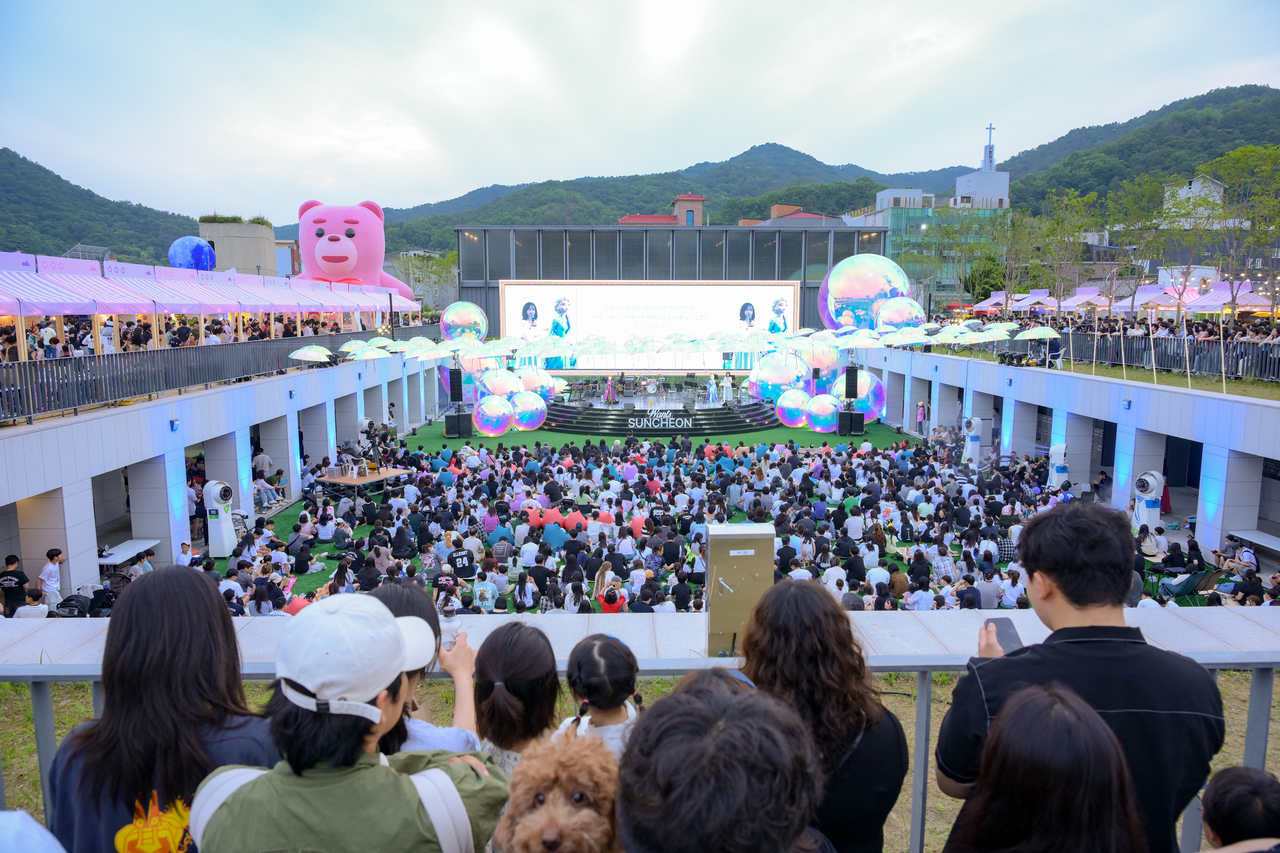
The "Wants Suncheon" festival last June was held at the old downtown street of Simin-ro and the Suncheon South Gate Site Square, a culture complex with a historical background as a stronghold against invaders during the Joseon era (1392-1910).
The two-day festival heralded the city's resolve to become a content-oriented city with night markets and various events, such as one featuring the city mascots Rumi and Ttungi — characters based on the indigenous hooded crane and mudskipper.
The two mascots are among the driving forces of Suncheon’s intellectual property industry, with their character store opening in December and attracting 500 visitors during the Lunar New Year holiday. The city is encouraging the private sector to participate in businesses using the characters, with an open-licensing policy to lower barriers to IP usage.
Suncheon has also signed a memorandum of understanding in May with Pororo the Little Penguin creator Iconix, which also produced Tayo the Little Bus.
The city ran a monthlong pop-up store and exhibitions featuring the character Loopy — from the Pororo series — with the character becoming a key attraction inside the Suncheonman National Garden from August to September.
This helped draw 21,000 visitors to the garden during the National Liberation Day weekend in August, double the figure from the previous year, and led to an early sellout of related merchandise.
"Such cooperation allowed the city to recognize the value of the culture and IP industry, along with the potential of its characters Rumi and Ttungi," the city said.
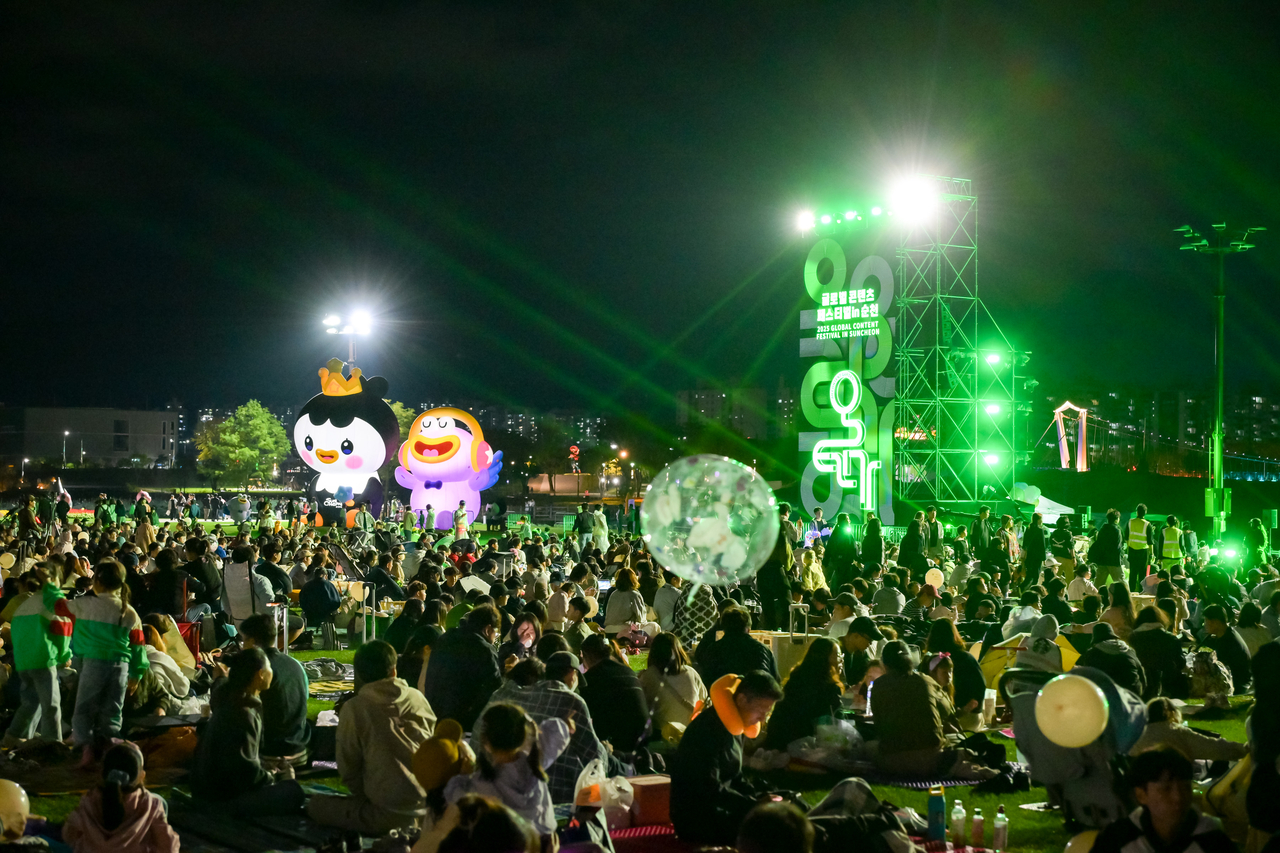
The All Content Garden in October featured not only popular characters, but also events spanning animation, music, webtoons and artificial intelligence. An airshow featuring 3,000 drones lit up the second edition of the annual festival, with 70 businesses from Korea and abroad participating in exhibitions and consultations.

Fostering up-and-coming content creators
Suncheon is planning to establish an animation and webtoon academy for the southern region, set for completion by 2028 with a budget of 30 billion won ($20.8 million). This, the city said, is to train specialists for the firms that have settled in Suncheon.
The city expects the project to foster young talent in the southern region and help attract an industry that is currently concentrated largely in the Greater Seoul area.
The academy will offer a comprehensive training program, including long-term residencies, participation in projects and internships with companies. It will also provide links to hiring within the animation and webtoon cluster, as well as support for those seeking to launch their own firms.
Prior to the academy’s launch, Suncheon is running several on-site training programs in cooperation with existing institutes, including the Global Webtoon Hub Center and the Studio Suncheon academy. Since January, 57 creators have been attending a four-month training course on content creation, including developing stories and scenes, managing IP business and working with global platforms.
Suncheon’s own events for webtoons and animation also provide platforms for aspiring creators to debut their work, such as the Student Animation Awards.
"Suncheon has built its own industrial environment based on its unique assets of gardens and ecology, which distinguish the city from others. The ecological brand from the garden expos, the foundation created through the special culture-and-education zone, and the networking enabled by the webtoon and animation cluster and global content festivals have created a strong synergy," city officials said.
"Suncheon is now moving toward a major transition from ‘a city worth visiting’ to ‘a city for staying and creating,’ and ultimately, ‘a city where content is made.’"
minsikyoon@heraldcorp.com
parkds@heraldcorp.com