Visa reform, foreign student retention demographic engine that will sustain Jeonbuk’s economy over the next decade.
Global Thinkers: Leadership Excellence
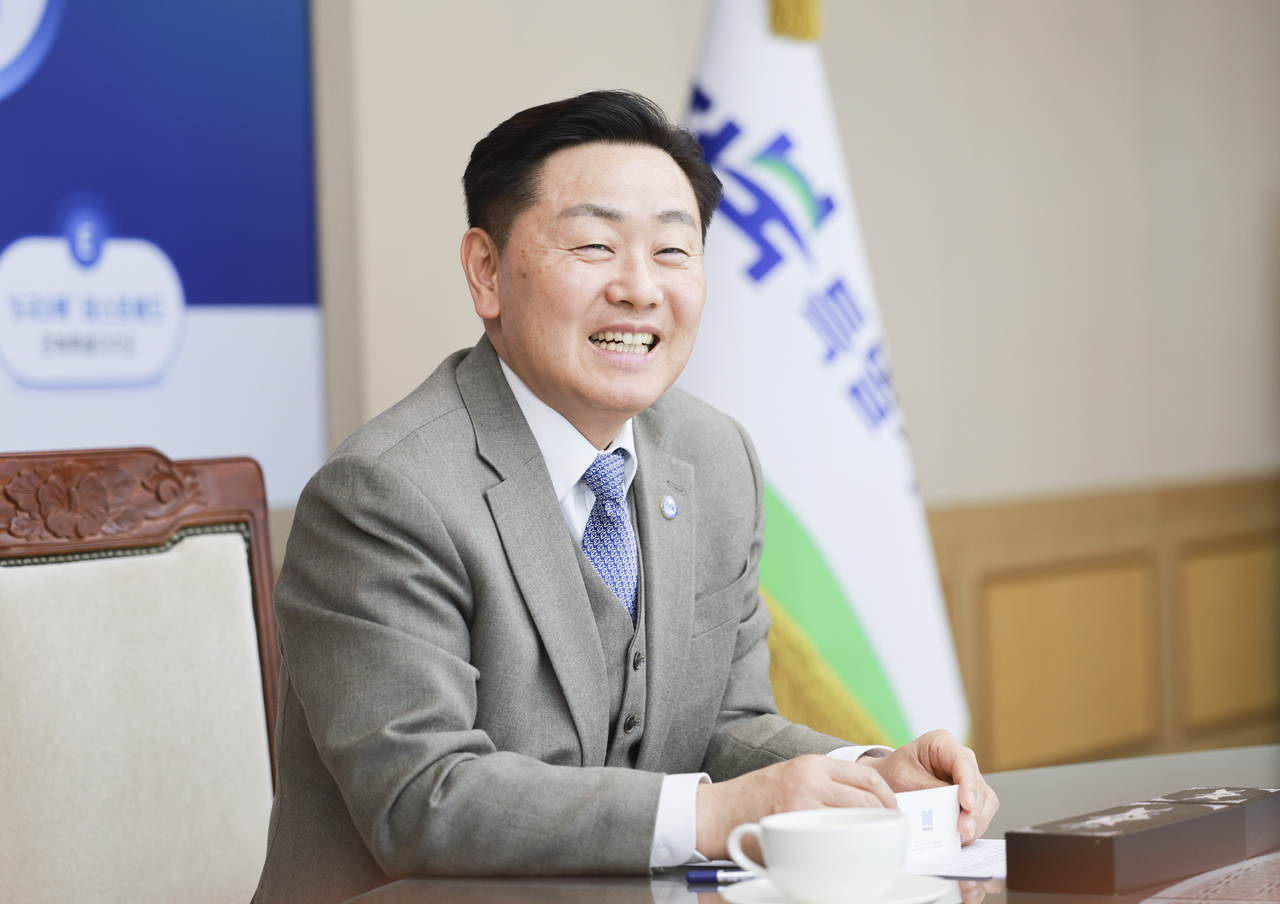
Instead of waiting for demographic trends to dictate its future, Jeonbuk State, better known as North Jeolla Province, is taking the initiative.
By building a system where foreign students become workers and long-term residents through policies the province now has control of, Gov. Kim Kwan-young said Jeonbuk has reached a turning point.
“Jeonbuk cannot rely on old population models anymore,” Kim said in an interview with The Korea Herald. “We need talent — people who study here, work here, raise families here. That is the only way a region can survive the demographic era Korea has entered.”
Under Kim’s tenure, Jeonbuk has developed one of the country’s most structured pipelines linking foreign students to local employment and long term settlement, while expanding visa autonomy and integration programs at a pace unmatched by other regions.
These shifts are unfolding in parallel with Jeonbuk’s push to attract global finance and future industries, making talent policy and economic strategy mutually reinforcing.
“Foreign residents are not a stopgap for labor shortages,” he said. “They are part of Jeonbuk’s future population and we must build a system that treats them as such from the moment they arrive.”
In the Global Thinkers framework, Jeonbuk is evaluated as both a Global Talent Hub for its direct link between education, employment and settlement, and a Global Economic Connector for pairing visa innovation with investment partnerships that strengthen the region’s industrial base.
Global Talent Hub
Turning foreign students into long-term residents
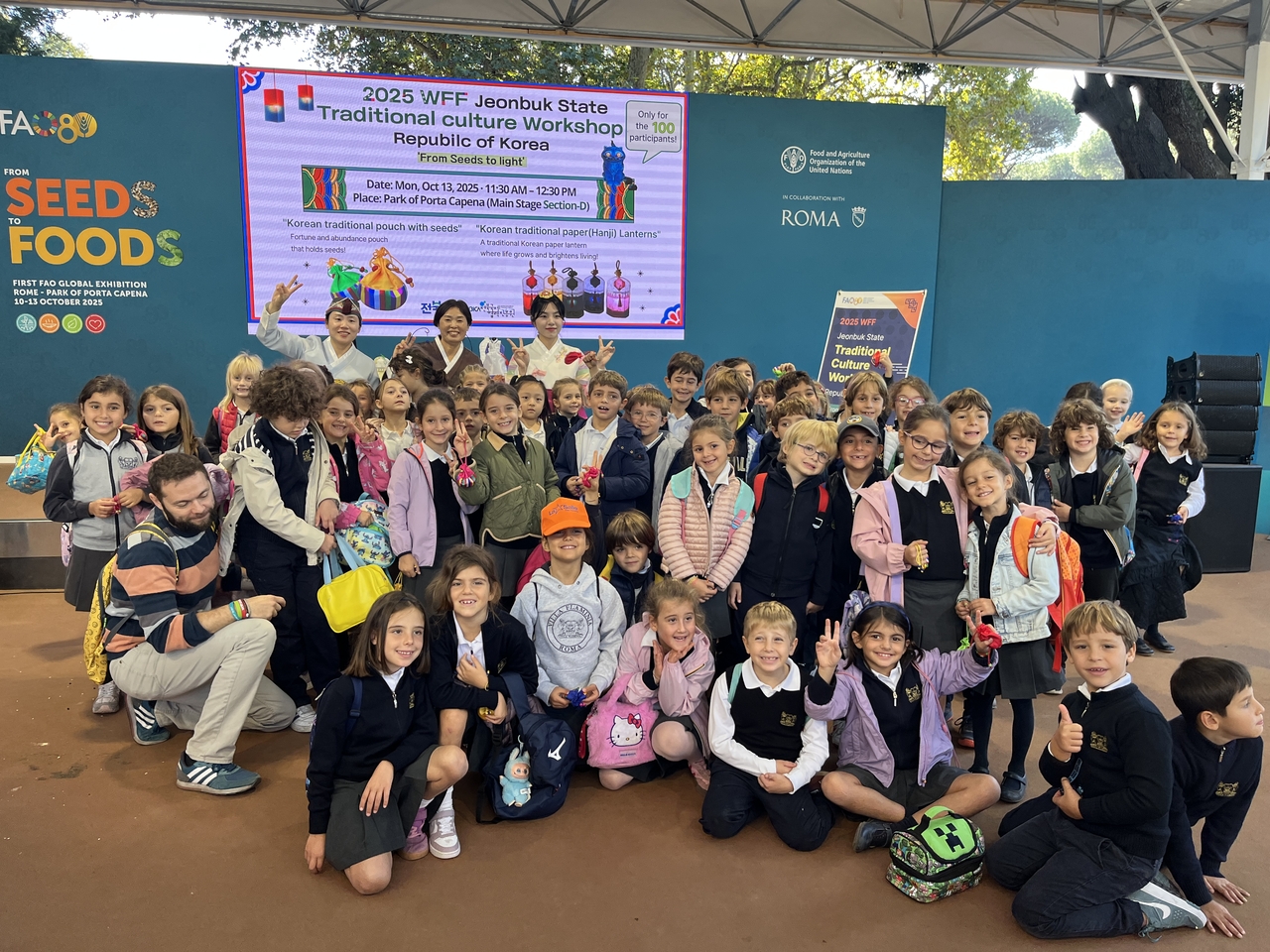
Jeonbuk is rapidly testing a new model for how regions can convert foreign students into long term residents.
Gov. Kim recalled raising the issue directly with the presidential office within a week of taking office in 2022. “When I examined Jeonbuk’s industrial ecosystem, it became clear that foreign workers were essential for agriculture and manufacturing alike,” he said.
“But national policies were fragmented. Governors understand local needs best, so decision making authority on visas should reflect that.”
This early intervention helped shape Korea’s regional visa system, launched in 2023. Jeonbuk received the largest quota because of the depth of its proposal and the urgency of its demographic needs.
A cornerstone is Jeonbuk’s F1-R regional visa, which allows foreign students at local universities to work for companies in the state for up to five years and apply for an an extension through the governor.
Students can invite family members, a factor that significantly increases retention.
Over the last three years, about 1,500 foreign graduates have settled in Jeonbuk, joined by more than 800 family members. Employers report high satisfaction due to smoother communication, safer training environments and faster integration compared to new arrivals from abroad.
Jeonbuk created a foreign resident policy division to support the growing population of second generation immigrants, which Kim describes as “bilingual assets who can become bridges between Jeonbuk and their parents’ home countries.”
The province also became the first in Korea to subsidize child care for foreign infants under age 3 — a gap in national policy — allowing foreign residents’ children to access early education without financial barriers.
These measures form a continuous pathway — recruitment, education, employment, settlement and long term integration. Jeonbuk now aims to have 10 percent of its population from immigrant backgrounds.
"It is not an abstract target,” Kim said. “It is the level necessary for population stability.”
Global Economic Connector
Investment momentum and industrial strategy reshape Jeonbuk’s future
Jeonbuk’s economic strategy is increasingly tied to its long-term demographic vision, with the province using its special self governing authority to position itself as one of Korea’s most attractive destinations for high-value investment. Gov. Kim said the region’s economic direction reflects both urgency and confidence.
“More than 40,000 residents signed a petition calling for semiconductor investment. That is a powerful message — a collective call for Jeonbuk’s economic renewal,” he said. “We respect companies’ autonomy in choosing locations, but our job is to make Jeonbuk the most compelling option in Korea.”
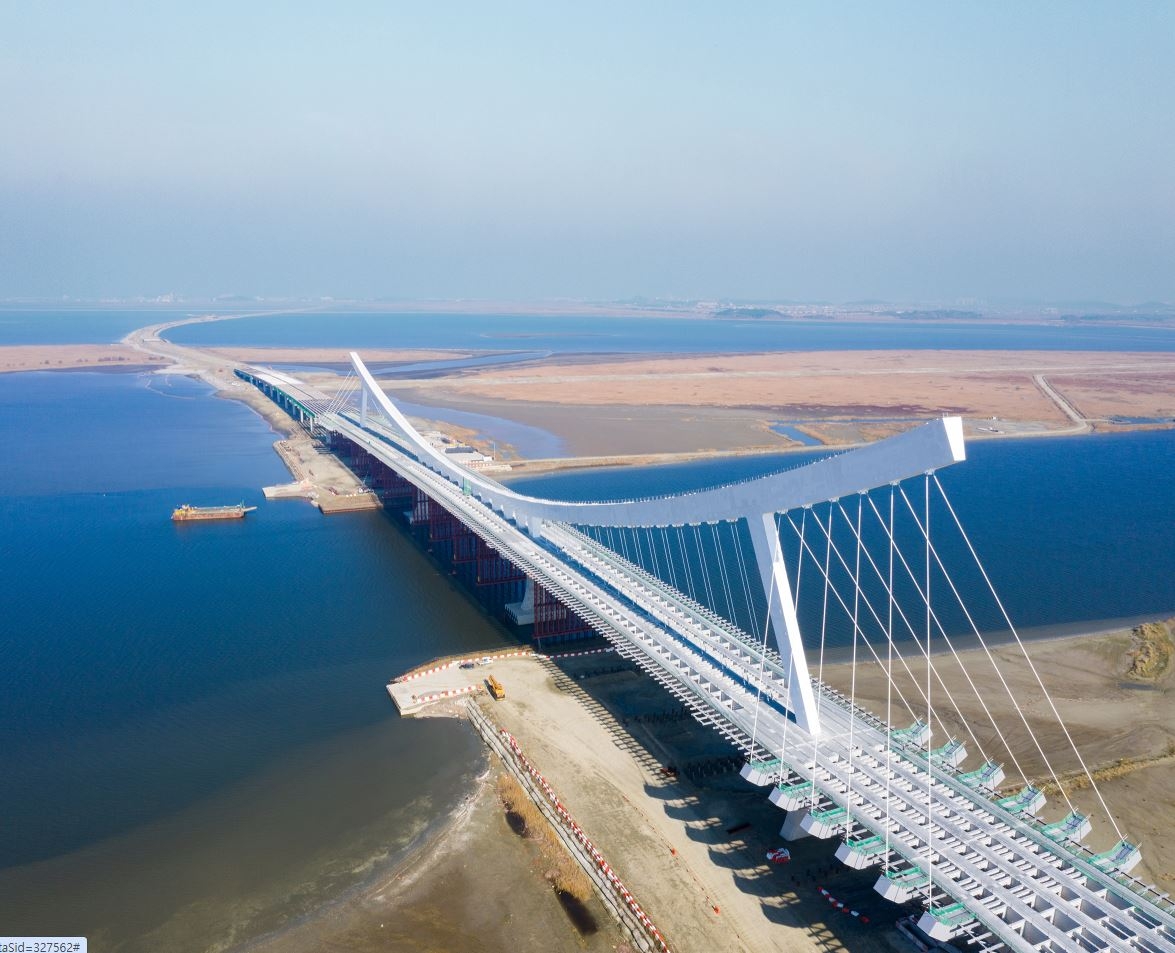
Kim argued that the province has structural advantages that are becoming more decisive in global competition. At the center is Saemangeum, with its expansive industrial land, access to large-scale renewable energy and flexibility for long-term leases.
The province offers one of the longest leasing horizons in the country, and costs are significantly reduced when foreign investment thresholds are met.
“Semiconductor companies cannot survive without RE100,” Kim said, referring to the global corporate initiative that requires companies to source 100 percent of their electricity from renewable energy.
“Jeonbuk offers something few regions can — enough renewable power to guarantee RE100 immediately. Saemangeum can supply up to seven gigawatts of clean energy by 2031, making it the most rational choice for energy-intensive industries.”
He noted that Jeonbuk's industrial base extends beyond land availability.
The region hosts strong materials and chemical manufacturers, universities producing specialized talent, and innovation anchors such as the semiconductor joint research lab.
“We will integrate our talent ecosystem with R&D hubs so that Jeonbuk becomes a top-tier candidate whenever companies consider new investment,” he said.
Kim describes the past three years as a period when the fundamental structure of Jeonbuk’s economy began to shift.
“If the National Assembly designs the blueprint, governors must deliver outcomes,” he said. “As governor, you answer with results that affect people’s lives.”
He cites attracting 17 trillion won in investment from 250 companies, including seven major conglomerates such as Samsung and LG, as one of the most meaningful achievements of his tenure.
A large part of that effort involvesd modernizing the province’s industrial capacity -- including the Samsung Smart Manufacturing Innovation Project, which strengthened productivity across Jeonbuk’s SME base.
The province also launched the first trillion-won venture fund outside the capital region to build a complete startup ecosystem.
Jeonbuk is now expanding into financial services as a long term growth engine.
The province recently submitted its official application to become one of Korea’s designated financial hubs, securing commitments from KB and Shinhan, and later deepening international engagement.
In January, Jeonbuk signed a partnership with BNP Paribas, the global banking group’s first official cooperation with a Korean regional government.
The agreement focuses on renewable energy, cultural infrastructure, bio materials, AI mobility and digital finance — the five pillars of Jeonbuk’s future-industry portfolio.
Provincial officials said the BNP Paribas partnership creates an international financing channel that strengthens Jeonbuk’s investment competitiveness and complements the region’s talent and visa strategy.
Kim said the only regret is that economic outcomes take time to materialize.
“It can take three to five years for investment to turn into operating factories and visible jobs,” he said. “But the foundations are in place. Residents will soon feel the impact in their own livelihoods — and we will continue working until they do.”
A new model for regional autonomy
The province’s upgrade to Jeonbuk State has given the region the authority to design settlement, visa and integration policies tailored to its own demographic and industrial needs. It has also enabled Jeonbuk to pursue large-scale partnerships previously handled only by national ministries.
The ultimate test of this autonomy is Jeonbuk’s selection of Jeonju as a domestic candidate city for the 2036 Summer Olympic Games.
“An Olympic bid carries the nation’s name,” Kim said. “That means a unified partnership with the central government is essential.”
A government review confirmed the project’s feasibility and showed that 82 percent of Koreans support the bid — a level of backing Kim says shows both practicality and public confidence.
With the Ministry of Finance and Economy revising its international-event rules to ease financial burdens on regional governments, officials say Jeonbuk now has a pathway to proceed with the next administrative steps.
Jeonbuk’s Olympic vision centers on using existing facilities to minimize national spending and ensuring that economic benefits spread nationwide.
“We aim to make our Olympics a sustainable, shared model aligned with the government’s balanced-growth strategy,” Kim said. “This is about creating a turning point — when a region becomes a new axis of national development.”
Officials believe Jeonbuk’s wider model — combining global talent, visa autonomy, renewable-energy-powered industry, financial partnerships and international event capacity — offers a preview of what future-ready regional autonomy can look like in Korea.
“We are not simply filling short-term labor gaps,” Kim said. “We are building a global community that will grow with Jeonbuk over the next decade.”
hnpark@heraldcorp.com