Identity is not clear-cut. What matters most is how we see ourselves, says Alyssa Hunzeker
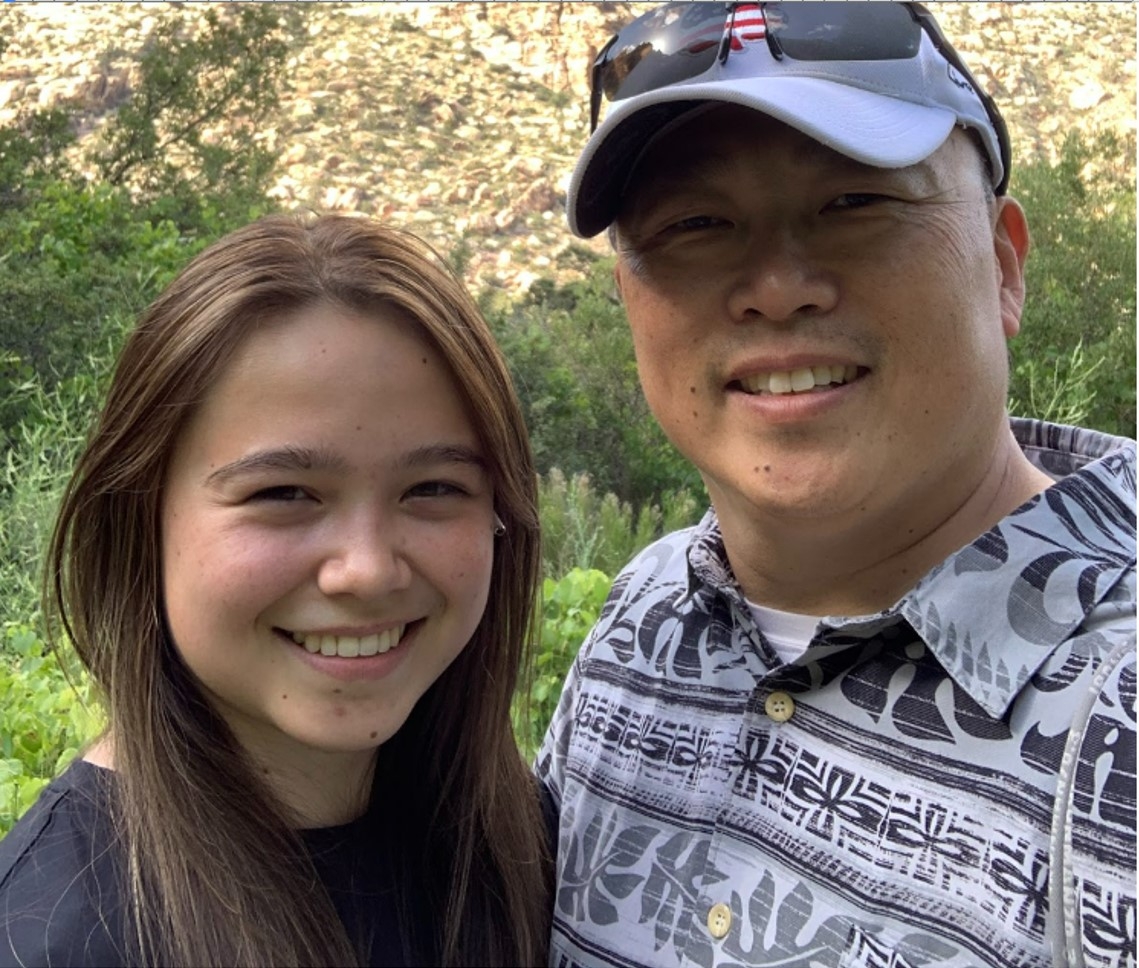
At first glance, Alyssa Hunzeker does not look different from other Asian Americans.
The 26-year-old attorney, who lives in Arizona with her husband, was born and raised in Utah to a Korean-born father. But Hunzeker's struggle with identity has been shaped by a family history unlike that of many other Asian Americans.
Her father was adopted from Korea in 1974. After being found wandering the streets at the age of 3, he was taken to an orphanage by police and then on to the United States. To this day, he does not know who his biological parents are.
From the 1960s to the 1970s, more than 50,000 Korean children were sent overseas for adoption, earning the country the stigma of being an "orphan-exporting nation." It later emerged that many adoption documents had been falsified, classifying children as orphans, despite having living parents.
Growing up, Hunzeker said she rarely saw people who looked like her.
"When I was a child, there were not many Asians, much less Koreans," said Hunzeker, who was recently licensed to practice law and hopes to work as a criminal prosecutor after completing her judicial clerkship. "There were even fewer biracial individuals."
That sense of difference followed her into school and she often felt caught between categories.
"When people at school learned I was part Korean, they thought it was cool that they had 'an Asian friend.' But then when they found out that my father was adopted and I'd never been to Korea, I could tell they were disappointed that I wasn't a 'real Asian,'" she said. "And that made it difficult to understand my identity."
"I identified as part Korean, but people didn't think I was a 'real Asian.' But if I identified as white, people would point out that I was also part Asian," she said. "So I never felt like I truly fit in, and I wasn't sure what my identity was."
Hunzeker lived in Korea in 2018 for a year, an experience she initially found exhilarating.
When she went to Korea, people there automatically knew she was part Korean. At first that was exciting to her because she thought it meant she was finally being seen as a "real Asian."
That excitement, however, was short-lived.
"I quickly realized that because I was identified as having Korean heritage, I was expected to speak the language fluently and know everything about Korean culture. And when I didn't, I felt more people were disappointed in me."
Learning to accept her identity
Despite these challenges, Hunzeker said she is gradually learning that identity is not defined by external expectations.
Although she struggles with being half white, half Korean and the complexities of being the child of an adoptee, she said she has come to understand that others' labels matter less than her own sense of self.
"Racially, I'm white and Korean. It doesn't matter what language I speak or where I grew up, nothing will change that part of my DNA," she said. "Culturally I'm a mix."
"I grew up in a predominantly white area and my experience with culture there will always be part of me. But I've also made an effort to get to know Korean culture and learn more about Korea, and that has become a part of me too."
She added that even though her father did not grow up in Korea, it does not make either of them any less Korean.
"Identity isn't clear-cut," she said. "It doesn't matter how anyone else views me or my father. It only matters how we view ourselves."
That perspective was largely shaped by her father.
Despite never finding his biological parents and growing up without Korean language or culture, he consistently taught her about her heritage. Hunzeker grew up eating Korean food both at home and in restaurants, and her father taught her to read Hangeul when she was in middle school.
"Even though I did not know what the words I was reading meant, it helped me feel connected to my heritage," she explained.
Her father also lived in Korea for a couple of years as a young adult and struggled with his own identity. He looked Korean but did not speak Korean or know anything about the culture.
Still, he tried to integrate what he had learned into his children's lives.
"I'm grateful he did that because it gave me a connection to my heritage and became the foundation for my desire to learn more about Korea."
Hunzeker now speaks Korean at an intermediate level and is familiar with Korean culture. She first visited Korea with her family in 2017, when she was a senior in high school. She later lived in Korea from 2018 to 2019, studied as an exchange student for one semester in 2021 and worked at an international law firm in Seoul, earning credit toward her law degree.
Unresolved wounds of overseas adoption
Hunzeker said she loves Korea and considers it her "home away from home."
"I find the culture interesting. The people care and the food is better than anything I get in America."
Despite her affection for the country, Hunzeker said she remains frustrated by how overseas adoptions, including that of her father, were handled.
Her father has attempted to locate his biological family through DNA testing, but without success. His adoption paperwork provides little clarity, stating only that he was found by a police officer and listing a name he is unsure is even accurate.
He last traveled to Korea in October 2024 to submit his DNA at a police station. After providing his adoption paperwork, he was told to wait for a follow-up call. More than a year later, he has yet to receive a response and is now attempting to go through the same process via a Korean consulate in the United States.
While early overseas adoptions focused on war or mixed-race orphans from the 1950s and 1960s, later cases included children who were sent abroad despite having living parents. Adoption agencies were criticized for profiting from overseas placements, and many adoptees still cannot find their biological families due to missing or falsified records.
A government investigation by the Truth and Reconciliation Commission found widespread human rights violations, including adoptions without parental consent, false registrations of abandoned children, record manipulation, inadequate screening of adoptive parents and failure to guarantee citizenship. In March 2025, the commission defined these practices as state-led human rights abuses and recommended an official apology, fact-finding, compensation and safeguards against recurrence. United Nations special rapporteurs similarly called for trust disclosure, reparations, accountability and systemic reform.
South Korea has pledged to end overseas adoptions by 2029, with the government assuming full responsibility of the entire adoption process that was previously handled by private or nongovernmental institutions.

Hunzeker hopes those efforts lead to real change.
"My hope is that the Korean government will do everything it can to help reunite adoptees with their biological families and address past issues of fraud."
"This process needs to be refined and I hope the government continues reviewing past adoptions for potential abuse or fraud," she said. "I also hope that society will continue to learn about issues with the adoption system and work to support adoptees."
shinjh@heraldcorp.com