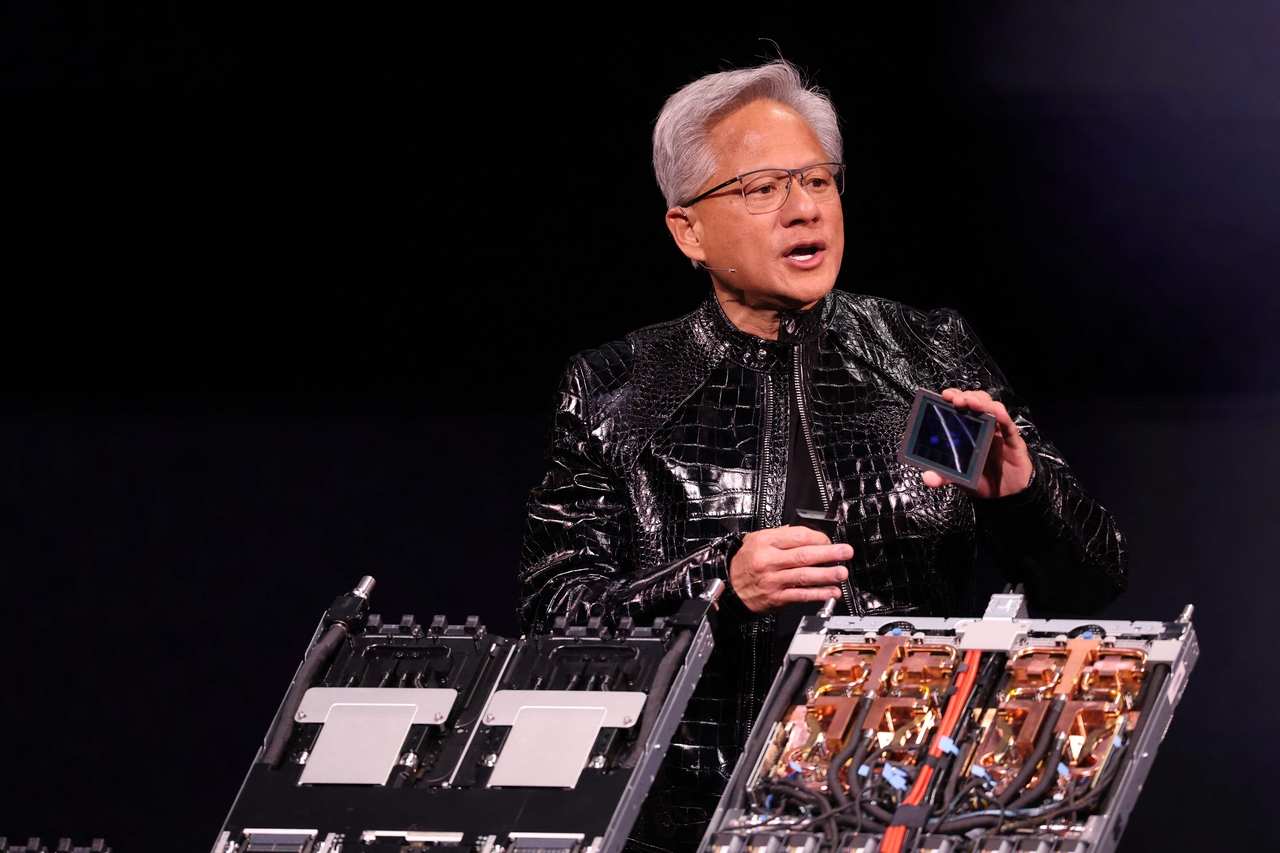
At CES 2026, the era of disembodied intelligence came to a decisive end. As AI stepped out of the cloud and into the physical world to walk factory floors, navigate city streets and manage households, the conversation shifted from what AI can say to what it can do.
CES 2026에서 비체화된 인공지능의 시대는 결정적으로 끝이 났다. AI가 막연한 상상에서 벗어나 현실세계로 걸어 들어와 공장을 오가고, 도시의 거리를 누비며 가사업무를 해내자 화두는 AI가 무슨 말을 할 수 있는지에서 무엇을 할 수 있는지로 전환되었다.
Nvidia’s “physical AI” is no longer a futuristic catchphrase; it is the blueprint for a world where silicon-based reasoning meets mechanical action. For the global economy, the implication is that the digital revolution has finally grown limbs.
엔비디아의 "피지컬 AI"는 더이상 시대를 앞선 선전구호가 아니라 실리콘 기반의 추론이 기계로 작동되는 움직임과 만나는 세상의 청사진이다. 세계 경제에 있어서는 디지털 혁명에 드디어 팔다리가 자라나게 되었다는 것을 의미한다.
For South Korea, a manufacturing power by instinct and history, this should have been a moment of recognition. Instead, it raised an uneasy question. If embodied intelligence is the next industrial frontier, why does Korea appear hesitant at the threshold?
직관적으로도 역사적으로도 생산강국인 한국의 입장에서는 인정받는 순간이 되었어야 한다. 그러나 대신 불편한 질문이 던져졌다. 만약 신체적 능력을 갖춘 인공지능이 산업의 다음 개척지라면 왜 한국은 그 문앞에서 망설이는 것처럼 보이는가다.
Physical AI marks a clean break from the era of generative models. Embodied systems extend intelligence into factories, logistics networks, vehicles and homes. Nvidia’s CEO Jensen Huang has put the long-term market opportunity at $50 trillion. The figure is speculative, but the trajectory is clear.
피지컬 AI는 생성형 모델 시대로부터 완전히 벗어났음을 의미한다. 물리적 시스템으로 인공지능은 공장, 물류 네트워크, 차량 및 가정에까지 파고들 수 있게 되었다. 젠슨 황 엔비디아 CEO는 장기적으로 시장 기회가 50조 달러에 달할 것으로 추정했다. 추측에 기반한 수치이기는 하나 앞으로 나아갈 방향은 분명하다.
At CES, Nvidia unveiled its Vera Rubin superchip platform, now in production, alongside Alpamayo, an autonomous driving model trained through physics-based simulation. Partnerships with industrial players such as Siemens signaled a shift from demonstrations toward deployment.
CES에서 엔비디아는 물리에 기반한 시뮬레이션을 통해 학습된 자율주행 모델인 알파마요와 함께 현재 양산 단계에 있는 슈퍼칩 플랫폼인 베라 루빈을 공개했다. 지멘스와 같은 산업체와 파트너십을 맺은 것은 이제 시연에서 실제 현장에 투입되는 단계로 옮겨감을 시사한다.
The global race is intensifying. In the US, private innovation is reinforced by strategic state intervention. The Trump administration recently secured a 10 percent stake in Intel, citing manufacturing and technology leadership. Uber, working with Lucid and Nuro, began robotaxi testing in San Francisco last month, with a commercial launch planned within the year.
세계적인 경쟁은 심화하고 있다. 미국에서는 사기업들의 혁신이 전략적인 정부의 개입으로 탄력을 받고 있다. 트럼프 행정부는 최근 제조 및 기술 분야에서의 주도권을 되찾겠다며 인텔 지분 10퍼센트를 인수했다. 우버는 루시드, 누로와 협력해 지난달 샌프란시스코에서 로보택시 실험 운행을 시작했고 연내 상용화를 계획하고 있다.
China is moving faster still. Government-led ecosystems are pushing humanoids into commercial use, supported by localized supply chains with high component self-sufficiency. In both countries, real-world deployment is treated as a national priority, not a regulatory inconvenience.
중국은 이보다 더 빨리 움직이고 있다. 정부 주도 생태계가 휴머노이드 상용화를 빠르게 추진중이며 자국내 공급망을 통한 높은 부품 자급률로 힘을 받는다. 양국 모두 현장에 투입하는 것을 규제상의 골칫덩이가 여기는 것이 아니라 국가 차원의 최우선 순위로 두고 있다.
On paper, South Korea should be formidable. It has the world’s highest density of industrial robots, more than 1,000 per 10,000 workers. Its manufacturing base generates high-quality data across semiconductors, automobiles, shipbuilding and electronics.
수치상으로 한국은 압도적일 것이다. 노동자 1만명 당 1천개가 넘는 산업용 로봇을 보유해 세계 최고 수준의 비율이다. 생산기지들은 제조 반도체, 자동차, 조선 그리고 전자 산업에 걸쳐 고도화된 데이터를 창출한다.
Korean firms drew attention at CES. Hyundai-owned Boston Dynamics demonstrated its humanoid Atlas. LG revealed a domestic robot designed to perform household tasks.
한국 기업들은 CES에서 주목을 끌었다. 현대차 계열사인 보스턴 다이내믹스는 휴머노이드 아틀라스를 시연했다. LG는 가사업무를 행할 수 있도록 고안된 홈로봇을 선보였다.
Yet these advantages are constrained by regulatory hesitation. Autonomous driving remains boxed into tightly controlled Level 3 pilot zones that still require human drivers. Higher levels of automation operate abroad. For humanoid robots, safety standards and data-sharing rules remain undefined, forcing companies to rely on regulations written for unrelated industries.
그러나 규제로 인해 망설임으로써 이러한 이점들에 발목이 잡힌다. 자율주행은 여전히 사람이 운전할 것을 조건으로 하는 3단계 시범 구간에 갖혀 엄격한 통제를 받고 있다. 해외에서는 더 높은 수준의 자율주행이 운영되고 있다. 휴머노이드 로봇의 경우 안전기준과 데이터 공유 법률이 여전히 미비해 기업들은 관련없는 산업에 적용되는 규율에 의존해야만 한다.
The costs are already visible. Hyundai plans to deploy Atlas in its electric vehicle plant in Georgia from 2028, not in Korea. Labor rigidity and union resistance are widely cited factors. When deployment moves overseas, learning curves and supplier ecosystems follow.
그 대가는 이미 눈에 보인다. 현대는 2028년부터 아틀라스를 한국이 아니라 미국 조지아주에 있는 전기차 공장에 투입할 예정이다. 노동경직성과 노조의 반발이 주된 요인으로 꼽힌다. 해외로 현장 투입을 옮겨간다면 학습 곡선도 공급자 생태계도 뒤를 따를 것이다.
Regulation compounds the drag. The Korea Chamber of Commerce counts 149 bills in the current National Assembly that impose what businesses describe as a “growth penalty,” adding obligations or cutting tax benefits as firms scale up. Many hinge on an asset threshold of 2 trillion won ($1.38 billion) set in 2000. Research and development tax credits shrink where global competition demands expansion.
규제는 어려움을 더한다. 대한상공회의소는 현 국회가 출범한 이후 기업의 규모가 커질수록 의무사항이 늘어나고 세제 혜택이 줄어드는 등 재계가 "성장에 대한 불이익"을 부과하는 것으로 간주하는 법안이 149개에 달한다고 집계했다. 2000년에 정한 자산규모 2조원이라는 기준에 많은 법안이 의존한다. 세계적으로 경쟁하기 위해 덩치를 키워야하는 기업들에게 연구개발 세제 혜택은 줄어든다.
Outcomes reflect these choices. Over the past four years, the US produced 229 new unicorn companies. South Korea produced two. None operate in AI.
이런 선택들이 결과에서 보여진다. 지난 4년간 미국에서는 229개의 새로운 유니콘 기업이 생겨났다. 한국은 2곳뿐이었고 인공지능 분야의 회사는 없었다.
The government’s pledge of 10.1 trillion won for AI transformation is meaningful but insufficient. Physical AI requires preventive deregulation, rules that allow deployment before innovation relocates offshore.
인공지능 전환을 위해 10조 1천억원을 지원하겠다는 정부의 공약은 의미는 있으나 충분치 않다. 피지컬 AI는 예방적인 규제완화를, 혁신적인 기술이 해외로 옮겨가기 전에 투입을 허용할 법률을 필요로 한다.
At CES, AI entered the physical economy. For South Korea, the challenge is no longer technological capacity but institutional alignment. Whether the country captures value from physical AI will depend less on engineering prowess than on the speed at which regulation, labor policy and capital incentives adapt.
CES에서 AI는 실물 경제로 들어섰다. 한국에 필요한 것은 더이상 기술적 역량이 아니라 제도적인 지지다. 피지컬 AI에서 한국이 기회를 창출해낼 수 있을지는 기술적인 기량보다는 규제, 노동 정책 그리고 투자 인센티브가 얼마나 빠르게 조정될 것인지에 달려있다.
disembodied 비체화된
threshold 문턱, 한계점
generative 생성형
trajectory 궤도
deployment 배치
density 밀도
cite 인용하다
compound 악화시키다
drag 장애물, 방해물
impose 부과하다
pledge 서약
alignment 지지
prowess 기량
khnews@heraldcorp.com