Global Thinkers: Leadership Excellence

As global competition intensifies, mid-sized cities with specialized strengths are emerging as critical nodes in the international economy. Daejeon is one of them.
Long known as Korea’s “brain city,” its scientific institutions, dense innovation networks and unusually international student population have positioned the city to move beyond its role as a domestic research hub toward an outward-looking, globally connected future.
“Daejeon is no longer just Korea’s science city. It is entering a phase where research, industry and global talent come together to create measurable impact,” Daejeon Mayor Lee Jang-woo told The Korea Herald.
This confidence emerges at a time when governments worldwide are racing to secure future industries, from aerospace and quantum to bio-health and advanced materials.
For Daejeon, the question lies in whether it can scale its strengths into internationally connected industries and a talent ecosystem capable of sustaining them.
Within the Global Thinkers framework, Daejeon demonstrates particular readiness in two areas: Global Economic Connector, for its capacity to convert R&D and emerging deep-tech sectors into real economic momentum, and Global Talent Hub, for its dense concentration of world-class universities and researcher mobility.
Together, these two areas form the basis of Daejeon’s evolving global identity — a city where scientific capability and human capital reinforce one another as engines of long-term growth.

Global Economic Connector — Daejeon as Korea’s leading scientific city
For over half a century, Daejeon has served as the nucleus of South Korea’s scientific and technological development, evolving into the nation’s representative “science city.”
Since the establishment of the Daedeok Innopolis cluster in 1973, Daejeon has accumulated nearly 3,000 research institutions, startups and high-tech enterprises. The district alone hosts 49 national research institutes and supports a workforce approaching 100,000, including more than 18,000 Ph.D.-level researchers.
This unprecedented concentration of talent and institutions enabled Daejeon to secure Asia’s No. 1 ranking and the world’s No. 3 ranking in the science and technology cluster category of the World Intellectual Property Organization’s 2022 Global Innovation Index.
Today, Daejeon is a rising global economic connector linking scientific innovation to international cooperation, city-level diplomacy and market expansion.
Capitalizing on its research capacity, the city has moved aggressively to build multicity alliances that strengthen both technological competitiveness and economic reach. This foreign policy shift is embodied in the Global Innopolis Network Initiative, an alliance Daejeon founded in September 2024 to deepen collaboration among the world’s leading science cities.
GINI’s founding members include Dortmund in Germany, Malaga in Spain, Montgomery County and Seattle in the United States, with Quebec becoming the sixth member last year.
Unlike past bilateral cooperation efforts, GINI represents a multilateral framework designed to pool research capacity, accelerate joint innovation and translate scientific advancement into local and global economic growth.
Daejeon’s global outreach is closely aligned with Mayor Lee Jang-woo’s vision of expanding the city’s influence beyond research, positioning it as a central platform for economic diplomacy.
"A memorandum of understanding with Montgomery County on global commerce demonstrates Daejeon’s intent to convert scientific leadership into real market access and strategic opportunities for the companies," Lee explained. "Local industries, particularly deep-tech startups, view these initiatives as vital pathways to enter broader North American and European markets," he added.
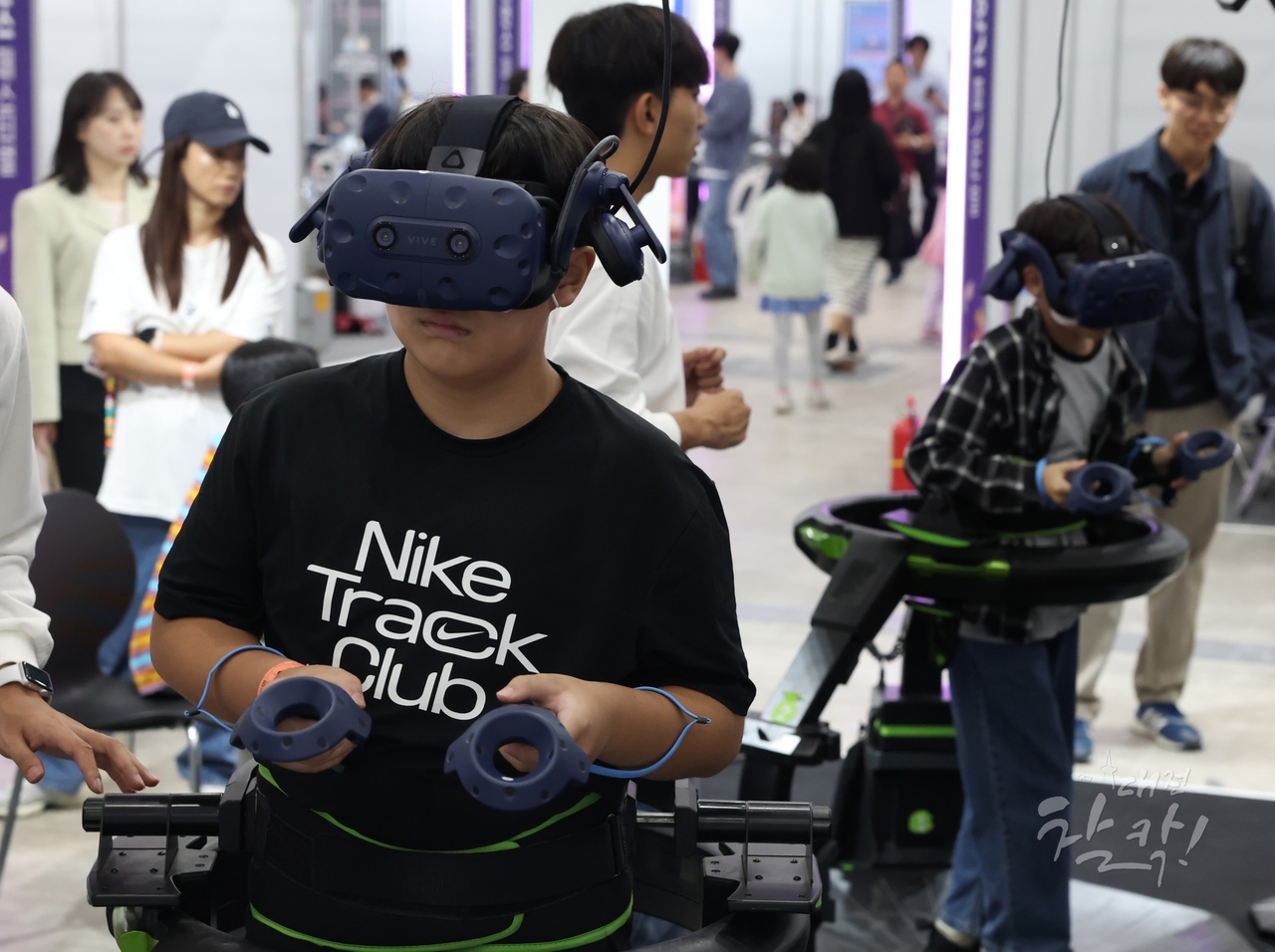
At the same time, Daejeon is consolidating its domestic industrial base across six strategic sectors — space, bio, semiconductors, defense, quantum and robotics — to ensure that its international partnerships are backed by strong homegrown capabilities.
The city’s 925 companies in these fields generate a combined annual revenue of 35 trillion won ($24 billion) and employ 35,000 workers, reflecting the emergence of a comprehensive innovation economy.
The space industry has grown substantially since Daejeon was designated a national aerospace cluster in 2022, with local companies posting more than 40 percent annual growth.
In biotechnology, the city has become a recognized national research and development hub, hosting 302 companies with 2.27 trillion won in revenue and 13 trillion won in technology exports.
The city also leads South Korea in quantum technologies, supported by the largest open-access quantum fabrication center, the nation’s first commercial quantum computer and a joint quantum graduate program by KAIST and Korea Research Institute of Standards.
In robotics and drones, Daejeon is leveraging research assets from national labs and KAIST to construct one of the country’s most advanced drone-testing and deep-tech scaling ecosystems.
As these sectors mature into a unified, integrated industrial platform — where research, workforce development and market deployment function cohesively — Daejeon is positioning itself as a city where global-oriented companies are born, and young professionals can build lifelong careers.
Daejeon’s scientific prowess is ultimately becoming a catalyst for global engagement.
Through GINI and expanding international partnerships, the city aims to translate its decades of research accumulation into global economic connectivity, strengthening its role as a bridge between advanced science cities and emerging deep-tech markets.
The ambition is clear: to transform Daejeon from Korea’s premier science hub into a world-leading economic science metropolis.
Global Talent Hub — A city where international youth converge
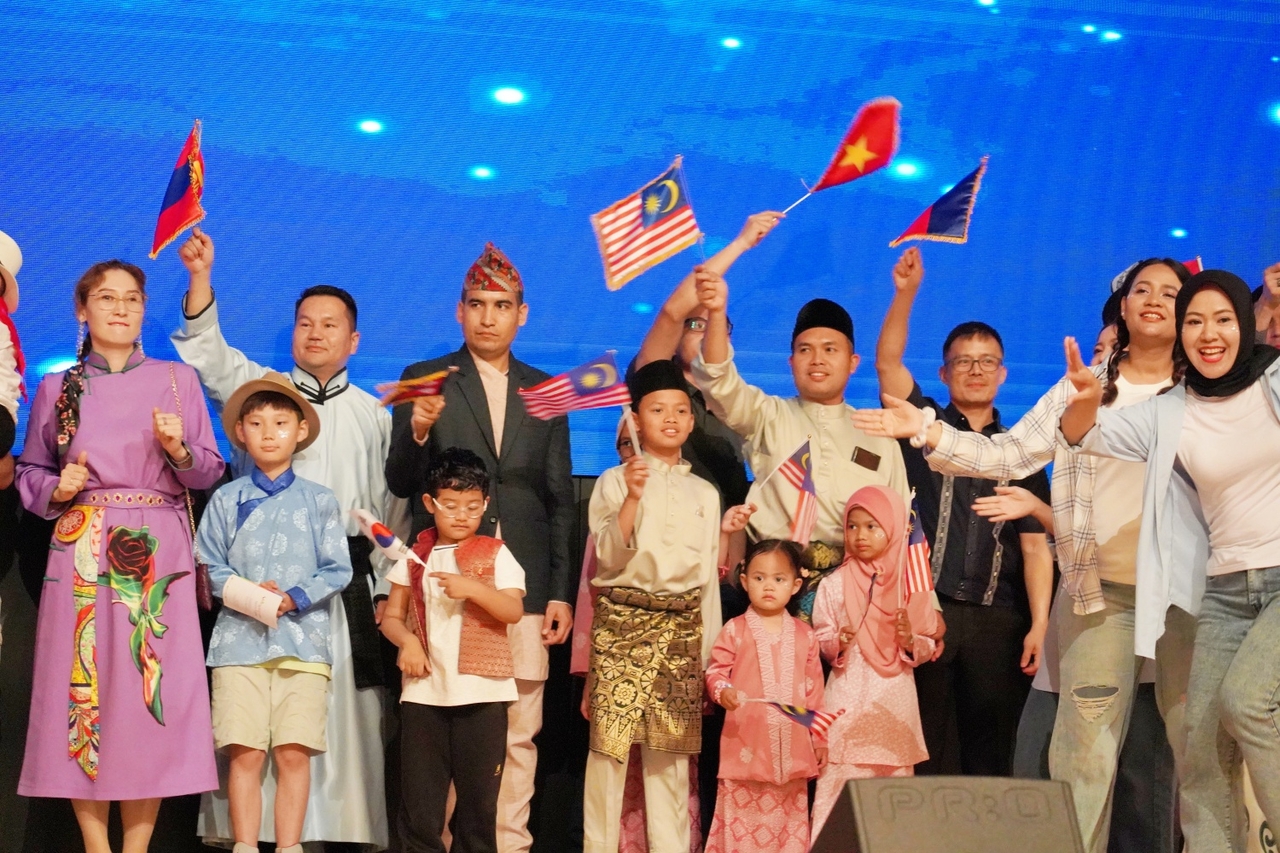
Daejeon is emerging as one of South Korea’s most distinctive global talent hubs, shaped by its world-class universities, concentrated research infrastructure and an unusually high proportion of international students and professionals.
Home to KAIST — ranked 24th globally and first domestically in Engineering & Technology by QS — Daejeon hosts the country’s densest population of foreign youth relative to total foreign residents, setting it apart from cities where manufacturing labor dominates foreign inflows.
Nationwide, registered foreign nationals are most commonly in Korea under the status of overseas Koreans (21 percent), nonprofessional employment (12.7 percent) and visa-waiver entry (7.8 percent).
In Daejeon, however, the city’s foreign population is led by international students, who account for 35.4 percent, followed by general trainees at 17.1 percent and marriage migrants at 11.4 percent.
"The ratio of international students is the highest proportion in South Korea. This highlights Daejeon’s strong pull as an education- and research-oriented hub," Lee added.
This concentration has become a crucial buffer against demographic decline: although Daejeon’s Korean population decreased by more than 3,000 in 2024, the foreign population increased by 2,865, nearly offsetting the loss.
Recognizing these strengths, the city has expanded its support infrastructure to help foreign students and professionals adapt to life in Daejeon.
The foreign residents’ integration support center provides a consolidated platform for language training, employment and entrepreneurship consulting. Beyond that, the city offers legal and administrative guidance, cultural integration programs and free medical services.
Community integration events and international student sports competitions further widen opportunities for engagement.
At the legislative level, Daejeon City Council recently passed an ordinance dedicated to improving the living, learning and employment environment of foreign national students, signaling a structural shift toward viewing international students as future contributors to the city’s growth rather than temporary visitors.
Still, local experts say the city’s growing foreign-resident base requires more systematic and citywide frameworks that connect education, employment and settlement.
Mayor Lee Jang-woo echoed this forward-looking perspective in an interview, noting that Daejeon’s strengths demand a strategic expansion of global talent pipelines rather than replication of policies used elsewhere.
“Requirements for employment visas, the burden on companies hiring foreign professionals, and the lack of accessible information all remain real barriers. And because Daejeon has the highest ratio of international students among major Korean cities, addressing these challenges is even more urgent for us.”
“Going forward, our goal is to build a system in which visas, job opportunities and long-term settlement are interconnected. Participation in the Justice Ministry’s regional visa program and the expansion of tailored settlement pathways for students and skilled professionals will be essential to making that possible," he added.
With 2026 marking the second year of the national RISE five-year plan to strengthen regional universities, Lee emphasized the need for a public platform that connects education, employment and long-term settlement for foreign students, supported by collaborative networks across government, academia, industry and research institutions.
Globally integrated innovation city
Within the Global Thinkers framework, Daejeon stands apart for the rare alignment between scientific infrastructure and talent depth. The city’s transformation from a domestic research enclave into a globally connected innovation hub reflects a maturation of Korea’s national science ambitions.
As a Global Economic Connector, Daejeon is building the structural capacity to convert high-level research into industries that matter on the world stage.
As a Global Talent Hub, it is nurturing a dense, self-sustaining ecosystem where world-class researchers, engineers and students can anchor their long-term careers.
Together, these outline the city’s emerging identity as a global science capital that not only produces knowledge but turns it into international competitiveness.
The Korea Herald, in collaboration with Herald Business, examines the present and future of local governments in a new series titled "Global Thinkers: Leadership Excellence," an assessment and certification program evaluating the international competitiveness of local governments.
Participating municipalities are recognized with badges representing five core elements used to gauge excellence: attracting investment, incubating talent, fostering tourism, improving living standards and strengthening connections with other global cities. — Ed.
jychoi@heraldcorp.com
kwonhl@heraldcorp.com
jychoi@heraldcorp.com
kwonhl@heraldcorp.com