Kospi ends near 5,100 after plunging below 5,000 on early selloff
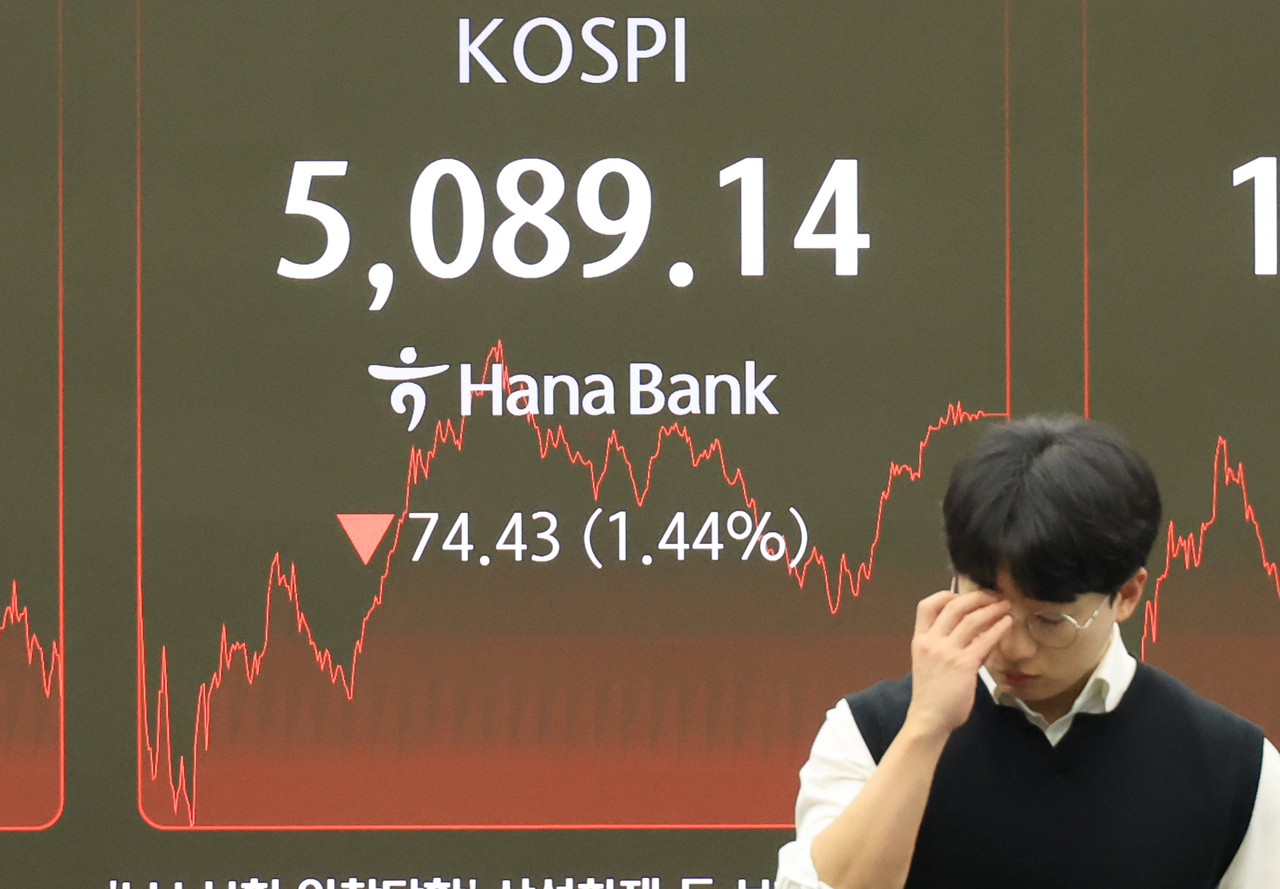
Three program-trading halts in five sessions capped one of the most volatile weeks in recent years for South Korea's stock market, as panic selling briefly sent the Kospi below 4,900 before retail investors stepped in to keep the benchmark above 5,000 by Friday’s close.
The Kospi ended daytime trading at 5,089.14, down 1.4 percent on the day, extending its slide for a second straight session but avoiding a deeper breakdown after plunging more than 5 percent in early trading.
The wild swings underscored a week defined by extreme volatility. The index triggered a buy-side sidecar Monday as it slipped below 5,000 at the start of the week, followed by a sell-side halt the next day as price swings intensified. A surge in buying power then propelled the market sharply higher, pushing the Kospi to a fresh intraday peak midweek before renewed selling pressure returned.
Friday’s session opened in near panic. After starting 2.6 percent lower at 5,013.15, the index quickly fell below the 5,000 threshold and tumbled more than 5 percent within the first 30 minutes, briefly touching 4,899.3. The early plunge sent Kospi 200 futures down more than 5 percent, triggering a sellside sidecar around 9:06 a.m. and temporarily halting program trading for the third time this week.
Losses were swiftly pared as retail buying intensified. By around 10:45 a.m., the Kospi had reclaimed the 5,000 mark, with individual investors snapping up more than 1 trillion won ($680 million) of shares. The index briefly climbed above 5,100 before stabilizing just below that level into the close.
The whipsaw moves capped a week dominated by heavy foreign outflows and aggressive retail buying. Over the past five sessions, foreign investors dumped about 11 trillion won of Kospi shares, while retail investors bought roughly 12.6 trillion won, cushioning the market from deeper losses.
The divergence was most pronounced over the final two sessions, when individuals snapped up nearly 9 trillion won as foreigners offloaded about 8.3 trillion won. Institutions, which sold heavily on Thursday, turned net buyers Friday with purchases of nearly 1 trillion won.
The turbulence followed a sharp reversal from earlier in the week, when retail-led buying pushed the Kospi to a fresh intraday high above 5,370 and its first-ever close above 5,300 on Wednesday. The rally, powered by chipmakers, briefly lifted Samsung Electronics to a market capitalization of 1,000 trillion won, making it the first Korean company to hit the milestone.
Volatility intensified as concerns grew over the sustainability of the artificial-intelligence-driven rally. Investors began reassessing lofty valuations amid worries that heavy AI-related capital spending could weigh on profitability at major technology firms.
Technology heavyweights bore the brunt of the pullback. Samsung Electronics slid more than 6 percent from its record earlier in the week, while SK hynix fell nearly 10 percent from its recent peak, unwinding part of the chip-led surge that had lifted the Kospi more than 27 percent in 2026.
Financial stocks were among the few pockets of resilience Friday. Bank and insurance shares rose on expectations for improved shareholder returns, with all four major banking groups advancing, led by a 7 percent jump in KB Financial Group.
Analyst Lee Kyoung-min of Daeshin Securities said the recent swings in Kospi reflect a short-term adjustment rather than a break in the broader trend.
“The earnings-driven uptrend in the Kospi remains intact, and recent moves should be seen as consolidation and profit-taking,” Lee said, noting that earnings forecasts continue to rise faster than expected while valuations remain deeply discounted. Daeshin raised its first-half Kospi target to 5,800.
Near-term volatility may persist, he added, with downside pressure potentially increasing ahead of the Lunar New Year holiday as investors turn more cautious.
jwc@heraldcorp.com