South Korea is moving on both diplomatic and legislative fronts to address mounting US tariff pressure, as Foreign Minister Cho Hyun on Friday denied that Seoul has intentionally delayed the legislative process tied to a bilateral investment deal while lawmakers agreed to fast-track related legislation.
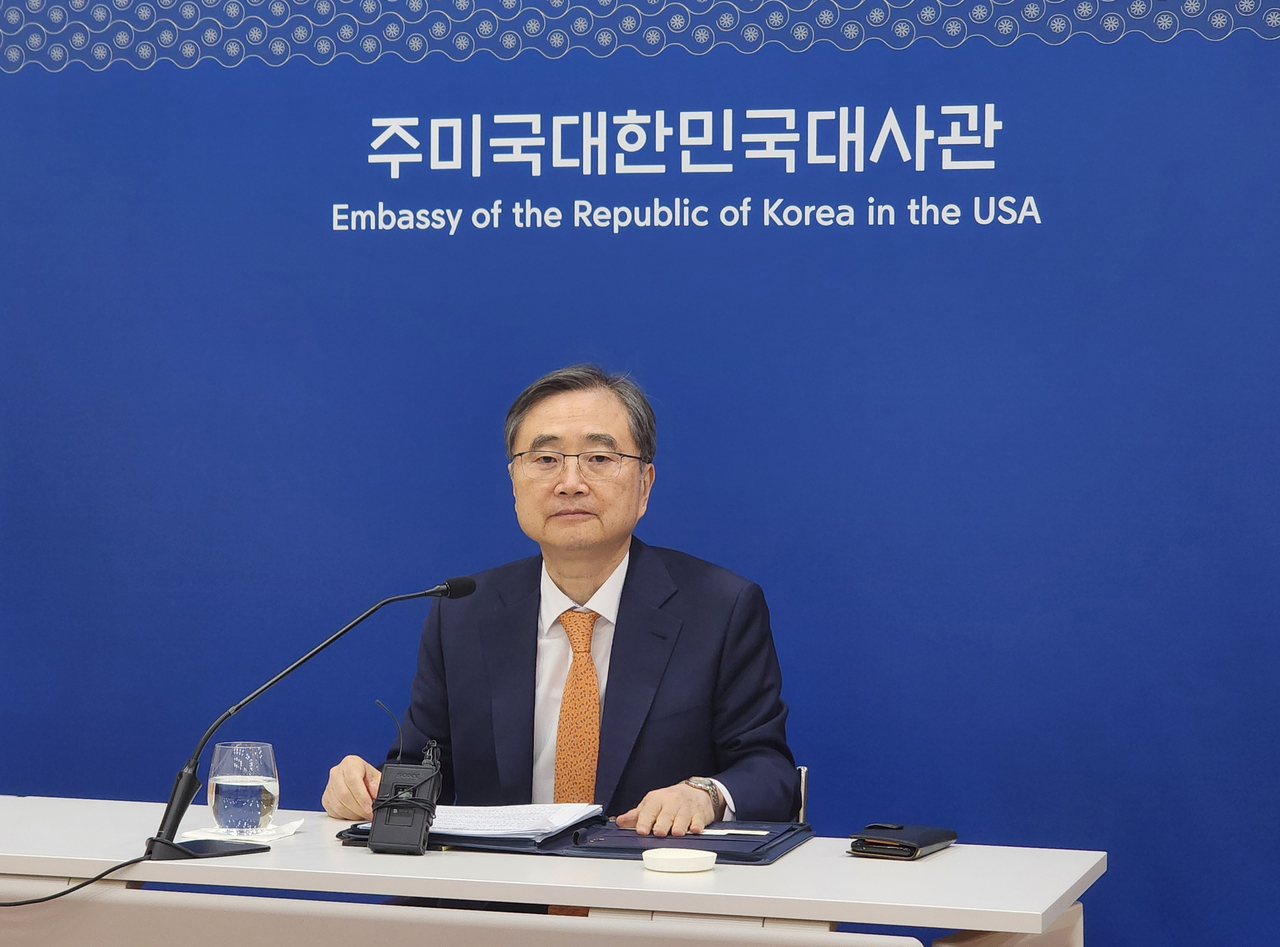
Cho said he conveyed Seoul’s position during talks with US Secretary of State Marco Rubio in Washington earlier this week, stressing that the pace of parliamentary procedures should not be interpreted as a lack of commitment, during a press meeting at the South Korean Embassy in Washington.
“Secretary Rubio noted that although the overall relationship between South Korea and the United States remains stable, there is growing unease within the US over the pace of Seoul’s implementation of trade-related commitments,” Cho said.
The discussions came after US President Donald Trump warned on Jan. 26 via social media platform Truth Social that Washington could raise tariffs on South Korean products — including automobiles, timber and pharmaceuticals — from 15 percent to 25 percent. He pointed to delays in passing a special investment bill required to implement the agreement.
Cho reiterated Seoul’s resolve to carry out the deal, which includes a pledge to invest $350 billion in US industries, stressing that “trade-related frictions should not spill over into broader areas of alliance cooperation.”
“I asked Rubio to encourage relevant US government agencies to ensure that there will be sufficient consultations on three key bilateral agreements on civil nuclear energy, nuclear-powered submarines and shipbuilding,” the minister said.
The commitments were outlined in a joint fact sheet released in November following summits between the two countries’ leaders.
Cho also met US Trade Representative Jamieson Greer on the sidelines of a ministerial meeting on critical minerals, where the US side emphasized the importance of Seoul making tangible progress on investment pledges and addressing non-tariff barriers.
Seoul has intensified high-level outreach to Washington since Trump’s tariff warning, dispatching senior officials to explain its legislative process and reaffirm its commitment to implementing the agreement.
Trade Minister Yeo Han-koo recently met US officials, members of Congress, industry representatives and think tank experts in Washington to clarify Seoul’s position and stress that it remains committed to existing bilateral arrangements. Yeo, who returned home Thursday from the weeklong trip, said bipartisan cooperation on the bill would help persuade Washington to delay or reconsider tariff measures. He noted that US officials have repeatedly cited legislative delays as a key reason for considering higher duties.
Despite these efforts, progress has been limited, and uncertainty remains over whether Washington will proceed with formal steps to raise tariffs.
The renewed tariff pressure has added urgency to Seoul’s legislative push, with officials warning that the outcome could influence not only trade ties but also broader areas of bilateral cooperation.
In Seoul, rival political parties agreed to form a special parliamentary committee to accelerate the passage of legislation tied to the US-bound investment package, reflecting growing concern that tariff threats could materialize.
Lawmakers from the ruling Democratic Party of Korea and the main opposition People Power Party plan to establish a 16-member panel tasked with reviewing and negotiating the bill. The committee, once formally approved, will operate for one month and include representatives from both major parties and a minor party.
The agreement also clears the way for a plenary session scheduled for Feb. 12, where lawmakers aim to pass the legislation with cross-party backing.
The bill has stalled amid disagreements over whether it requires parliamentary ratification. The opposition argues that the deal, which involves significant financial commitments, should undergo legislative approval, while the ruling party maintains it is tied to a nonbinding memorandum and does not require ratification.
mkjung@heraldcorp.com