Cheong Wa Dae accused of stepping up attacks on adversarial TV networks
Concerns over freedom of press and accusations of the government oppressing media with opposing political inclinations are once again rising in Korea — a phenomenon that repeats itself with each new administration.
This time around, the controversy was renewed by President Lee Jae Myung and his aide's open disapproval of certain TV networks for their "poor-quality" political shows. The controversy comes amid deepening political polarization in South Korea over the past years that has contributed in part to deteriorating press freedoms.
As assessed by the nongovernmental Reporters Without Borders, South Korea's score in the World Press Freedom Index has seen a four-year consecutive decline — from 76.57 points on a 100-point scale in 2021 to 64.06 points in 2025, dropping 19 spots to No. 61.
Media taken to task
The president's open criticism of political television programs began at the end of last year, when he compared some talk shows on general programming cable channels to those of far-right YouTube channels.
"I sometimes get mistaken if I'm watching this (political) show on a licensed broadcaster or a (far-right) YouTube channel," Lee said at the year-end policy briefing of the Korea Media and Communications Commission.
Lee has repeated similar comments since, with the latest coming on Jan. 20 during a Cabinet meeting.
At the meeting, Lee said that some broadcasters were failing to uphold the principles of impartiality and neutrality, citing political shows he considers to be supportive of the prosecution in cases involving liberal politicians.
These TV shows "always take side with the prosecution no matter what," after enjoying various privileges as general programming channels, Lee said.
Referring to review and regulation processes, Lee said also that freedom of expression for media entities that require licensing from the government is not guaranteed limitlessly.
"We have a misperception that 'media can do as they please, 100 percent,' but that is not always the case," he said.
Such sentiment was later echoed by Lee Kyu-youn, senior presidential secretary for public relations and communication. In an interview with JTBC, of which he is a former CEO, the presidential secretary said some TV networks air low-quality political shows featuring political commentators with biased views.
In another interview with Media Today, he said that such programming "is not fit for the purpose of the government's licensing of general programming channels."
General programming cable channels — Channel A, JTBC, MBN and TV Chosun — have often been accused of bias by the left due to their conservative inclinations.
Known as "jongpyeon," the channels emerged from a politically charged media reform process in the late 2000s. Under the Lee Myung-bak administration, the government pursued revisions to media laws in 2009 that eased restrictions on cross-ownership between newspapers and broadcasters.
This allowed four major daily newspapers — all conservative — to enter the television market with these channels.
Supporters argued the move would increase competition and media diversity, while critics warned it could undermine editorial independence and favor politically aligned outlets. The channels launched in 2011 amid controversy, reflecting broader tensions over media power, regulation and the role of broadcasting in shaping public opinion.

The comments from the president and top communications aide have sparked severe backlash.
Rep. Kim Jang-kyom of the main opposition People Power Party said in a statement Monday that Cheong Wa Dae has attempted to intervene in the operations of critical media outlets. The presidential office's warnings are likely meant to target broadcasters critical of those in power, not those running shows favorable to the liberal administration, he added.
"Soon, only the freedom to praise power will thrive, while the freedom to criticize will wither," said Kim, a former MBC chief.
Fellow People Power Party Rep. Lee Sang-hwi echoed Kim's view Tuesday, saying that the comments from the administration "will inevitably lead to a chilling effect on production staff."
Rep. Lee Jun-seok, chair of the minor conservative Reform Party, also said Monday that Cheong Wa Dae's criticism toward the media was selective,
Comparing the Lee Jae Myung administration to Russian President Vladimir Putin and Hungarian Prime Minister Viktor Orban, the Reform Party representative said that the current administration was targeting conservative media in order to silence critics.
Political polarization runs deep
The practice of those with power attempting to tame critical media is nothing new in Korea.
Lee Myung-bak, the conservative president from 2008-13, was accused of interfering in the management of left-leaning TV networks, while allowing right-leaning newspapers to operate general programming channels with a controversial bill package.
His successors, conservatives Park Geun-hye (2013-17) and Yoon Suk Yeol (2022-2025), as well as liberal Moon Jae-in (2017-22), were also criticized for their attempts to control media by sacking chiefs of publicly run broadcast networks or appointing more politically sympathetic figures to lead the media watchdog.
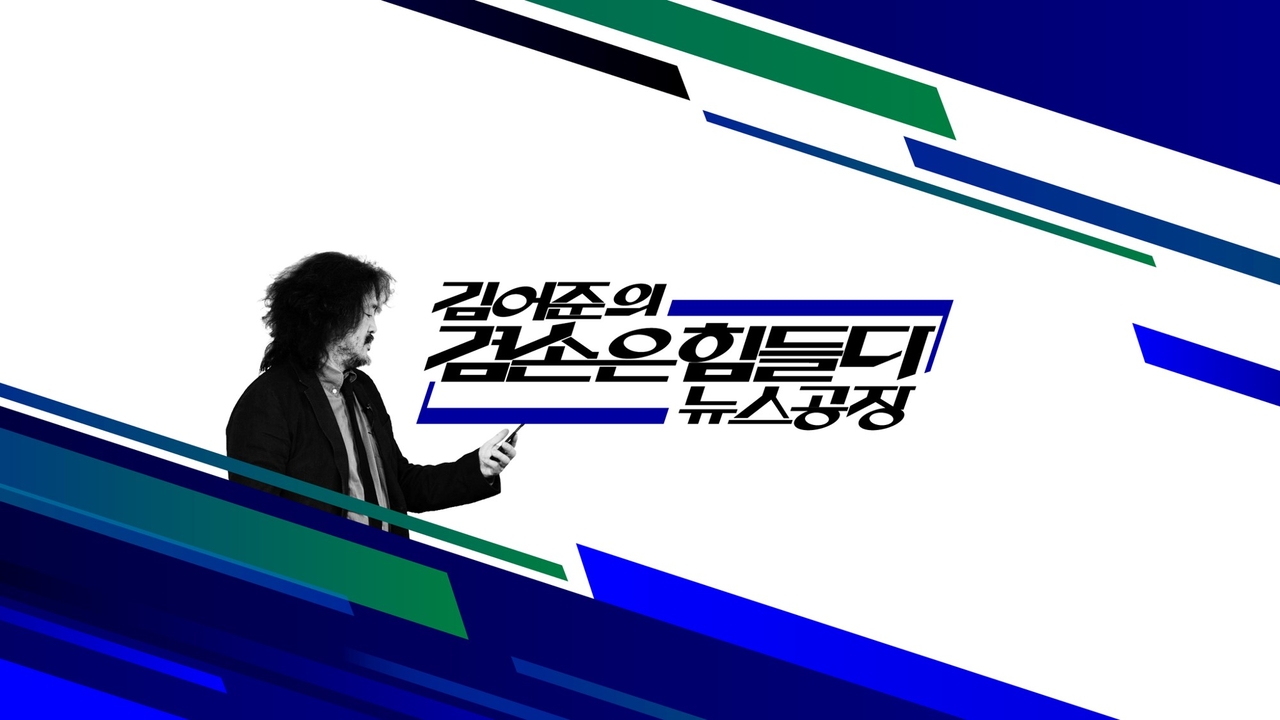
De facto media censorship was particularly rampant during Yoon's tenure. The then-ruling People Power Party lambasted radio broadcaster TBS for "News Factory," which it labeled as anti-government.
The show had been sanctioned several times by the Korea Communications Standards Commission for violating impartiality rules.
The station is funded by Seoul Metropolitan Government. Conservative Seoul council members led cut in subsidies to TBS and a move to strip its status as a municipal body.
"News Factory" host Kim Ou-joon had become popular in the early 2010s for his podcast "I'm a Petty-minded Creep," in which he raised issues against conservative figures including Lee Myung-bak.
As conservatives mounted pressure on Kim and his show, he was forced out of TBS in 2022 and migrated to YouTube in 2023. The News Factory YouTube account now has over 2.3 million subscribers.
Kim's fortunes have taken a dramatic turn since Yoon's ouster, as he is now considered a major beneficiary of the Lee Jae Myung administration.
Cheong Wa Dae allowed News Factory to join its press pool, alongside two other left-wing outlets, in July. Kim's brother-in-law was also appointed Wednesday to lead the state-run Small Enterprise and Market Service institution.
People Power Party Rep. Park Sung-hoon accused the government of cronyism Wednesday, saying, "Why not appoint Kim Ou-joon as the next prime minister?"
Moral responsibility
Meanwhile, the liberal bloc passed a law to curb the spread of fake news in December without the main opposition party's involvement.
Under the law that becomes effective in July, those with the intention to "cause harm to others" or "win illicit gains" through the use of "false" information could be liable for punitive damages.
The bill doesn't give clear standards for determining falsehood, or on what constitutes harm or "illicit gains," such as whether the latter includes general media revenue like advertising sales.
One media freedom advocacy group, Austria-based International Press Institute, criticized the bill for restricting the ability of the press to hold power to account by its vague language, potentially leaving open for those in power to arbitrarily accuse critics of wrongdoing.
"IPI is deeply concerned about how this legislation could be used to censor and punish journalists and media outlets in South Korea," IPI Executive Director Scott Griffen said in a recent statement.
Yet, describing President Lee and his secretary's comments as not problematic in press freedom terms, Paul Wragg, professor of media law at the University of Leeds, said the need for liberal democracy to curb fake news outweighed the need to defend press freedom in a world being plagued by misinformation.
"Press freedom is not an absolute right, which is to say that limitations upon press speech are justifiable, and in this case, justified," said Wragg, underscoring the mainstream media's moral responsibility to recognize its own role in the spread of fake news.
Concerning South Korea's controversial fake news bill, Wragg said the vague language in the legislation is not unique among well-meaning liberal democracies, and the established tripartite system will guide society through the safeguards of press freedoms.
"In systems where courts are independent of government, the appropriate safeguards for press freedom can be instituted by them to ensure the government cannot use the legislation as a political weapon to suppress, say, criticisms of its policies," Wragg expounded.
consnow@heraldcorp.com