KCCI survey shows 40% expect weaker economy, majority opt for status quo
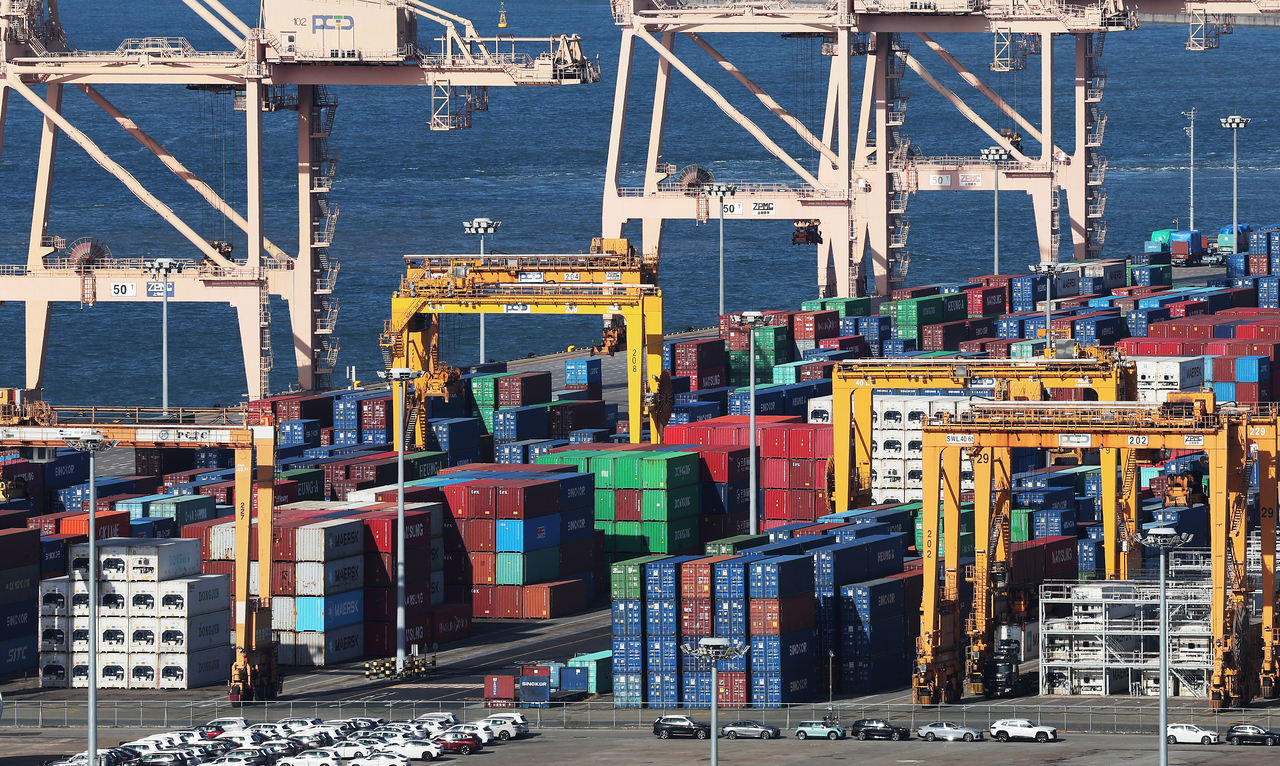
Nearly four in 10 South Korean manufacturers expect an economic slowdown in the country this year, leading most companies to adopt a cautious management strategy amid ongoing currency volatility and global uncertainty, a business survey showed Tuesday.
According to a recent survey by the country’s largest business lobby, the Korea Chamber of Commerce and Industry, 40.1 percent of the 2,208 manufacturing companies responded that they project overall economic conditions in 2026 to weaken relative to last year. Another 36.6 percent forecast conditions to remain similar, while only 23.6 percent anticipated improvement.
That cautious stance is evident in corporate planning. Asked about their management focus for 2026, 67 percent said they would maintain the status quo, while 20.6 percent opted for business expansion, and 12.4 percent chose business downsizing.
The figures point to a further tilt toward caution compared to two years ago. In a similar survey conducted in December 2023 on management plans for 2024, 55.5 percent of companies said they would maintain the status quo and 9.5 percent planned to downsize. In the latest survey, the combined share of companies pursuing conservative strategies rose by 14.4 percentage points, underscoring a stronger focus on stability and risk management.
Despite the overall alertness, industries with stronger outlooks are moving in the opposite direction. Around 47 percent of semiconductor firms said they plan to expand their business this year amid upbeat prospects in the chip sector fueled by artificial intelligence.
Expansion plans were prevalent among pharmaceutical and biotech companies at 39.5 percent and cosmetic firms at 29.4 percent, both sectors exceeding the overall average.
By contrast, industries struggling with weak domestic demand and intensifying price competition leaned more defensive. The share of firms adopting downsizing strategies was highest in textiles at 20 percent, and steel at 17.6 percent.
“Despite forecasts that both exports and domestic demand will improve together this year, companies are likely to continue to take a cautious management approach for some time due to external uncertainties such as high exchange rates,” said Kang Seok-gu, head of the KCCI’s research division.
Companies cited economic and demand forecasts as the most important factor influencing their business plans this year, with 52 percent identifying it as the top consideration. Cost and profitability factors followed at 25.9 percent, while internal company conditions accounted for 7.6 percent. Policy and regulatory changes came in at 7.5 percent and external trade risks accounted for 7 percent.
Amid continuing uncertainty, companies said they are largely focused on maintaining earnings from the previous year. For domestic sales, 42.2 percent said their performance targets are set at levels comparable to last year, while 48.8 percent said their export targets are similar to last year’s results.
When asked about the biggest risks to South Korea’s economic growth this year, 47.3 percent of companies cited high foreign exchange rates and volatility as hindering growth. Fluctuations in oil and raw material prices followed with 3.6 percent, while 35.9 percent pointed to uncertainty in the trade policy of US President Donald Trump.
Currency risk concerns were reflected in what companies wanted from policymakers. The largest share of companies, at 42.6 percent, called on the government to stabilize exchange rates, followed by support for domestic investment, stronger trade policy responses such as tariffs, and measures to boost consumption.
sahn@heraldcorp.com