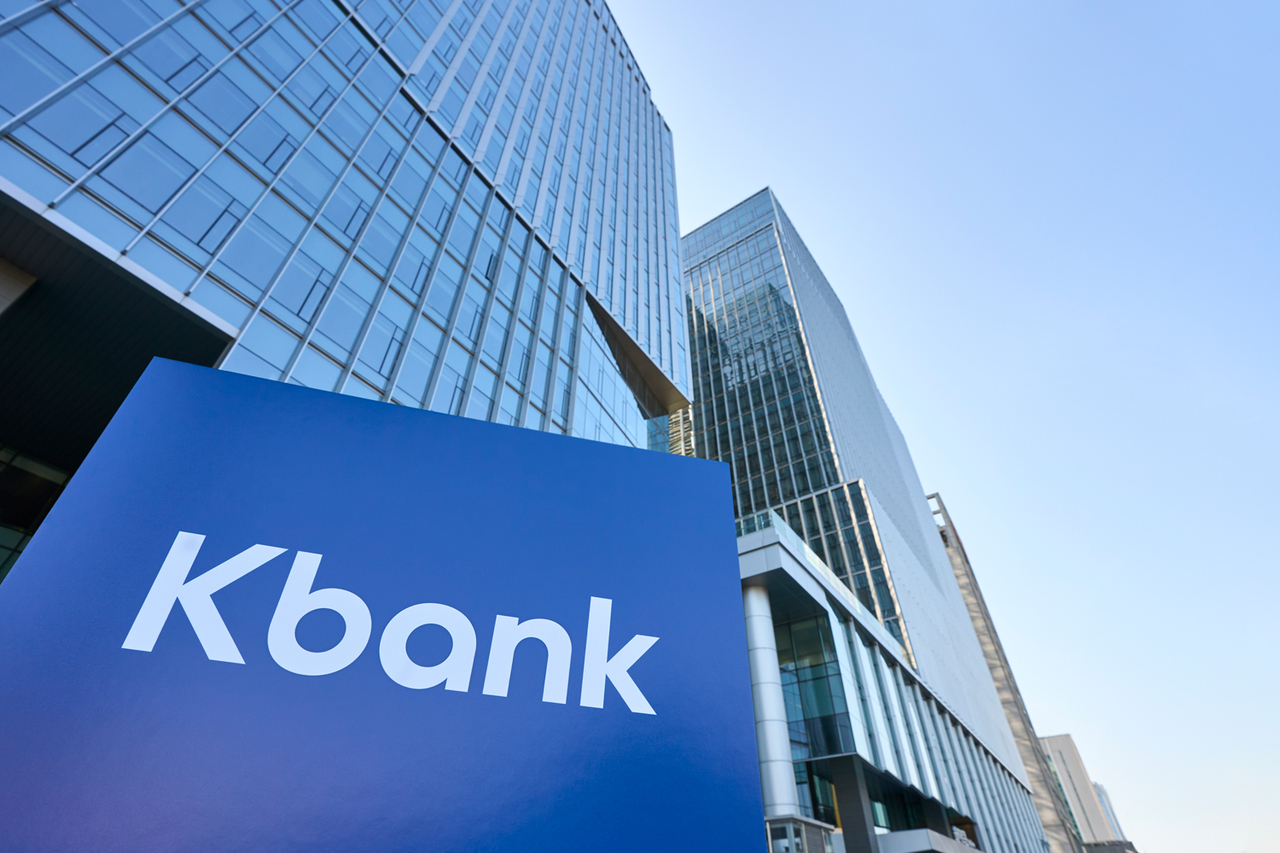
K bank, South Korea’s first internet-only bank, has cleared a key hurdle for what could be its last attempt at a market debut.
The Korea Exchange said Monday that K bank passed a preliminary review for a new share listing, deeming the lender eligible to proceed with an initial public offering.
Founded in 2016, K bank has shelved IPO plans twice. The first attempt in 2022 was derailed by a market slump triggered by the COVID-19 pandemic, while weak investor demand undermined valuations in its most recent bid in 2024.
In the 2024 attempt, K bank had targeted a market valuation of about 5.3 trillion won ($3.6 billion).
Industry watchers see this year’s IPO push as a final window for the online lender, with the deadline promised to investors set for July. In 2021, K bank raised about 700 billion won from financial investors, including Bain Capital, MBK Partners and JS Private Equity. The deal included drag-along and call-option clauses that require a payback if the bank fails to list by July 2026.
Should the latest attempt falter, the burden would fall on K bank’s largest shareholder, BC Card, which could be forced to return the funds upon request — potentially by selling part or all of its 34 percent stake in the lender.
Overvaluation was widely seen as the main obstacle in the previous bid. In response, K bank has scaled back the size of its offering to 60 million shares from 82 million, aiming to ease concerns over potential selling pressure. Half of the offering will consist of newly issued shares, with the remainder coming from existing shareholders.
The target price range has also been lowered to 8,300 won to 9,500 won per share, from the previous attempt's 9,500 won to 12,000 won. That implies a post-IPO market capitalization of about 3.6 trillion won to 3.9 trillion won, slightly above the roughly 3.5 trillion won valuation indicated by investor demand in the earlier bid.
Despite its early start, K bank has been losing ground to platform-led rivals, with the gap widening with market leader Kakao Bank while its distance to Toss Bank has narrowed. As of the third quarter last year, Kakao Bank and Toss Bank posted cumulative net profit growth of 6 percent and 140 percent, respectively, while K bank saw profits fall 15 percent.
Another overhang is reliance on Upbit. While deposits tied to the exclusive partnership have dropped to below 20 percent from more than half previously, uncertainty over its renewal and high fees continue to weigh on the outlook.
Recently, CEO Choi Woo-hyung unveiled a mid-term plan to lift the customer base to 26 million, from about 15 million now, and grow assets to 85 trillion won by 2030, eventually positioning the lender as comprehensive digital financial service provider.
jwc@heraldcorp.com