New visa, housing and job pipelines aim to turn international students into local professionals
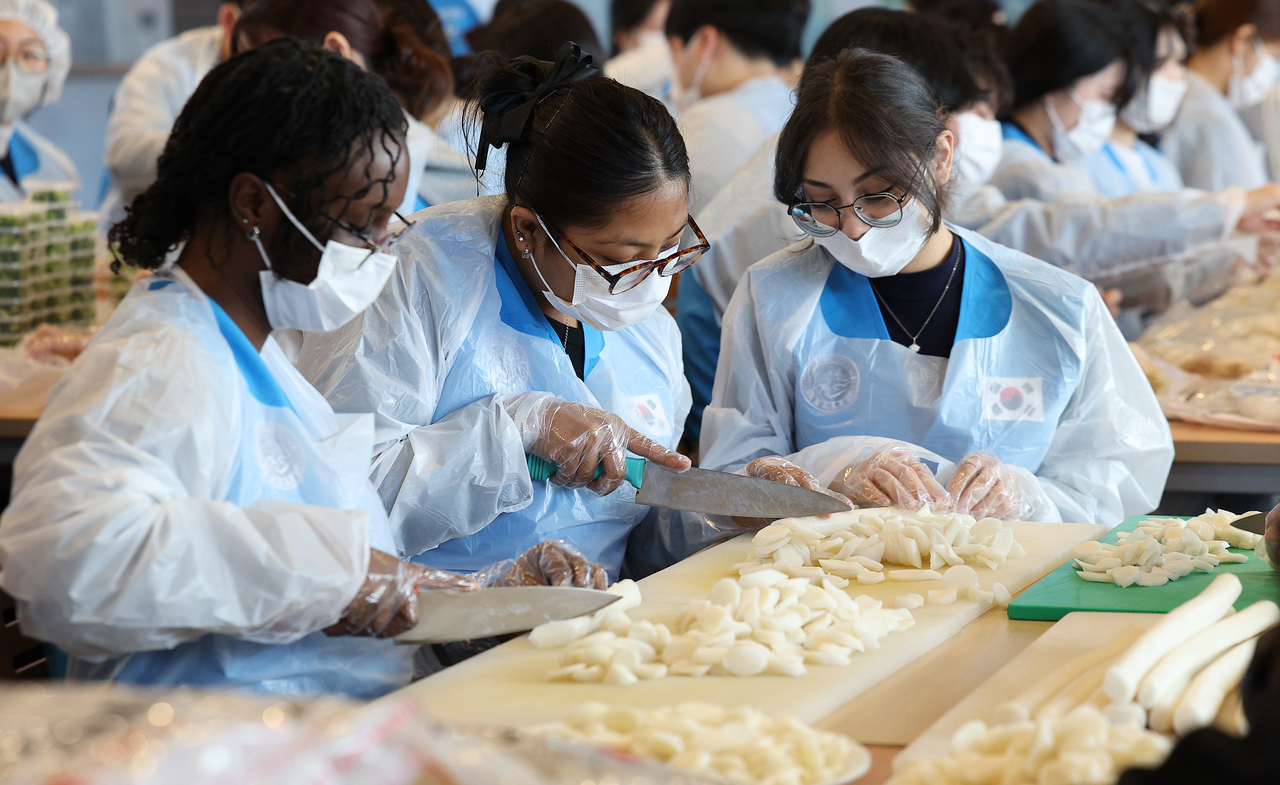
Foreign students seeking study-to-work pathways outside Seoul may find new opportunities in North Gyeongsang Province, as the region accelerates a sweeping higher-education overhaul aimed at tying universities more closely to local industry and long-term settlement.
The province said Tuesday it will invest more than 300 billion won ($207 million) this year alone into its Regional Innovation System & Education framework, part of a five-year plan that will channel over 1.5 trillion won through 2029. It is the largest region-led university support system among South Korea’s metropolitan and provincial governments.
A key pillar of the strategy is attracting and retaining global talent. One flagship initiative, “New Koreans 1,000,” aims to provide foreign students with comprehensive support spanning education, daily life, employment, entrepreneurship and administrative services, with the explicit goal of anchoring them in the local economy after graduation.
The province has set a target of hosting 30,000 foreign students. As part of that effort, the province plans to establish “Gyeongbuk Academies” in major source countries, offering pre-departure Korean-language instruction and region-focused orientation before students enroll at universities in the province.
Once in Korea, students will receive job-focused language training, regional studies and on-site internships aimed at preparing them for immediate placement in local industries.
“We will systematically build employment and settlement conditions within North Gyeongsang Province through visa support, housing assistance and long-term settlement programs,” said Park Sun-young, head of the province’s university policy division.
“Through a step-by-step strategy linking recruitment, education and settlement, we aim to respond to demographic change while advancing the internationalization of regional universities.”
Beyond global talent recruitment, the RISE framework represents a structural shift in how higher education is governed at the regional level.
Rather than fragmented, centrally driven programs, the province is placing itself at the center of planning — integrating university funding, talent development, industrial linkage and regional settlement into a single policy flow.
One major initiative launching this year is the “Gyeongbuk-style MEGAversity,” a consortium model that supports universities that failed to secure designation under the central government’s Glocal University program but have demonstrated strong capacity for educational innovation aligned with future industries.
Universities will be selected with a focus on artificial intelligence and other strategic growth sectors. Institutions that applied earlier this year will be evaluated and chosen, with full implementation to follow.
The MEGAversity consortium will receive 9 billion won annually and is designed to encourage resource-sharing while allowing each institution to concentrate on its specialized strengths.
A flagship example is the Gumi Global MEGAversity alliance. Under the model, Kumoh National Institute of Technology will lead advanced engineering and systems fields.
Kyungwoon University will focus on applied engineering and social infrastructure services, and Gumi University will specialize in industrial technical skills, together forming a region-wide academic consortium aligned with Gumi’s manufacturing base.
Another key project is the Gyeongbuk Mobility Innovation Institute, involving Daegu Catholic University, Daegu University and Yeungnam University.
The program trains specialists in future vehicle components, eco-friendly batteries and other mobility technologies tailored to the needs of local manufacturers.
The province said it will also strengthen outcomes-oriented initiatives, such as early-employment contract-based departments and university entrepreneurship platforms, focusing on job placement, technology transfer and industry-academia collaboration.
Looking ahead, the province plans to stabilize and deepen cooperation with universities already selected under the national Glocal University 30 initiative by increasing coordination with local governments and tightening performance monitoring.
These include POSTECH, Kyungpook National University, Daegu Haany University and Handong Global University.
“RISE is not simply an expansion of university support budgets,” said Lee Sang-soo, head of the province's regional development policy bureau. “It represents a real turning point in which universities and regions design their future together.”
“With the largest investment of its kind nationwide and bold innovation, we aim to complete a regional innovation model, one where talent does not leave, and where universities become engines that move the region forward,” he added.
jychoi@heraldcorp.com