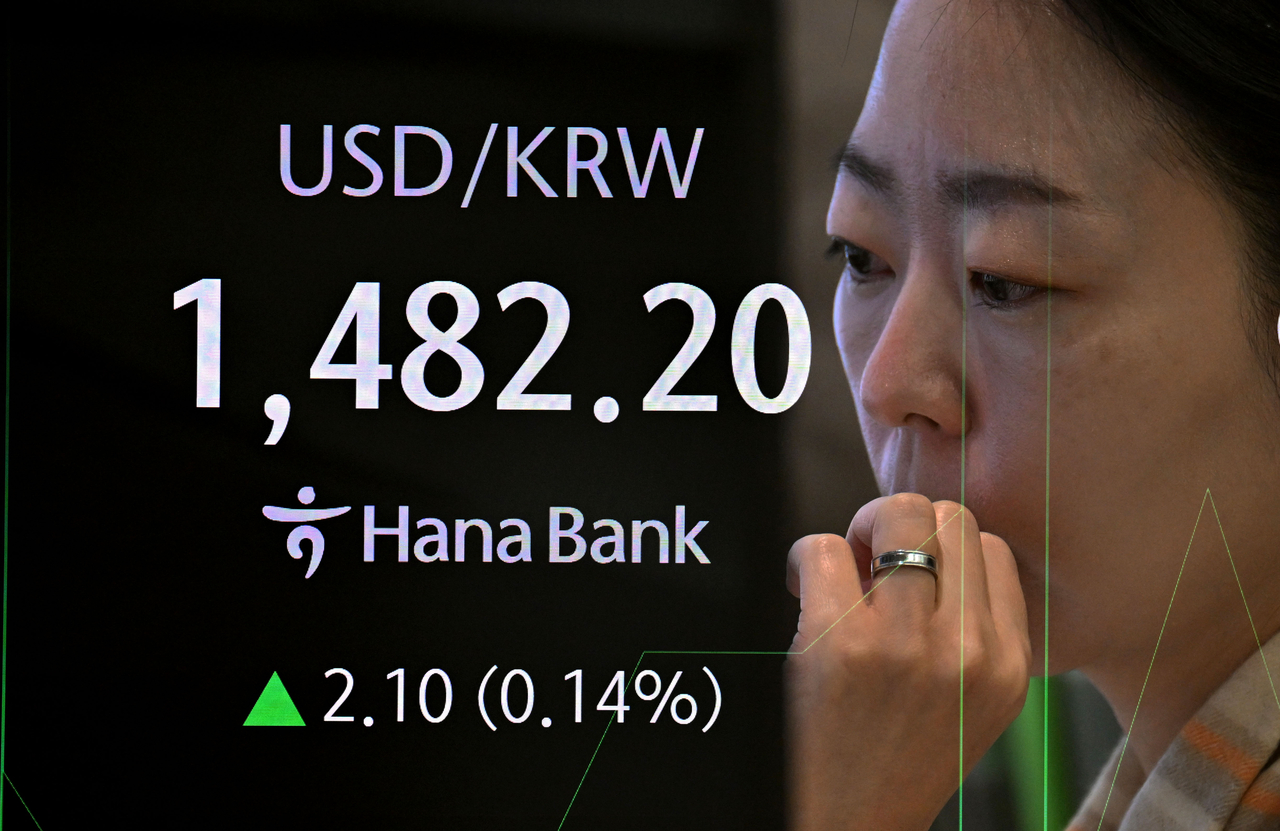
South Korea’s foreign-exchange authorities paired a verbal intervention with tax incentives for retail investors who sell overseas stocks and reinvest domestically, as part of broader efforts to stabilize the won.
“The Korean won’s excessive weakness is not desirable,” the Finance Ministry and the Bank of Korea said in a joint statement released at 9 a.m., just as onshore trading opened.
“The market will soon see that the series of meetings held over the past week and the rollout of measures by individual ministries and agencies were part of an effort to put the situation in order, underscoring the government’s strong resolve and its ability to execute a comprehensive policy response,” the statement said.
Officials said the measures are designed to correct structural imbalances in dollar supply and demand, particularly those driven by retail investors’ expanding overseas stock investments.
The government will grant capital gains tax relief to individual overseas investors who shift existing holdings of foreign stocks, held through Tuesday, into long-term domestic investments. The incentive will be available on a temporary, one-year basis and applied on a differentiated basis depending on the timing of asset sales.
Additional steps target currency risk management for retail investors. Major securities firms will roll out retail-oriented forward-exchange products, with tax incentives offered for currency hedging on overseas stocks held through Tuesday.
“Individual investors tend to invest overseas without hedging currency risk, leading to dollar purchases proportional to investment size and adding upward pressure on the exchange rate,” said Choi Ji-young, deputy finance minister for international affairs, at a press briefing.
He added that the rapid rise in overseas investment by retail investors has also increased the need to redirect those flows toward domestic markets. Retail investors accounted for less than 10 percent of Koreans’ overseas equity investment before 2020, a share that has since risen to more than 30 percent, Choi said.
According to the Finance Ministry, retail investors held a combined $161.1 billion in overseas stocks as of the end of September.
The package also expands tax support for dividend inflows from overseas subsidiaries of local companies, lifting the tax-exempt portion of such dividends received by domestic headquarters to 100 percent from the current 95 percent.
jwc@heraldcorp.com