A majority of South Koreans believe that migrants who pay taxes should be included in the country’s social welfare system, according to new national survey data released this week.
이번 주 공개된 전국 단위 조사에 따르면, 다수의 한국인은 세금을 내는 이주민을 국가의 사회복지제도에 포함해야 한다고 인식하는 것으로 나타났다.
The 2025 Human Rights Awareness Survey, published by Korea’s National Human Rights Commission on Tuesday, found that nearly 75 percent (74.7 percent) of respondents supported allowing taxpaying migrants to access the same social benefits as Korean citizens, a level of support that has remained largely unchanged from previous years.
국가인권위원회가 화요일 발표한 ‘2025 인권의식 조사’에서 응답자의 약 75%(74.7%)는 세금을 내는 이주민에게 한국 국민과 동일한 사회 혜택을 제공하는 데 찬성한다고 밝혔으며, 이는 예년과 비슷한 수준의 지지율이다.
The survey was conducted nationwide between July and August and gathered responses from over 17,000 South Korean adults aged 18 or older. It is considered the country’s most comprehensive annual study on public perceptions of human rights, discrimination and inclusion.
이번 조사는 7~8월 전국에서 만 18세 이상 한국인 성인 1만7,000여 명을 대상으로 실시되었다. 이 조사는 인권·차별·포용에 대한 국민 인식을 가장 포괄적으로 살피는 국내 대표 연례 조사로 평가된다.
The survey also revealed that migrants remain widely perceived as marginalized in South Korean society. Only 38.8 percent of respondents said they believe migrants’ rights are respected, which was the lowest of all population groups covered in the survey.
조사 결과, 이주민은 여전히 한국 사회에서 주변화된 집단으로 인식되고 있는 것으로 나타났다. 이주민의 권리가 존중받고 있다고 답한 비율은 38.8%로, 조사 대상 집단 중 가장 낮은 수준이었다.
In contrast, nearly 90 percent said women’s rights are respected, followed by those of youth (87.1 percent) and children (85.2 percent). Migrants were also listed among the most vulnerable to discrimination, along with economically disadvantaged groups and persons with disabilities.
반면 여성의 권리가 존중된다고 답한 비율은 약 90%였고, 이어 청년(87.1%)과 아동(85.2%) 순이었다. 이주민은 경제적 취약계층, 장애인과 함께 차별에 가장 취약한 집단으로 꼽혔다.
Limited welfare access for migrants
이주민의 제한된 복지 접근권
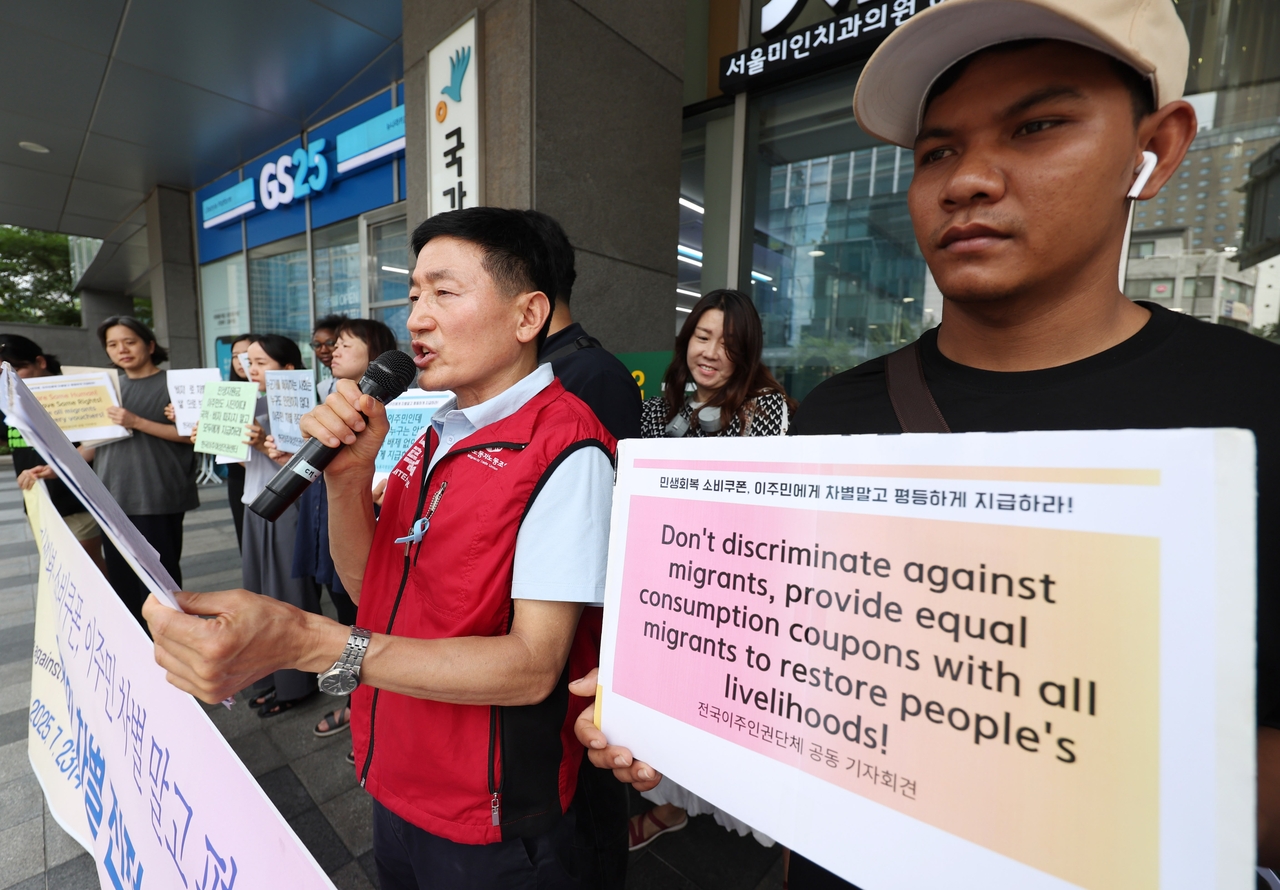
The survey results come months after the South Korean government implemented its 2025 Livelihood Recovery Consumption Coupons program, a large-scale stimulus measure intended to boost domestic consumption. While the program issued cash-equivalent vouchers to most citizens, including additional support for low-income groups, most foreign residents were excluded.
이번 조사 결과는 정부가 내수 진작을 위해 대규모 경기부양책인 ‘2025 상생소비쿠폰’을 시행한 지 몇 달 뒤에 발표됐다. 저소득층 추가 지원을 포함해 대다수 국민에게 현금성 쿠폰이 지급됐지만, 상당수 외국인 거주자는 대상에서 제외됐다.
Under the government’s eligibility rules, only foreign residents holding visas for permanent residence, marriage or refugee status qualified to receive the vouchers. Others could apply only if they were registered on the same resident record as a Korean national and enrolled in the national health insurance system.
정부 기준에 따르면 영주권, 결혼비자, 난민 지위를 가진 외국인만 쿠폰 수령 자격이 주어졌다. 그 밖의 외국인은 한국 국적자의 주민등록에 함께 등재되어 있고, 국민건강보험에 가입되어 있을 때에만 신청이 가능했다.
Migrant workers and most temporary visa holders were not eligible, even if they had lived in the country for years and paid taxes throughout that time.
수년간 한국에 거주하며 세금을 납부해온 이주노동자와 대부분의 단기 비자 소지자는 여전히 대상에서 제외됐다.
South Korea is home to more than 2.6 million foreign residents as of the 2024 census, who now make up over 5 percent of the population. Many participate in the workforce and contribute to social insurance and taxes, but remain excluded from various government programs tied to nationality or visa status.
2024년 인구조사에 따르면 한국에는 260만 명 이상의 외국인 거주자가 살고 있으며, 이는 전체 인구의 5%를 넘어선다. 이들 상당수는 노동시장에 참여하고 사회보험과 세금을 납부하고 있지만, 국적이나 체류자격에 연동된 많은 정부 지원 프로그램에서는 제외된다.
Earlier data from the Ministry of Gender Equality and Family released in June also indicated that public support for migrant integration is growing. In that survey, 73.5 percent of South Korean adults agreed that promoting migrant integration is a necessary long-term investment, while just over half believed the government was doing enough in that area.
여성가족부가 6월 발표한 이전 조사에서도 이주민 ‘통합’을 지지하는 여론이 확대되고 있는 것으로 나타났다. 해당 조사에서 한국인 성인 73.5%는 이주민 통합을 ‘필요한 장기적 투자’라고 보았지만, 정부가 충분히 노력하고 있다고 답한 비율은 절반을 조금 넘는 수준에 그쳤다.
Tip
1. migrants — 이주민들
2. welfare — 복지, 사회보장
3. discrimination — 차별
4. inclusion — 포용
5. marginalized — 주변화된
6. implemented — 시행된
7. refugee — 난민
8. integration — 통합
khnews@heraldcorp.com