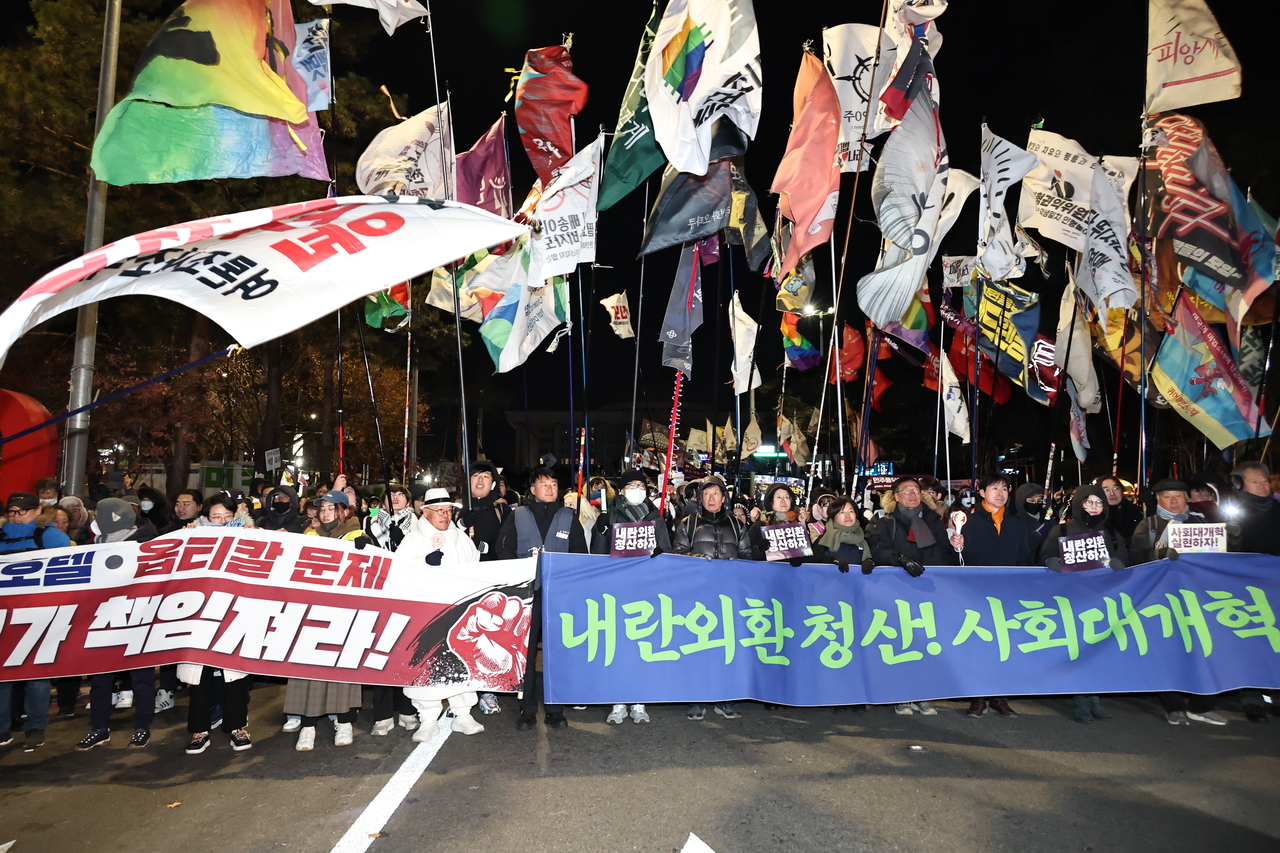
One year after the Dec. 3 martial law crisis upended Korea’s constitutional order, the country confronts an uncomfortable truth: The institutions that resisted a president’s unlawful deployment of troops proved sturdier than many feared, yet the political class that presided over the collapse has learned almost nothing from it.
12월 3일 계엄령 사태가 한국의 법치 구조를 흔든지 1년이 된 지금 우리는 불편한 진실을 마주하고 있다. 대통령의 불법적인 군대 동원에 맞섰던 국가 기관들은 많은 이들이 걱정했던 것보다 더욱 견고하다는 것을 증명했으나 사태를 주도했던 정치 세력들은 교훈을 얻은 것 같지 않다.
The broad facts appear largely settled. Courts now handle the trials of former President Yoon Suk Yeol and senior security officials. Major elements of the alleged chain of command, the planning and the attempted execution have been laid bare, even if important questions remain.
대략적인 상황은 거의 안정된 것처럼 보인다. 법원에서는 윤석열 전대통령과 고위 안보 관계자들의 재판이 진행되고 있다. 비록 중요한 의문점들은 여전히 남아있지만 당시의 지휘 체계, 계엄 관련 계획 과정 및 실행 시도와 관련한 주요 사항들은 전말이 밝혀졌다.
The trials of Yoon and more than 20 co-defendants, including former military and police chiefs, are indispensable not only for accountability but for establishing an authoritative record of how the crisis unfolded.
윤 전 대통령과 전직 고위 군경 인사들을 포함한 20여명의 피고들에 대한 재판은 책임 소재를 밝히는 것 뿐만 아니라 사태의 전개 양상에 대한 권위있는 기록이라는 점에서도 필수불가결이다.
South Korea restored constitutional rule without violence and projected an administrative resilience that many democracies would struggle to match. Within hours of the declaration, the National Assembly overturned the decree and the acting police chief later issued a formal apology for restricting access to the legislature. These steps mattered. They signaled a recognizable commitment to democratic procedure, even amid institutional shock.
한국은 폭력 사태 없이 헌법 체제를 복원하였고 많은 민주주의 국가들이 따라하기 어려울 정도로 국가 행정 기능의 회복력을 보여주었다. 계엄령 선포 후 몇 시간 만에 국회는 계엄 해제를 의결하였고, 경찰청장 대행은 국회 출입 통제에 대해 공식적인 사과를 발표했다. 이러한 조치들은 제도적으로 흔들리는 와중에도 민주적 절차를 따랐다는 것을 시사한다.
But the political response since then has been a disappointing mix of blame shifting, moral posturing and factional theatrics.
그러나, 그 이후 정치권의 반응은 실망스럽게도 책임 전가, 도덕적 가식 그리고 당파적 보여주기식 행동들로 점철되었다.
The conservative opposition People Power Party has been particularly adrift. It cannot decide something as basic as whether to apologize for the episode, divided between lawmakers who see contrition as essential to legitimacy and leaders still caught in the gravitational pull of the previous presidency.
보수야당인 국민의 힘은 특히 갈피를 잡지 못하는 모습을 계속 보이고 있다. 국민의 힘은 계엄 사태에 대한 사죄 여부와 같은 기본적인 사항도 결정을 내리지 못하고 있으며, 과오 인정이 정통성 확보에 필수적이라고 하는 정치인들과, 여전히 전 대통령의 영향력에서 벗어나지 못하고 있는 중진들로 분열되어 있다.
The spectacle of senior figures flirting with revisionist narratives, even after impeachment, has cemented the perception that the party fears its loudest factions more than it respects the constitutional order. The result is a party with support stuck at a low level and no credible claim to be a governing alternative.
탄핵 이후에도 수정주의적 설명 논리를 넌지시 흘리는 중진 인사들의 모습은 국민의 힘이 헌법 질서 존중보다 당내 영향력 있는 파벌을 더욱 우려한다는 인식을 더욱 공고히 했다. 그 결과 당 지지율은 저점에 머물러 있고, 정권의 대안세력으로서의 신뢰도 잃게 되었다.
The trajectory of the governing coalition led by the Democratic Party of Korea offers only partial relief. It led the legal and institutional clean-up that voters expected, yet its posture has grown more punitive as the trials near their end. The push for new special tribunals risks looking less like democratic consolidation and more like partisan compulsion.
민주당이 주도한 여당의 연대 행보도 국민들의 우려를 일부 완화할 뿐이다. 유권자들이 기대했던 법적, 제도적 청산을 주도하기는 했으나 재판이 막바지에 이르자 처벌에 좀더 초점이 맞춰졌다. 특별재판소 신설 추진은 민주적 통합보다는 당리당략 차원의 밀어붙이기식 행동으로 보일 위험을 안고 있다.
President Lee Jae Myung’s call for a second special counsel and a dedicated insurrection court may ensure procedural completeness, but it risks creating the impression that justice is being driven by the political calendar rather than institutional process.
이재명 대통령의 2차 특검 및 내란 전담 재판부 설치 주장은 절차상 완결성을 보장할 수 있을지 모르나, 제도적 절차보다 정치적 목적에 따라 정의를 재단한다는 인상을 줄 위험도 있다.
Even if the motives are sound, the way the Democratic Party tries to score political points increasingly appears clumsy. A ruling party that leans on moral superiority rather than consensus-building will eventually discover the limits of its mandate.
아무리 선한 동기라 하더라도 민주당이 정치적으로 득점을 올리려는 모습은 점점 투박해 보이기까지 한다. 국민의 공감대 형성보다 도덕적인 우위에 의지하는 여당은 결국 권력의 한계에 부딪히게 될 것이다.
The deeper tragedy is that both camps remain captive to their most strident supporters, offering mirror-image versions of the same flawed logic: That absolutism mobilizes better than responsibility. This mindset is precisely what made a martial law gambit politically thinkable a year ago. It is also why neither camp has produced a credible program for long-term renewal, whether on economic reform, demographic decline or national security.
더욱 비극적인 것은 여야 모두 열성 지지자들에게 발목을 잡힌 채 마치 거울에 비친 이미지처럼 동일한 결함투성이의 논리를 내세우고 있다는 점이다. 그러한 극단주의는 책임 정치보다 세력 동원에 용이할 수는 있다. 이러한 사고방식이야말로 일년 전 계엄령 선포를 정치적인 포석이라고 인식한 것과 동일하다. 또한 여야 모두 경제 개혁이나 인구 감소 또는 국가 안보 문제에 있어 장기적 개선을 위한 설득력 있는 방안을 제시하지 못하는 이유이기도 하다.
All this unfolds against an economic backdrop that is better than feared yet worse than needed. Markets have steadied under the Lee administration and external risks have eased, but South Korea still confronts stagnant potential growth, persistent 1 percent real gross domestic product forecasts and a reform backlog that no coalition has had the courage to own.
현재 상황은, 당초 우려보다는 심각하지 않지만 여전히 어려운 경제상황 하에 펼쳐지고 있다. 이재명 정부 출범 이후 시장은 안정화하고, 대외적인 위협요인들은 완화되었으나 한국의 잠재적 성장은 여전히 정체되어 있다. 실질GDP는 여전히 1퍼센트대 성장률에 머물러 있고, 개혁 지연의 책임은 정치권 누구도 떠안으려 하지 않고 있다.
Without structural changes to regulation, labor, pensions and education, the country’s growth ceiling will keep drifting downward, no matter how many crises it survives.
규제, 노동, 연금 그리고 교육 분야에 있어서의 구조적 변화 없이는, 한국이 아무리 많은 위기를 헤쳐나간다고 하더라도 국내 성장의 한계는 계속 하향화할 것이다.
Anniversaries can clarify. A year after armored vehicles and troops were mobilized toward the National Assembly, South Korea’s institutions look durable, but its politics do not.
계엄 사태 1주년이 된 지금 더욱 분명해진 사실이 있다. 국회를 향해 무장 차량과 군대가 동원된 지 1년이 지난 지금 한국의 제도적 시스템은 견고해 보이지만 정치는 그렇지 않다는 점이다.
The Dec. 3 crisis was a warning. Its lessons remain unlearned.
12월 3일의 위기는 우리에게 경고를 보냈지만, 아직 교훈은 얻지 못했다.
upend 뒤집다
deployment 동원
preside 주재하다
resilience 회복
posturing 가식
factional 당파의, 파벌간의
gravitational 중력의
contrition 회한, 회개
punitive 처벌을 위한
tribunal (특별)재판소
consolidation 화합
compulsion 충동, 강요
strident 단호한
gambit 수
stagnant 정체된
khnews@heraldcorp.com