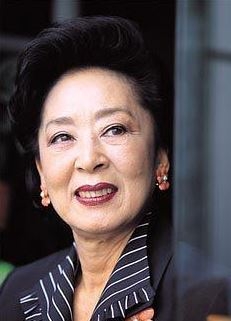
Kim Ji-mee, a leading figure during the rise of Korean cinema in the 1960s and '70s, died Tuesday at the age of 85.
Local industry reports said Kim's health had declined in recent weeks following complications related to shingles. According to the Korean Film Council and the Korea Actors Association, they have begun making funeral arrangements in coordination with her family and the film community.
Born in 1940 in Daedeok County, South Chungcheong Province, Kim was discovered as a teenager by filmmaker Kim Ki-young and made her screen debut in "Hwanghonyeolcha" (translated as "Twilight Train") in 1957. She broke out the following year with the 1958 melodrama "Byeola Nae Gaseume (Star, in My Heart)."
A dominant star through the '60s and '70s, Kim eventually appeared in more than 700 features through the 1990s and became synonymous with a distinctive femme fatale screen persona.
Kim also remained active behind the camera. In 1986, she established the production banner Jimmy Film, which produced seven titles, including that year's "Ticket," for which she earned best acting honors at the 23rd Baeksang Arts Awards. She later held several key industry posts, including serving as chair of the Korean Film Council in 1995.
Over her career, she earned numerous honors both as an actress and film producer, including recognition at the Baeksang Arts Awards, Blue Dragon Film Awards and Grand Bell Awards. Kim was also inducted into the Hall of Fame for Korean film figures in Namyangju, Gyeonggi Province, in 2010, for her contribution to Korean cinema.
Her personal life, which included three legal marriages and divorces, drew steady media attention. Kim first married director Hong Seong-gi in 1958 at age 18; he was 16 years her senior. After giving birth to a daughter and a son, the couple parted ways in 1962 amid Hong's repeated production failures and his extramarital affair.
Kim later became embroiled in a scandal when she was detained on adultery charges with Choi Mu-ryong, one of the era's biggest stars. After paying damages to Choi’s wife in 1963, the pair married, but divorced in 1969. Choi's son from his first marriage, actor Choi Min-soo — known for seminal Korean dramas like “Sandglass” — was long known to have maintained a close, mother-son bond with her.
Kim later lived with star singer Na Hoon-a in a de facto marriage from 1976 to 1982, then married a physician in 1991, divorcing 11 years later.
Kim continued performing until 1990. After stepping away from active work, she lived in the US until her death.
yoonseo.3348@heraldcorp.com