Digital trade, sustainability, new supply-chain rules emerge as core pillars of upgraded pact
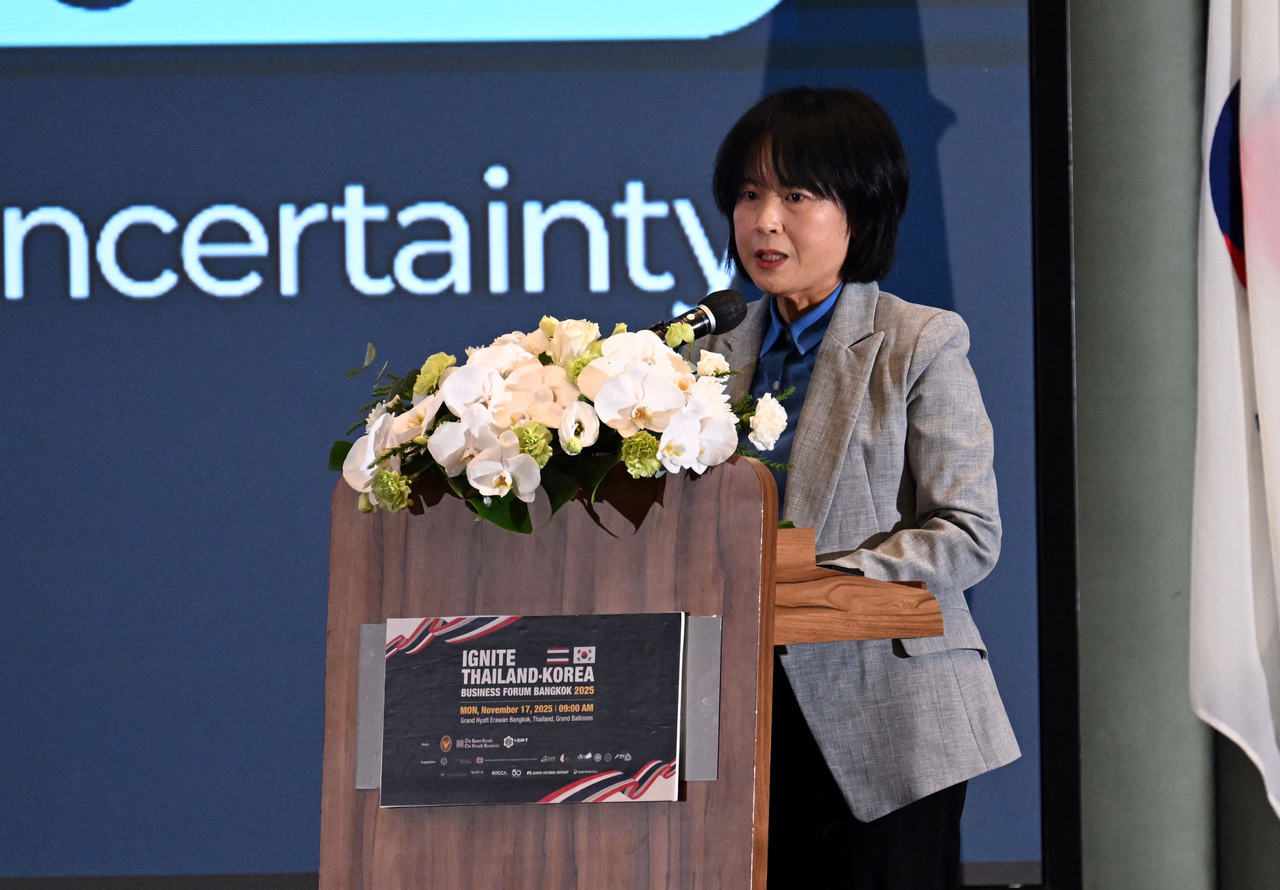
BANGKOK — South Korea and Thailand signaled fresh momentum behind their Comprehensive Economic Partnership Agreement negotiations on Monday, presenting the deal as a strategic upgrade that both economies now see as necessary amid a shifting global environment.
“The multilateral system we once depended on no longer functions as it should, and protectionism and unilateralism continue to spread,” Kwon Hye-jin, South Korea’s deputy minister for trade negotiations of the Ministry of Trade, Industry and Resources, said at the Ignite Thailand–Korea Business Forum in Bangkok.
“In this environment, strengthening ties through bilateral agreements is becoming increasingly important, with the Korea–Thailand CEPA serving as a tool to expand trade, investment and cooperation between our two countries.”
Kwon took the stage during a session on strategies for expanding business cooperation between Korea and Thailand, speaking alongside a senior Thai trade official on the progress of the CEPA negotiations.
Launched in 2024, the CEPA talks have progressed through seven rounds, covering 24 chapters that range from goods, services and investment to digital trade, supply-chain cooperation and sustainability. Both sides say the goal is a high-standard, comprehensive agreement that goes well beyond existing commitments under the ASEAN–Korea FTA and the Regional Comprehensive Economic Partnership.
“The two countries are putting in place the institutional groundwork to help their companies operate in each other’s service markets with more competitiveness and legal certainty,” Kwon said.
The economic stakes are significant. Bilateral trade peaked at about $16.5 billion in 2022, and more than 400 Korean companies now operate in Thailand across electronics, steel, chemicals and manufacturing. ASEAN as a whole is Korea’s second-largest trading and investment partner, and Thailand — its third-largest economy and Korea’s fifth-largest export destination in the bloc — is increasingly viewed by Seoul as a key supply-chain base.
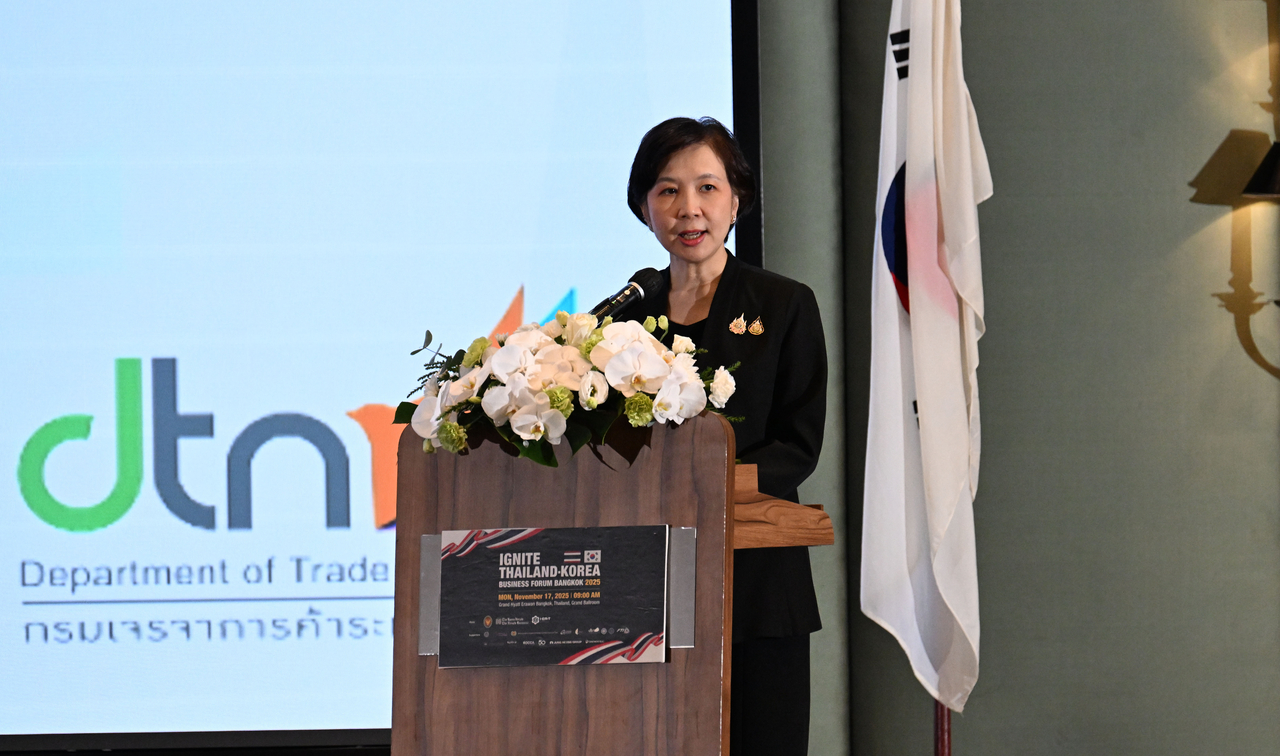
Chotima Iemsawasdikul, head of Thailand’s Department of Trade Negotiations, said the new pact would go further than any agreement the two countries share today.
“This CEPA is a step forward — more modern, transparent and aligned with international standards,” she said. Citing domestic research, she added that Thailand expects the deal to lift gross domestic product by over $1 billion.
Both governments see clear sectoral gains. Thailand anticipates wider access for tropical fruit, processed foods, rubber and chemical products, while Korea is expected to benefit in automobiles, machinery, electronics and steel. In services, Korean firms see opportunities in logistics, transportation, hospitality and digital infrastructure, while Thailand expects openings in business services, tourism, entertainment and health care, including elder-care services in Korea’s aging market.
The agreement will also open new ground in digital trade, with provisions expected to cover cross-border data flows, cybersecurity and e-commerce. “Much of today’s commerce moves through digital channels,” Kwon said. “CEPA’s digital rules are anticipated to support the digital transition and digital-trade facilitation policies of both countries.” Chotima added that these elements would “lower barriers, build trust and strengthen security capacity.”
Sustainability and supply-chain chapters are also under discussion, aimed at reinforcing resilience in sectors where the two countries already operate closely together, from electronics and autos to food processing.
Amid shifting global trade dynamics and rising geopolitical risk, Seoul and Bangkok say the CEPA will help anchor the future structure of their economic ties. “I’m confident the final pact will expand trade and investment flows, strengthen our supply-chain partnerships and elevate our bilateral relationship to a higher level," Chotima said.
jwc@heraldcorp.com