Plans to facilitate UAE citizens' entry to S. Korea under review, amid momentum for growth of people-to-people exchange
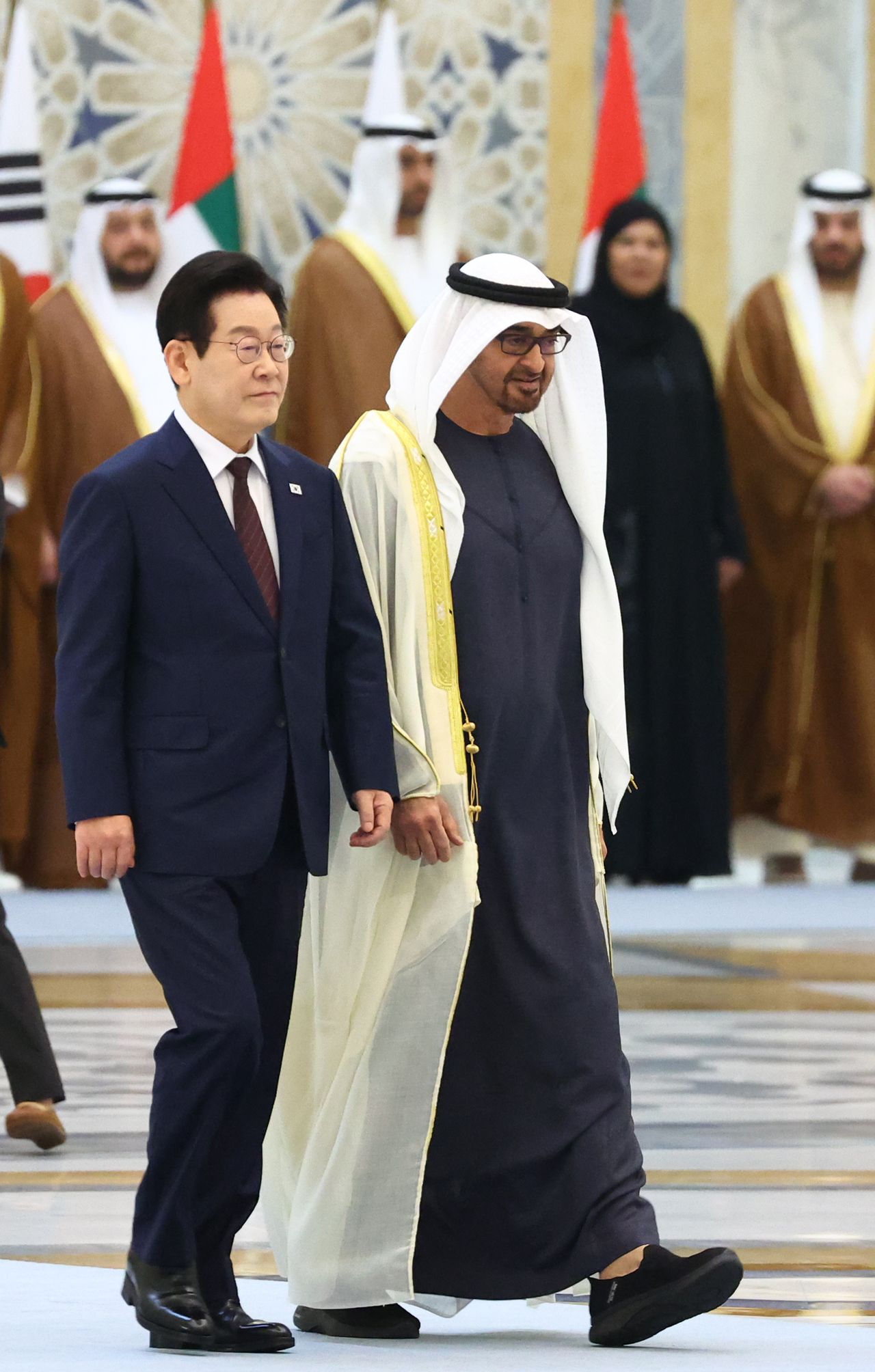
South Korea and the United Arab Emirates seek deeper ties across the board, in fields ranging from artificial intelligence and space to health care, with the two sides' leaders discussing related matters during President Lee Jae Myung's state visit.
Lee and UAE President Mohamed bin Zayed Al Nahyan held a presidential summit Tuesday at the Qasr Al Watan presidential palace in Abu Dhabi. Following the meeting, South Korea and the UAE signed seven memoranda of understanding outlining cooperation in these fields.
The MOUs include those laying out a framework for strategic AI cooperation between the two countries, as well as ways to join forces for space exploration. Others seek to foster comprehensive ties in biotechnology and health care, and deepen cooperation in the field of intellectual property and advanced technology in nuclear energy.
The summit was followed by a state lunch hosted by the UAE leader and a performance by UAE and South Korean artists in the Spirit of Collaboration room of Qasr Al Watan. Performers were to include soprano Jo Su-mi, crossover trio La Poem, 25-string gayageum player Seo Jung-min and guitarist Jang Ha-eun as the first South Koreans to take the stage at the Emirati presidential palace.
Lee's visit comes as the UAE has pushed to nurture a future-oriented, non-oil economy with new growth drivers. The UAE has laid out the AI blueprint for 2031, dubbed the National Strategy for Artificial Intelligence.
Moreover, the Barakah nuclear power plant in the UAE, built by South Korean firms as the Middle East's first commercial plant, has been in full-fledged commercial operation since last year after 12 years of construction. It now covers a fourth of the country's electricity needs.
The Middle Eastern country, over the past few years, has also turned to South Korea for imports of key defense equipment such as the Chunmoo multiple rocket launcher and the Cheongung-II surface-to-air missile system.
Such developments in bilateral ties build on the UAE's 2023 commitment to invest $30 billion in South Korea, as well as the Comprehensive Economic Partnership Agreement signed in 2024, designed to eliminate tariffs on more than 90 percent of bilateral trade. The two countries have reinforced the "special strategic partnership" signed in 2018.
Before Lee's meeting with the Emirati president, Prime Minister Kim Min-seok presided over a Cabinet meeting at the Government Complex in Seoul and told Cabinet ministers that Lee's 10-day trip, which began with his state visit to the UAE, would "broaden the diplomatic horizon" of South Korea.
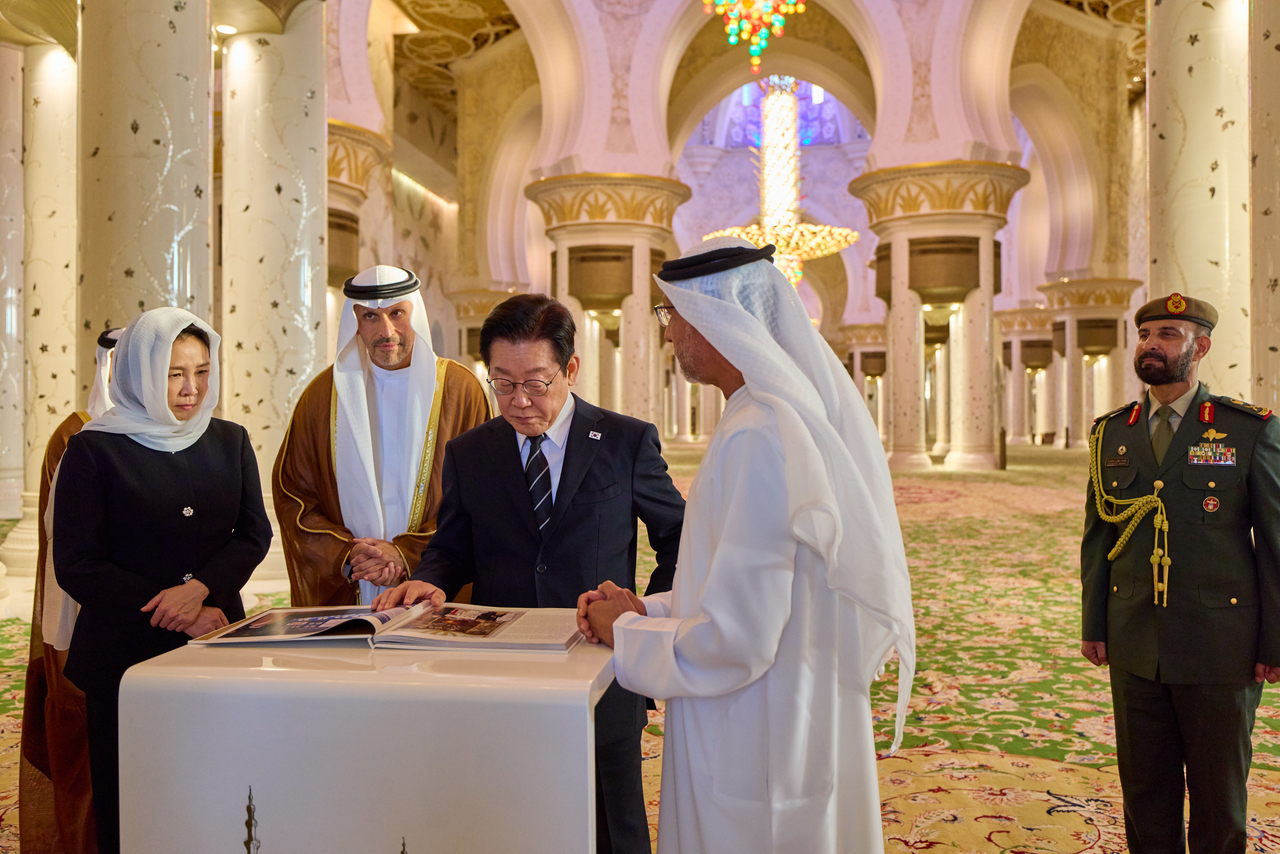
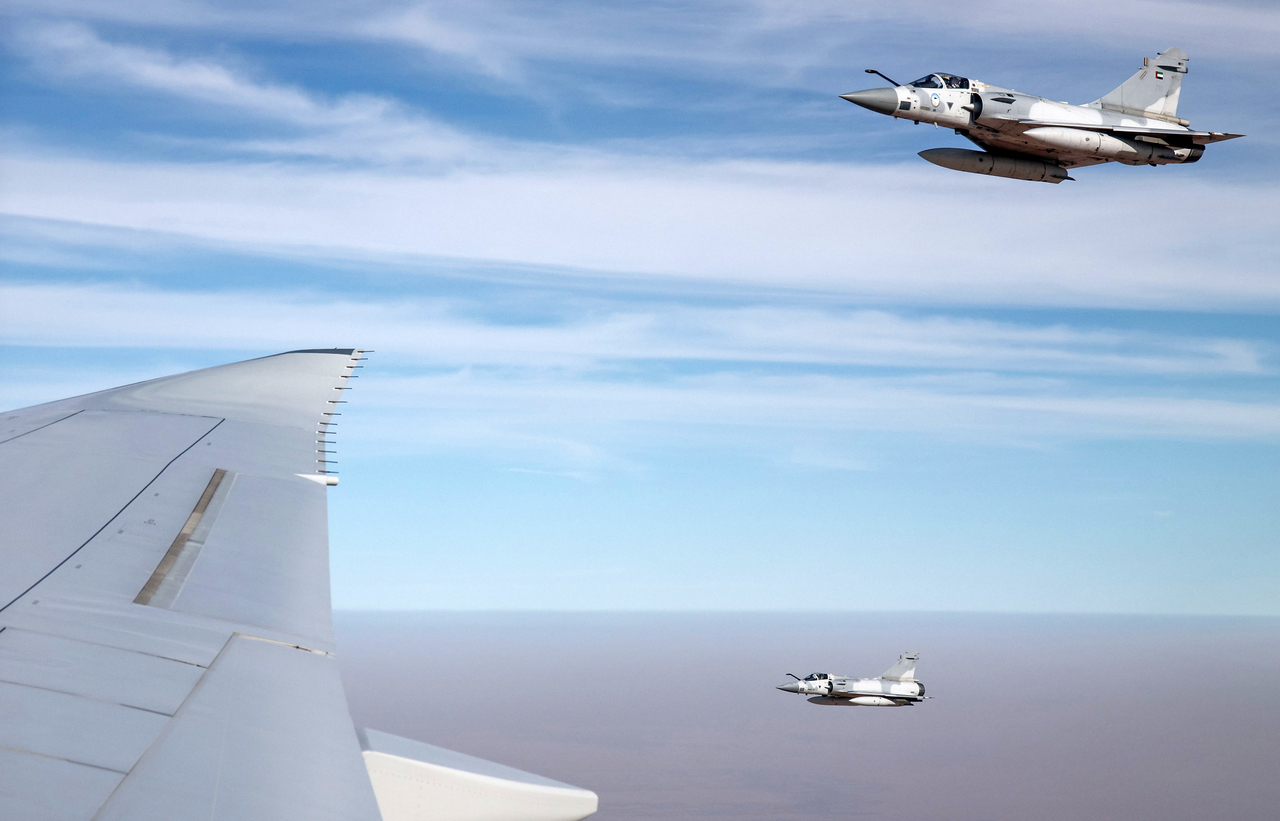
Upon arrival in Abu Dhabi on Monday, escorted by four UAE Air Force fighter jets, Lee visited the Wahat Al Karama war memorial and the Sheikh Zayed Grand Mosque. At the dinner meeting with overseas Koreans in Abu Dhabi on Monday, Lee expressed his view that the UAE could serve not only as a "strategic gateway" but also a "base camp" for South Korean firms and talent seeking to make a foray into the Middle East, Africa and Europe.
Meanwhile, Lee's interview with Emirati newspaper Al Etihad, released Tuesday, showed that the Lee administration had reviewed ways to facilitate UAE citizens' entry to South Korea. Such measures would be in addition to the 2016 visa waiver agreement, which allows citizens to travel between the two countries without a visa for up to 90 days.
"The Korean government will continue reviewing ways to make entry easier for UAE citizens wishing to visit Korea," Lee told Al Etihad.
Lee also said it was important to keep the momentum for people-to-people exchange afloat, underscoring that the UAE had attracted some 200,000 South Korean visitors each year.
consnow@heraldcorp.com