$1,880 headset marks Samsung’s return to immersive tech, start of new XR showdown
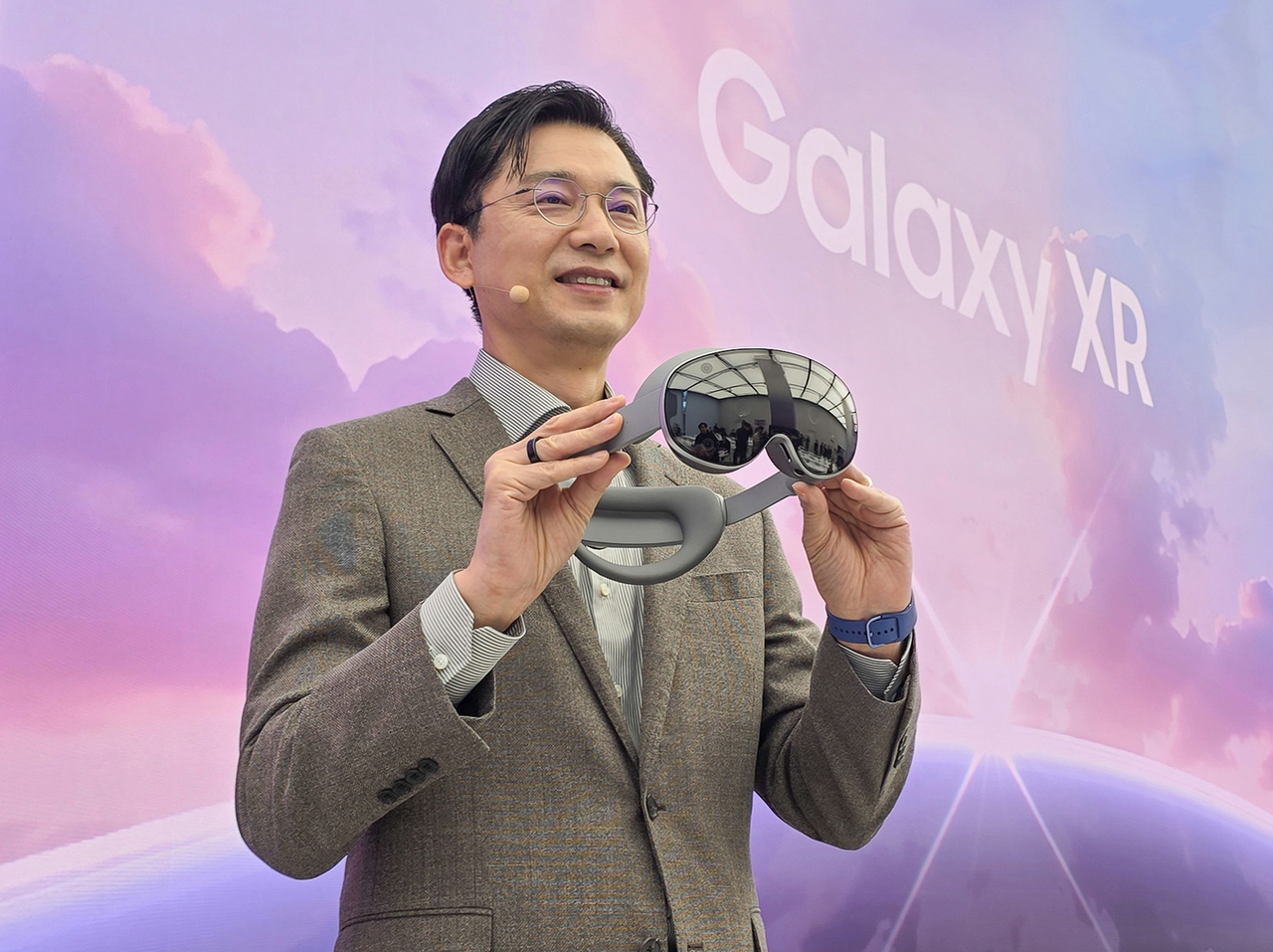
Samsung Electronics on Wednesday unveiled Project Moohan, its long-awaited extended reality headset, marking its bold entry into the high-stakes immersive technology race dominated by Apple’s Vision Pro.
Developed in partnership with Google and Qualcomm, the device — officially branded as the Galaxy XR — represents a powerful alliance between three tech giants, combining Samsung’s hardware expertise, Google’s Android XR platform and Qualcomm’s Snapdragon XR2+ Gen 2 processor.
The launch signals Samsung’s return to the forefront of next-generation computing, setting the stage for a direct showdown with Apple in the battle to define the future of spatial and mixed reality.
Weighing 545 grams, the Galaxy XR sits between Apple’s Vision Pro (600 grams) and Meta’s Quest 3 (515 grams). It offers up to two hours of continuous use per charge. Samsung said the headset’s optimized form factor and balance make it comfortable for extended wear — a key consideration against Apple’s high-priced, heavyweight rival.
At the heart of Samsung’s push is its deep integration with Google’s software ecosystem, which allows the Galaxy XR to deliver immersive experiences through key services like maps, photos and YouTube apps specialized for the Galaxy XR. The headset supports most Android apps, immediately giving it access to a vast, established user base — something Apple’s Vision Pro ecosystem lacked at launch.
“This device represents the pinnacle of hardware and software innovation,” said Lim Sung-taek, Samsung’s vice president for domestic sales. “With Google and Qualcomm, we are setting a new standard for immersive technology.”
The Galaxy XR leverages Google’s Gemini artificial intelligence for natural, multimodal interaction, enabling users to control the interface through sight, sound and movement — a direct counter to Apple’s intuitive “eye and hand” control system. Qualcomm’s powerful chipset ensures low latency and precise tracking of head, hand and eye motions, making the experience smoother and more responsive.
Samsung and its partners are also tackling one of XR’s biggest hurdles: content scarcity. The Galaxy XR will offer exclusive XR-enabled experiences from Adobe, MLB, the NBA and local partners like Coupang Play and Naver’s Chzzk livestreaming platform, strengthening its entertainment lineup against Apple’s largely US-centric content library.
“This collaboration is about more than a single device,” said Juston Payne, director of product management for XR at Google. “Together, we’re building an ecosystem that connects premium content with world-class hardware and AI.”
Samsung executives say the device — code-named “Infinite” during development — symbolizes the company’s ambition to expand XR beyond headsets into an entire platform of connected experiences. Future projects include next-generation smart glasses in partnership with Gentle Monster and Warby Parker, though the Galaxy XR itself will remain focused on immersive entertainment and productivity.
Priced at 2.69 million won ($1,880), the Galaxy XR goes on sale Wednesday in Korea and the US, undercutting Apple’s Vision Pro, which retails at $3,499 in the US.
yeeun@heraldcorp.com