Price gap between the most and least expensive postpartum care centers nationwide exceeds 33-fold, data shows
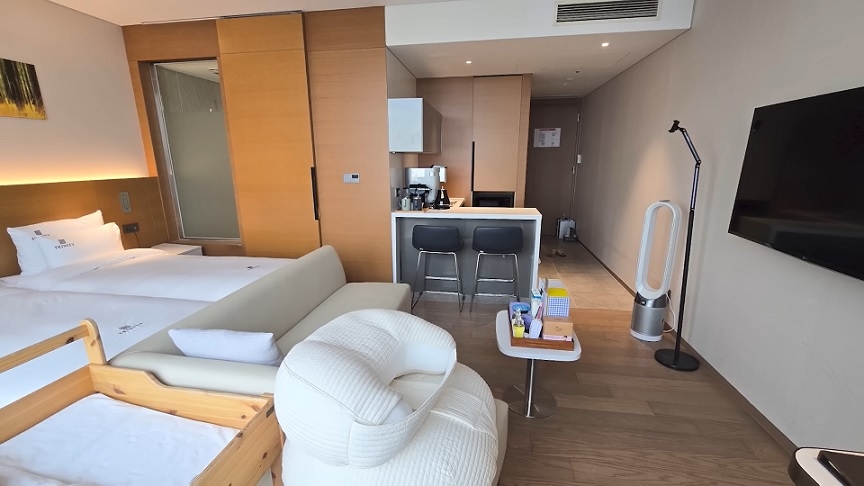
Postpartum care centers, or "sanhujoriwon," are often hailed as a haven for new mothers in Korea.
At these facilities, where new mothers typically stay for about two weeks, they are provided with hotel-like services 24 hours a day, including well-balanced meals made with high-quality ingredients, massages designed to aid weight loss and personalized child care lessons.
The rising demand among young mothers has fueled the emergence of upscale, hotel-style postpartum facilities in recent years, deepening the divide between premium and basic options, according to data from the Ministry of Health and Welfare cited by Rep. Nam In-soon of the Democratic Party of Korea.
As of June, Korea's priciest postpartum care in Seoul’s Gangnam-gu charged 40.2 million won ($28,183) for a two-week stay in a deluxe suite — a 1.55-fold increase from the previous high of 26 million won recorded in 2021. In contrast, the most affordable option based on the same room type was in Gunsan, North Jeolla Province, costing 1.54 million won for the same period, data showed.
For standard rooms, two postpartum care centers in Seoul’s Gangnam-gu recorded the highest prices at 17 million won each, while a center in Gunsan, North Jeolla Province, offered the lowest rate at 1.2 million won.
When comparing overall rates regardless of room type, the price difference between the most and least expensive postpartum care centers nationwide reached 33.5 times.
Seven out of the 10 most expensive postpartum care centers were concentrated in Gangnam-gu, while the remaining three were located in Yongsan-gu, Gangseo-gu and Seongnam, Gyeonggi Province.
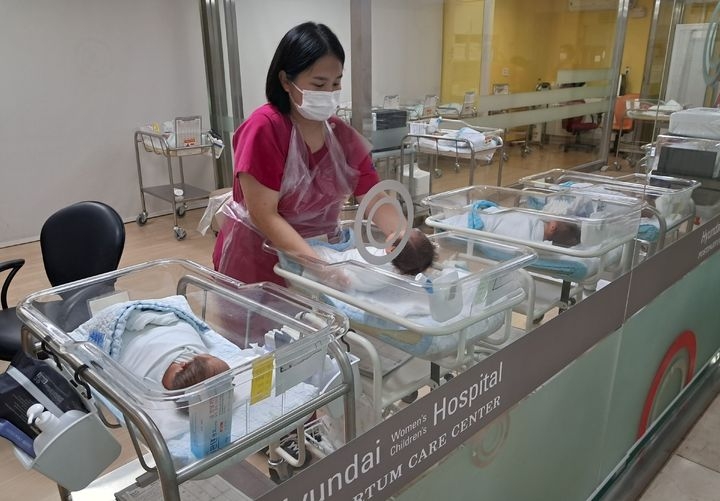
The average cost among the top 10 centers was 12.6 million won — about 8.4 times, or roughly 11.1 million won higher, than the average of the 10 least expensive centers nationwide, which stood at 1.5 million won. Six were public facilities operated by local governments.
The lawmaker voiced concern over the widening disparity in postpartum care costs and urged the expansion of public postpartum care centers offering quality services at affordable prices.
"Currently, there are only 21 public postpartum care centers nationwide, limiting new mothers’ ability to choose suitable facilities according to their financial circumstances," Nam said.
Centuries-old tradition reborn in luxury suites
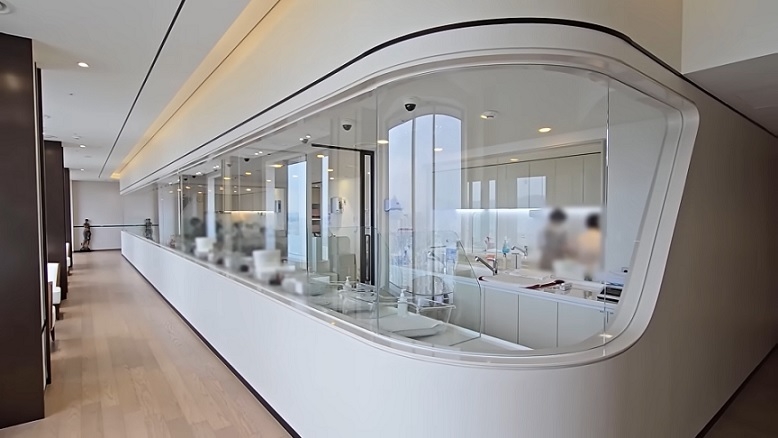
Traditionally for Korean mothers, the three weeks following childbirth, called "samchilil," have been regarded as a crucial recovery period that determines long-term health.
During this time, new mothers are expected to keep their bodies warm, even in the peak of summer, avoid heavy lifting and eat miyeokguk (seaweed soup) several times a day to aid recovery.
Though none of these practices are scientifically proven, many young mothers still choose to adhere to them. Their wish to honor tradition, coupled with a belief that they deserve premium care after the pain and effort of childbirth, has given rise to the modern concept of postpartum care centers.
Last year, about nine out of 10 mothers used postpartum care centers, according to an online survey conducted by the Ministry of Health and Welfare in October on 3,221 women who gave birth in 2023.
The main purposes of postpartum care were cited as recovery of the mother’s health (91.2 percent), followed by learning how to care for the baby (6.2 percent) and building attachment and interaction with the child (2.2 percent).
cjh@heraldcorp.com