Culture Ministry leads monthlong celebrations featuring performances, exhibitions, forums and citizen programs across the country
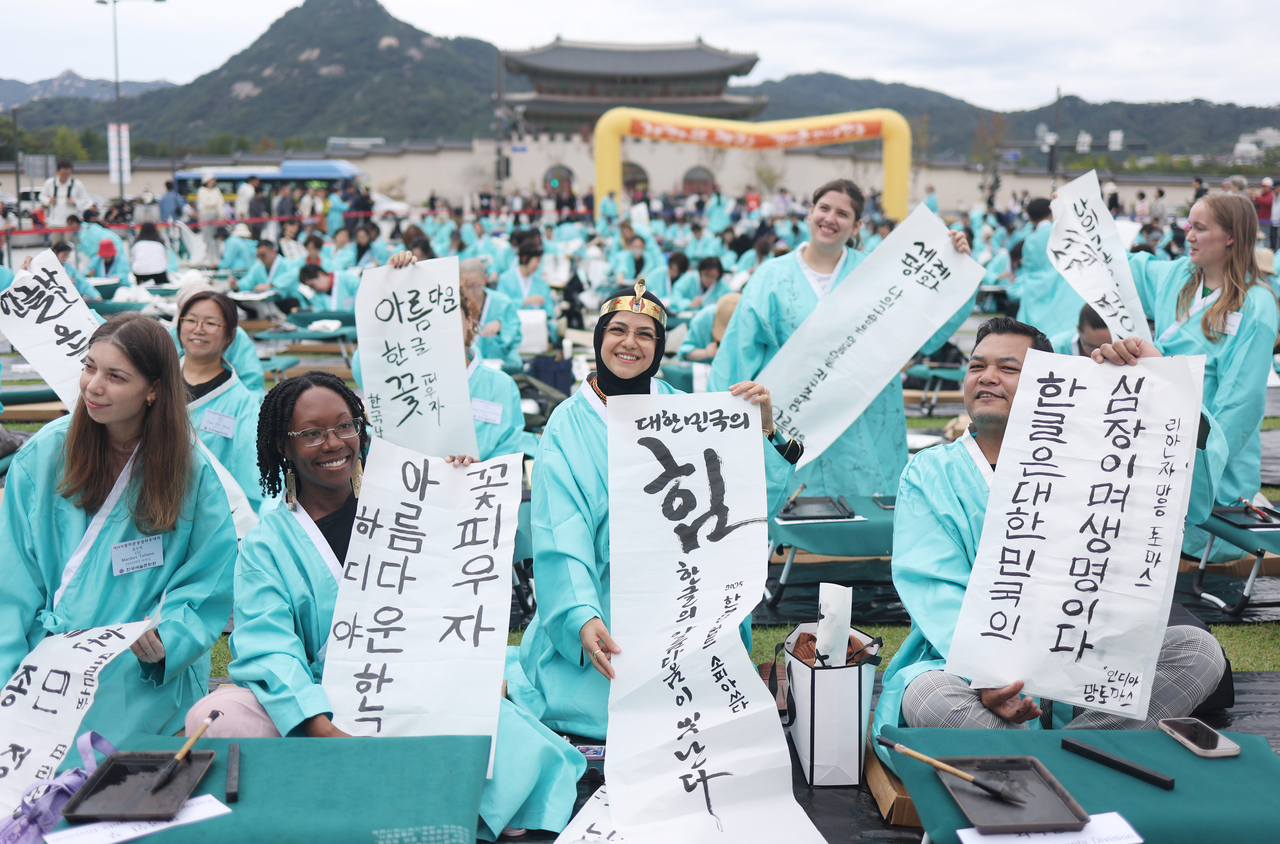
The Ministry of Culture, Sports and Tourism is hosting a series of nationwide events throughout October to mark the 579th anniversary of the proclamation of Hangeul — the Korean writing system — extending the celebrations well beyond Thursday’s national holiday.
On Thursday morning, Culture Minister Chae Hwi-young and members of the Korean Language Society laid flowers before the statue of King Sejong at Gwanghwamun Square in Seoul to honor the creator of Hangeul, followed by a ceremony recognizing contributions to the Korean language.
The main event, Hangeul Hanmadang, will take place Saturday evening in Gwanghwamun Square, featuring performances by pansori singer Yoo Taepyeongyang, dance performances and designer Lee Sang-bong’s Hangeul-inspired fashion show, along with awards recognizing exemplary use of clear and accessible Korean in public documents.
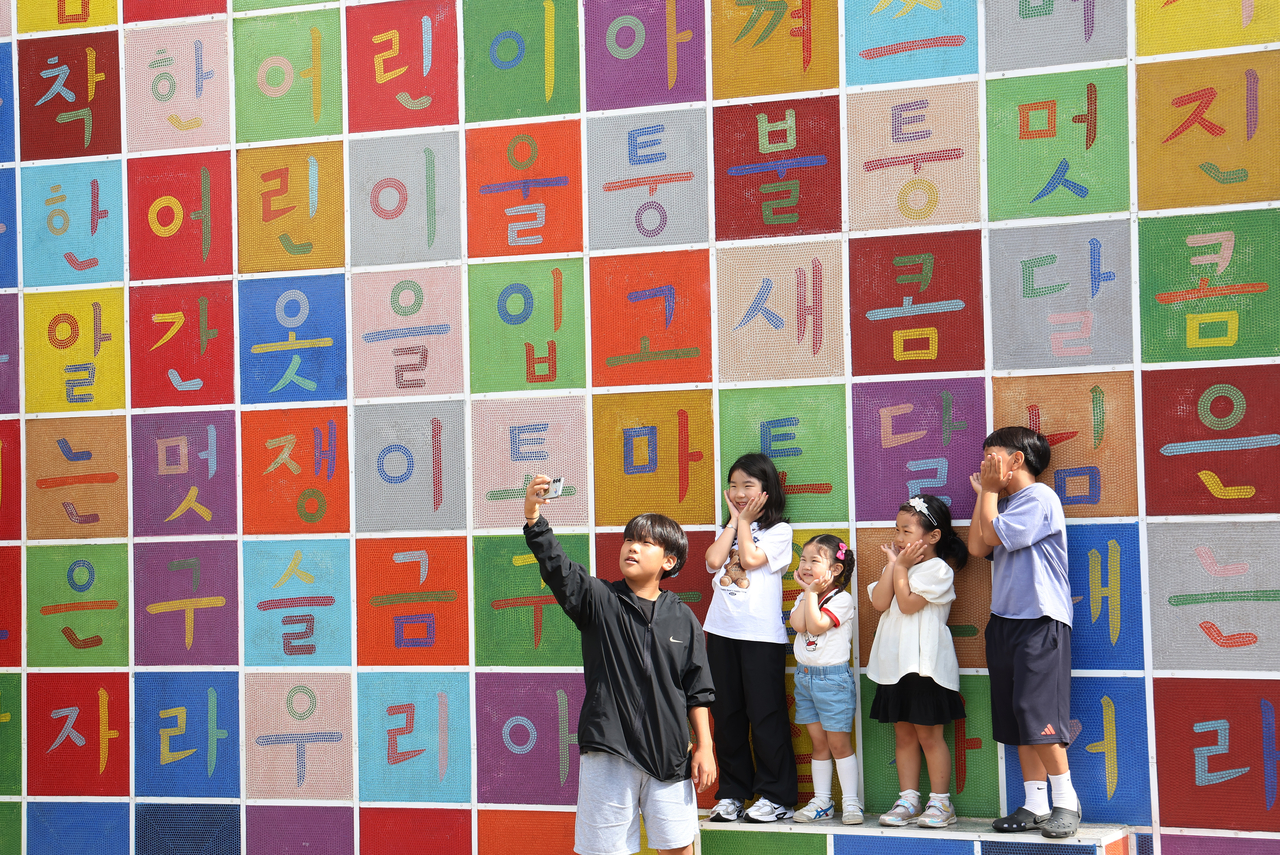
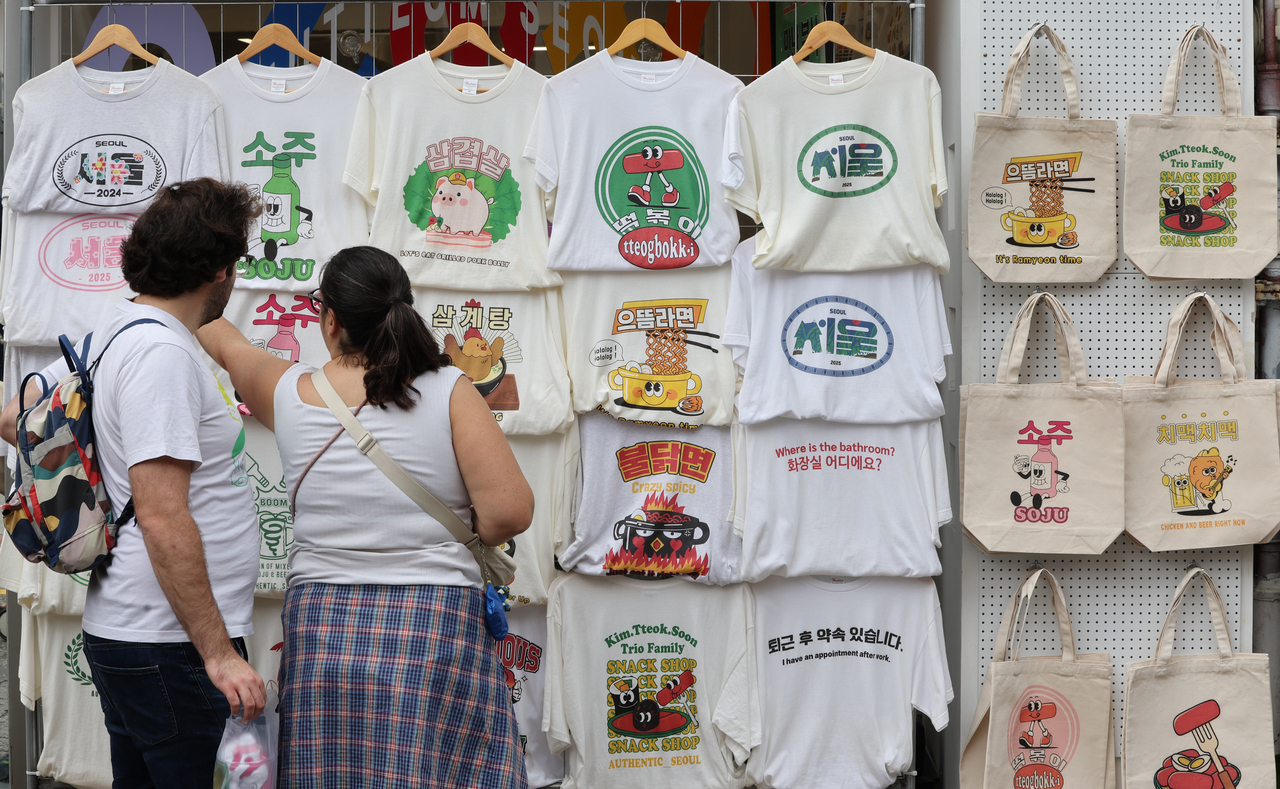
From Saturday to Tuesday, the 2025 Hangeul Cultural Industry Exhibition titled “The More You Know, The More _______ Hangeul” will be held at Gwanghwamun Square, exploring the creative and commercial potential of Hangeul-based products. The exhibition will feature around 70 government-supported Hangeul cultural products developed since 2015, including installations by artist Kang Ik-joong and fashion pieces by designer Lee Sang-bong.
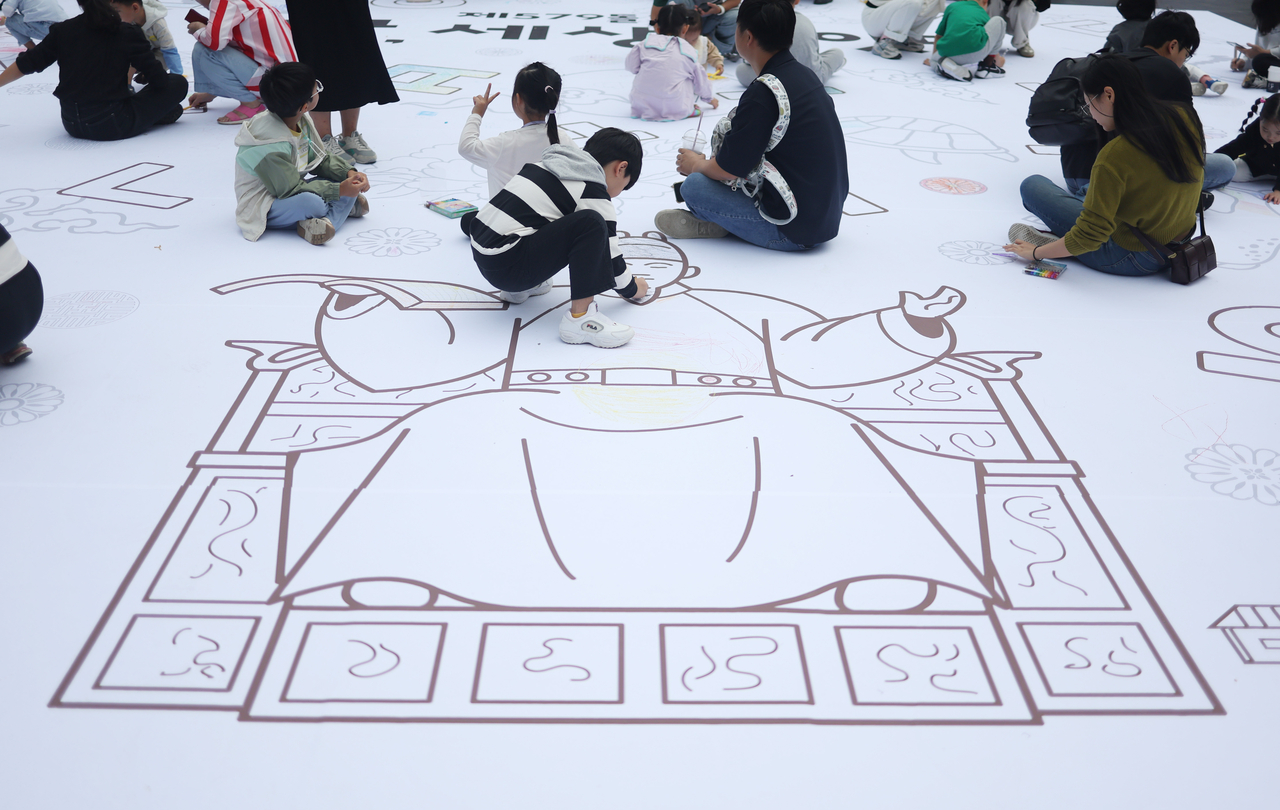
A range of hands-on activities, including Hangeul calligraphy, keychain making, spelling quizzes and other events, will offer family-friendly experiences. Visitors can also enjoy performances of Hangeul-themed musicals such as "Yi Do," a musical about King Sejong, and "The Flower of a Twenty-Year-Old Mother."
On Oct. 18, the Hangeul Dictation Contest will take place at Gyeongbokgung, bringing together 150 participants, including 120 Koreans and 30 outstanding foreign learners from Sejong Institutes worldwide, to test their Korean proficiency.
A series of academic conferences will explore Hangeul’s evolving role in modern society. On Monday, the Eosol Society will discuss the future of Hangeul and the Korean language in the digital age, followed by a forum on Tuesday that will examine how writing connects generations in an aging society.
In addition, 22 Korean language and culture centers under the Ministry of Culture, Sports and Tourism, along with local governments in Seoul and Sejong, will host Hangeul exhibitions, performances and hands-on activities designed to help residents experience and share the growing cultural and creative value of Hangeul.
The Seoul Metropolitan Government is holding a citizen participation event at Gwanghwamun Square under the theme “Hangeul, Connecting the World,” offering spelling and proverb quizzes, Hangeul calligraphy and bracelet-making sessions. The Sejong National Institute of Korean Language will host the AI Film Festival Jeongeum 1446 and a nationwide children’s reading competition, while the civic group Hangeul Culture Solidarity will hold a citizen program titled "Hunmin’s Forest at Olympic Park."
In Sejong City, the Sejong Hangeul Festival runs from Thursday to Saturday around Sejong Lake Park under the theme “Sejong, Embracing Hangeul.” Programs include an air show by the Air Force’s Black Eagles, a Hangeul song contest and an interactive historical play reenacting the Joseon-era (1392-1910) civil service examination. On Saturday, the festival will close with a Korean-language speech contest for foreign residents and a fireworks display.
Hangeul — originally named "Hunminjeongeum," meaning “the correct sounds for teaching the people” — was created in 1443 by King Sejong and his scholars to help commoners who could not read Chinese characters. Hangeul Day was first observed in 1926 as Gagya Day by the Korean Language Society. It was renamed Hangeul Day in 1928 and fixed to Oct. 9 after Korea’s liberation in 1945, marking the date Hunminjeongeum was first proclaimed.

gypark@heraldcorp.com