China's CDFG, Lotte may square off again for vacant spot, while Shinsegae’s future hangs in balance
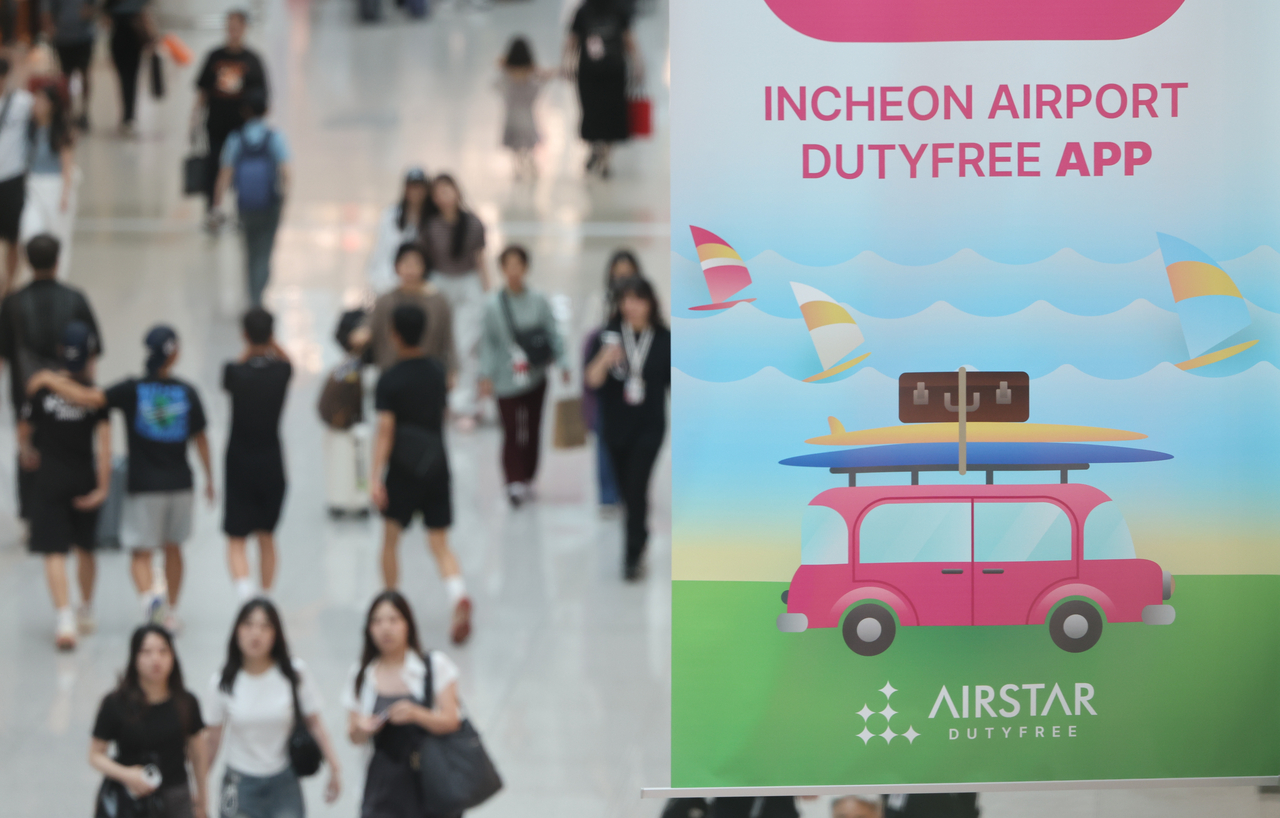
Korea’s duty-free industry is bracing for a shake-up after Shilla Duty Free said it would bow out of one of Incheon Airport’s prime zones, buckling under the weight of mounting rents.
Its withdrawal from Asia’s busiest travel hub sets the stage for a fresh contest among domestic and global giants for one of the airport’s most lucrative spaces, built on sales of cosmetics, perfumes, liquor and tobacco.
Shilla throws in the towel
Hotel Shilla, operator of Shilla Duty Free, announced on Sept. 18 that it would return its license for Incheon Airport’s DF1 zone, citing “unavoidable financial losses” and the need to shore up its balance sheet.
With Chinese tourists lagging in recent years and foreign visitors' spending patterns shifting, sales fell well short of projections.
Last year, the concession generated about 429 billion won in revenue, accounting for roughly 11 percent of Hotel Shilla’s consolidated sales. On a standalone basis, the withdrawal means giving up 20.3 percent of Shilla Duty Free’s turnover.
Yet losses ballooned to an estimated 60 to 80 billion won ($42 to 57 million) each month, potentially reaching 960 billion won annually, the duty-free operator said.
Shilla had sought a 40 percent rent cut in April, but when court meditation instead recommended a 25 percent reduction, the airport operator rejected the ruling. The stalemate left Shilla with little alternative but to pull out.
“Given the scale of monthly losses and the uncertainty of prolonged litigation, we decided to withdraw,” a company official said.
Under the contract, the company must continue operations until March 2026 before vacating the space. Its 190 billion won lease deposit will be retained by Incheon International Airport Corp. as a penalty.
Space of opportunity opens
The upcoming re-bid, scheduled for later this year, could redraw the duty-free landscape, particularly among those that vied for the license in 2023.
China Duty Free Group, the world's second-largest travel retailer, looms as a formidable contender. With deep pockets and unrivaled sway over Chinese travelers, the state-owned giant’s entry at Incheon could channel a wave of customers directly to its counters.
“CDFG’s participation would be a game-changer,” said one industry official. “Korean operators could lose their biggest customer base overnight.”
In the 2023 bidding round, Shilla secured the license for 8,987 won per passenger, while CDFG bid 7,388 won. Lotte Duty Free, Korea’s largest operator, submitted a bid of 6,738 won.
With rents expected to be reset 30 to 40 percent lower than Shilla’s winning offer, Lotte now sees an opening to return to Incheon and consolidate its market leadership. “Provided the conditions are reasonable, it’s an attractive store worth reviewing,” a Lotte official said.
Attention has also turned to Shinsegae Duty Free, operator of the DF2 concession. Like Shilla, it has clashed with the airport operator over rent and sought court mediation. With Incheon refusing to budge, Shinsegae may soon face a choice between a costly legal fight and an orderly exit.
Yet, if Shinsegae stays put, it could overtake Shilla to become the country’s second-largest duty-free operator. Last year, Lotte led the market with 3.26 trillion won in sales, followed by Shilla at 2.11 trillion won and Shinsegae close behind at 2.0 trillion won.
While no final decision has been made on Shinsegae’s course, Shinsegae Group has recently appointed Lee Seok-gu, CEO of Shinsegae Live Shopping, to lead its duty-free unit, tasking him with steering the business through the current impasse.
“The firm is carefully reviewing the situation before deciding on its next steps,” a company official said.
minmin@heraldcorp.com