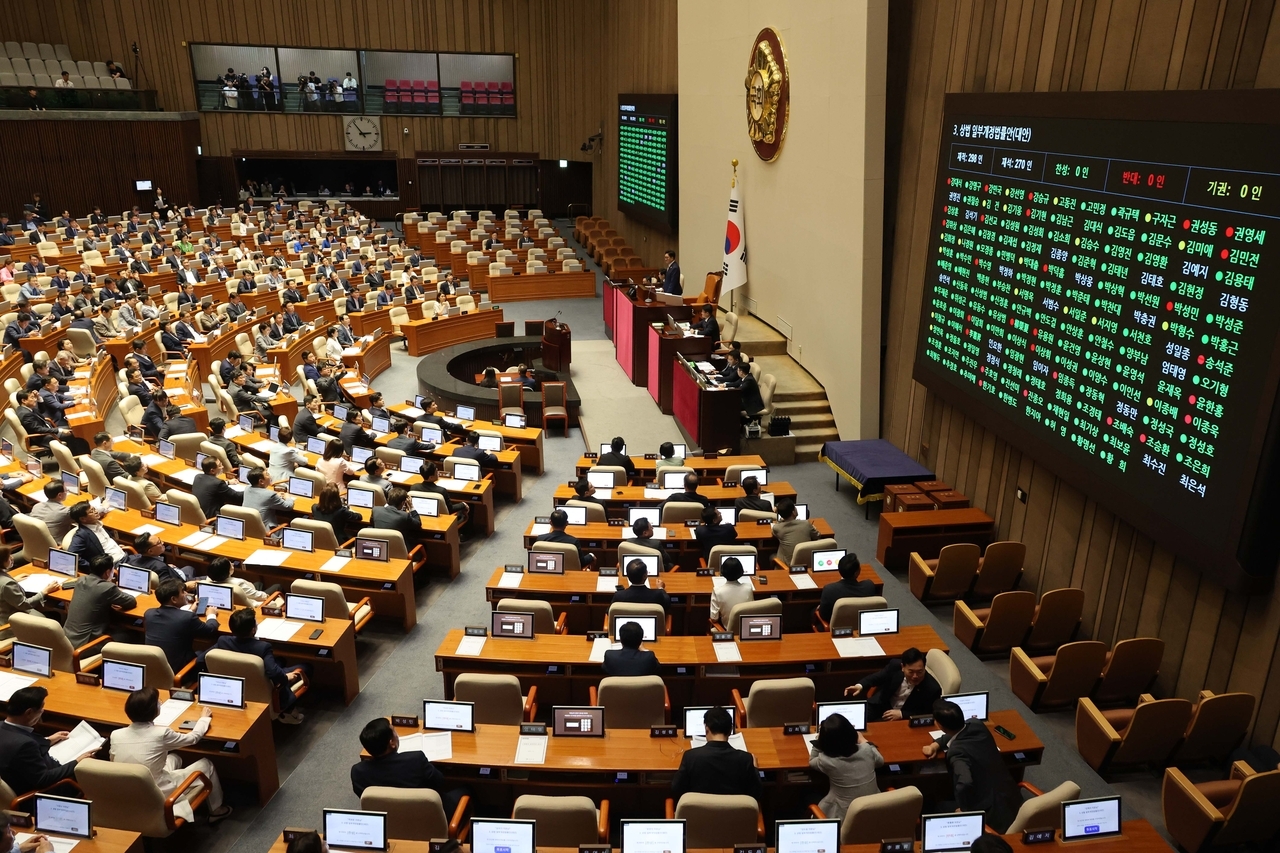
South Korea’s major conglomerates may face diminished control over board governance if the National Assembly passes the additional revision to the Commercial Act, according to industry analysis.
업계 분석에 따르면, 국회에서 상법 추가 개정안이 통과될 경우 한국의 주요 대기업들은 이사회 지배구조에 대한 통제력이 약화될 수 있다.
According to a report released Tuesday by the local market analysis firm Leaders Index, about 38 percent of shares held by owner family and aligned parties in the country’s 50 largest business groups could have their voting rights stripped in the election of audit committee members following the revision.
시장 분석 기관 리더스인덱스가 화요일 발표한 보고서에 따르면, 개정안이 통과되면 국내 50대 그룹 총수 일가 및 특수관계인이 보유한 주식의 약 38%가 감사위원 선거에서 의결권이 박탈될 수 있다.
The research examined 130 publicly traded affiliates under Korea’s 50 business groups that have family ownership and calculated their “friendly shares” — shares held by owner family, affiliated companies and charity foundations operated by conglomerates — at 40.8 percent on average.
이번 조사는 국내 50대 그룹의 총수 일가가 지분을 보유한 130개 상장 계열사를 분석했으며, 총수 일가와 계열사, 대기업이 운영하는 재단이 보유한 ‘우호 지분’은 평균 40.8%로 계산됐다.
But with both the so-called “3 percent rule” from the first round of Commercial Act revision and the new rules in the upcoming second round, 37.8 percent of those family-aligned shares would be deprived of voting power, it said.
그러나 1차 상법 개정에서 도입된 이른바 ‘3% 룰’과 새롭게 예정된 2차 개정안이 동시에 적용되면, 그 가운데 37.8%의 특수 관계자 지분이 의결권을 잃게 된다고 보고서는 밝혔다.
The first round of revisions, passed last month, included the “3 percent rule” of capping the voting rights of the largest shareholders and related parties at 3 percent when electing audit committee members. In practice, this means even if an owner family holds 40 percent of a company’s shares, they can only exercise 3 percent of those votes in an audit committee election.
지난달 통과된 1차 개정안에는 감사위원 선임 시 최대주주와 특수 관계자의 의결권을 3%로 제한하는 ‘3% 룰’이 포함됐다. 이는 실제로 총수 일가가 40%의 지분을 갖고 있어도 감사위원 선임 투표에서는 3%의 의결권만 행사할 수 있음을 의미한다.
The ruling Democratic Party-controlled parliament is also expected to vote this week on a second round of revisions to the act. If passed, the bill would mandate cumulative voting at companies with assets exceeding 2 trillion won ($1.44 billion) and increase the number of separately elected audit committee members from one to two. These provisions were excluded from the first round amid pushbacks from businesses and opposition lawmakers.
여당 더불어민주당이 장악한 국회는 이번 주 2차 개정안을 표결할 것으로 예상된다. 개정안이 통과되면 자산이 2조 원(14억4천만 달러)을 초과하는 기업에 집중투표제를 의무화하고, 별도로 선출되는 감사위원 수를 1명에서 2명으로 늘리게 된다. 이러한 조항들은 기업과 야당 의원들의 반발 속에 1차 개정안에서는 제외됐다.
The revisions, which aim to protect minority shareholders and improve corporate governance at Korea’s family-owned conglomerates, would substantially weaken founding family control, observers say.
소액주주 보호와 가족 소유 대기업의 기업 지배구조 개선을 목표로 하는 이번 개정안은 창업주 일가의 지배력을 크게 약화시킬 것이라고 전문가들은 지적합니다.
In contrast, the state-run National Pension Service, which owns more than 5 percent stakes in 74 of the 130 companies on the list, is expected to be able to exert greater influence under the revisions. With owner-family votes restricted, the pension fund could emerge as a key swing voter in the boardroom.
반면, 목록에 포함된 130개 기업 중 74곳에서 5% 이상 지분을 보유한 국민연금은 개정안에 따라 더 큰 영향력을 발휘할 것으로 예상된다. 총수 일가의 표가 제한되면서, 국민연금은 이사회에서 핵심 캐스팅보트로 부상할 수 있다.
"If the second round of Commercial Act revisions passes the National Assembly, the National Pension Service will secure the same voting rights as the shares held by the owner family and related parties, strengthening its power in both annual and extraordinary shareholder meetings," said an official at Leader's Index.
리더스인덱스 관계자는 “상법 2차 개정안이 국회를 통과하면, 국민연금은 총수 일가 및 특수 관계자가 보유한 지분과 동일한 의결권을 확보해 정기주주총회와 임시주주총회 모두에서 영향력을 강화하게 될 것”이라고 말했다.
governance: 지배구조
affiliate: 계열사
deprive: 박탈하다
mandate: 의무화하다
pushback: 반발
provision: 조항
influence: 영향력
conglomerate: 대기업, 복합 기업
khnews@heraldcorp.com