Uzbekistan, the most populous of the five Central Asian countries, remains one of the world’s top producers of gold, but it is now seeking to become a key supplier of minerals for green technologies, producing copper, uranium and silver.
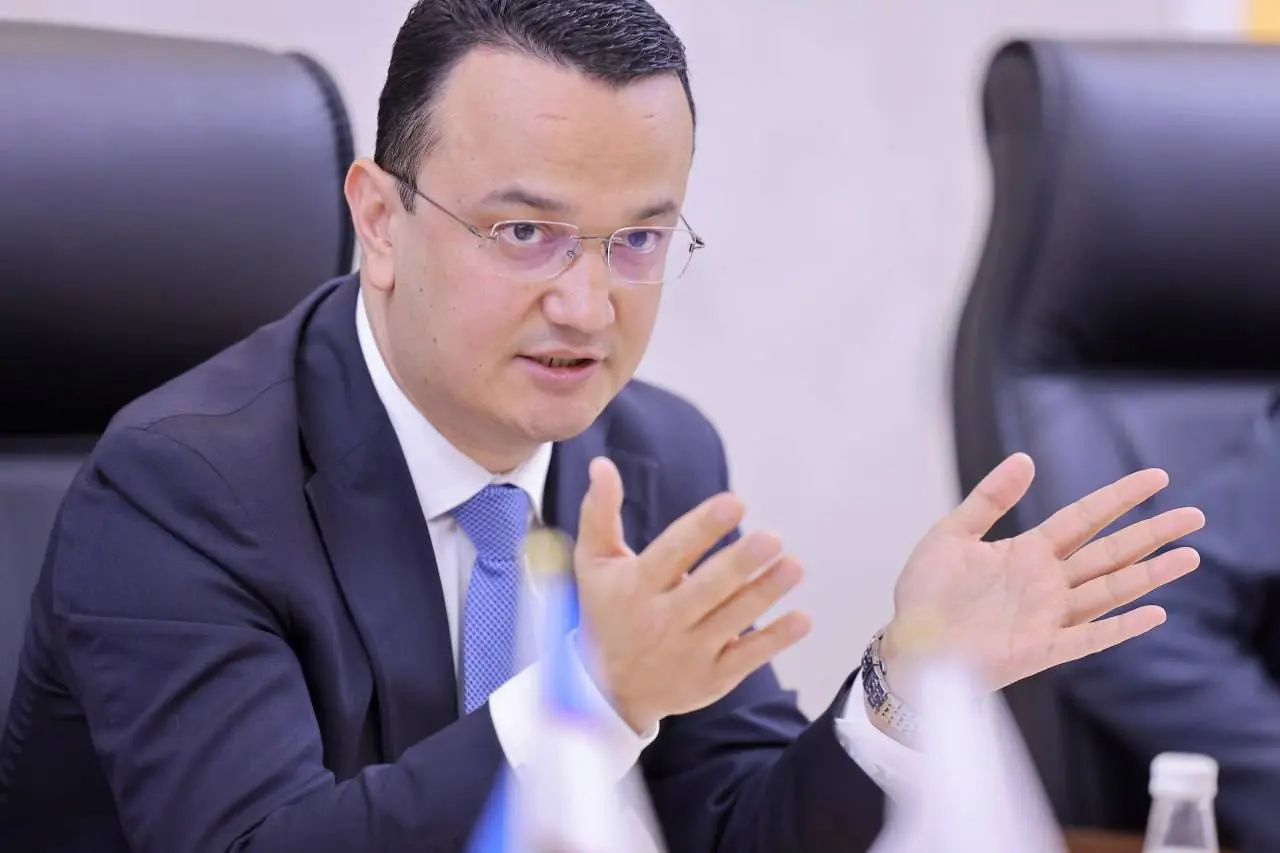
Uzbekistan wants to become a key partner for Korea’s advanced industries -- working together in critical minerals, semiconductors, green energy and pharmaceuticals, said Laziz Kudratov, Uzbek minister of investment, industry and trade, in an interview with The Korea Herald.
Rich in core minerals such as tungsten and molybdenum -- used in semiconductors and secondary batteries -- Uzbekistan has become an attractive partner for South Korea’s high-tech industries.
“We're focusing first and foremost on critical minerals,” he told The Korea Herald.
In 2024, South Korea and Uzbekistan agreed to maximize supply chain synergy by combining Uzbekistan’s abundant resources with Korea’s advanced technology.
The partnership spans the full cycle of exploration, mining and refining of key minerals such as lithium, and grants Korean companies priority in developing economically viable deposits.
The minister said Uzbekistan is developing Central Asia’s first semiconductor cluster in Tashkent to bring in Korean expertise and create a regional tech hub, while also launching joint initiatives in green hydrogen, ammonia and a chemical technology center with Korean support.
“Uzbekistan has signed agreements with Korea covering the entire value chain from extraction to commercialization, with the aim of becoming a reliable source for Korea’s advanced industries,” Kudratov told The Korea Herald.
Kudratov noted Korean companies' involvement, citing 726 companies benefiting from partnerships. He said many agricultural projects in Uzbekistan are using Korean technologies, while the country is also building a strategic framework with ventures like the textile technopark, rare metals center and e-commerce modernization.
“IT Park Uzbekistan has significant incentives, including tax exemptions until 2040, streamlined business registration processes, and programs like 'Zero Risk,'" he said.
This cooperation with Korean entities was established by the Uzbek-Korean IT Business Alliance, aimed at facilitating joint ventures and technology exchange, according to Kudratov.
“The trade and investment relationship between Uzbekistan and the Republic of Korea is very strong -- and expanding … A Framework Program for Trade and Investment Facilitation was signed in September 2023.”
South Korea ranks among Uzbekistan’s most prominent investment partners, having invested over $7.7 billion in the country, he said, citing chemicals, textiles, agriculture, energy, mining, education and health care projects supported by the Korea Eximbank.
South Korea doubled its Economic Development Cooperation Fund ceiling to $2 billion for 2024-2027, supporting projects such as the second-phase construction of a pharmaceutical cluster at Tashkent Pharmaceutical University.
Projects such as a national multiprofile surgical clinic, a national oncology clinic and the Tashkent Pharma Park -- which conducts pharmaceutical research, education and production -- align with Uzbekistan’s 2030 strategy, said the minister.
sanjaykumar@heraldcorp.com

![[Graphic News] Heat-related illnesses hit third-highest level since 2011](https://wimg.heraldcorp.com/news/cms/2026/10/25/news-p.v1.20261025.19f3e38734a24ae8a9d84c94666b516f_T1.gif?type=h&h=800)