Korea talks plastic-free, but struggles to deliver. Here's why.
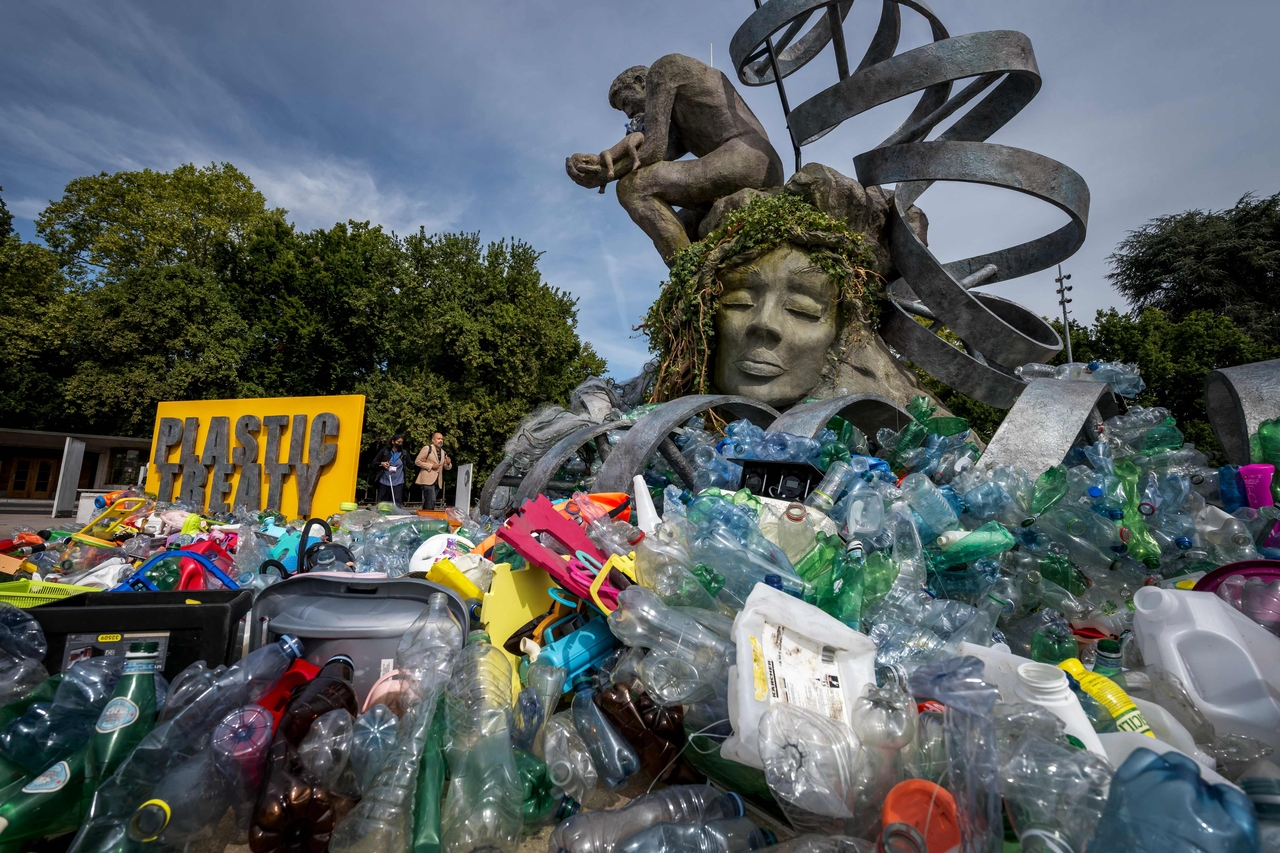
South Korea talks tough on plastic, but hesitates when it comes to binding global rules.
At UN-led treaty negotiations in Geneva this summer, Seoul drew fire for resisting stronger measures to curb plastic pollution — despite President Lee Jae Myung’s pledge just weeks earlier to deliver a national road map for phasing out plastics by 2025.
Rather than backing proposals from countries pressing for enforceable commitments, Korea aligned with delegations pushing softer language, arguing it was trying to “break the deadlock.”
The talks collapsed on Aug. 15 without an agreement, leaving Korea’s stance exposed as more cautious than its rhetoric suggests.
At home, the gap between ambition and policy is equally clear.
A few years ago, the government introduced sweeping rules to cut single-use plastics, including bans on disposable cups and straws and a deposit scheme on takeaway containers. But those efforts crumbled under industry resistance and backtracking.
Many of the measures have since been watered down or reintroduced as voluntary programs, with only willing businesses or local governments participating. For critics, the pattern raises a pointed question: Why does South Korea, a country eager to brand itself as a climate leader, struggle to turn its plastic-free promises into meaningful action?
Petrochemical industries
Korea’s reluctance to go all-in on zero-plastic policies begins with its economic structure.
The country is home to some of the world’s largest petrochemical producers — including LG Chem, Lotte Chemical and Hanwha Solutions — which manufacture the resins and plastics that supply industries from packaging and consumer goods to cars and electronics. Any attempt to cap plastic production or impose a strict ban on single-use products would have an impact on these conglomerates, threatening not only export competitiveness but also domestic jobs.
“These industrial giants also carry enormous political weight. As cornerstones of Korea’s economy, their influence runs deep in policymaking circles, making politicians hesitant to impose certain rules that could cut into their profits or exports,” professor Jeong Su-jong from Seoul National University’s Department of Environmental Management told The Korea Herald.
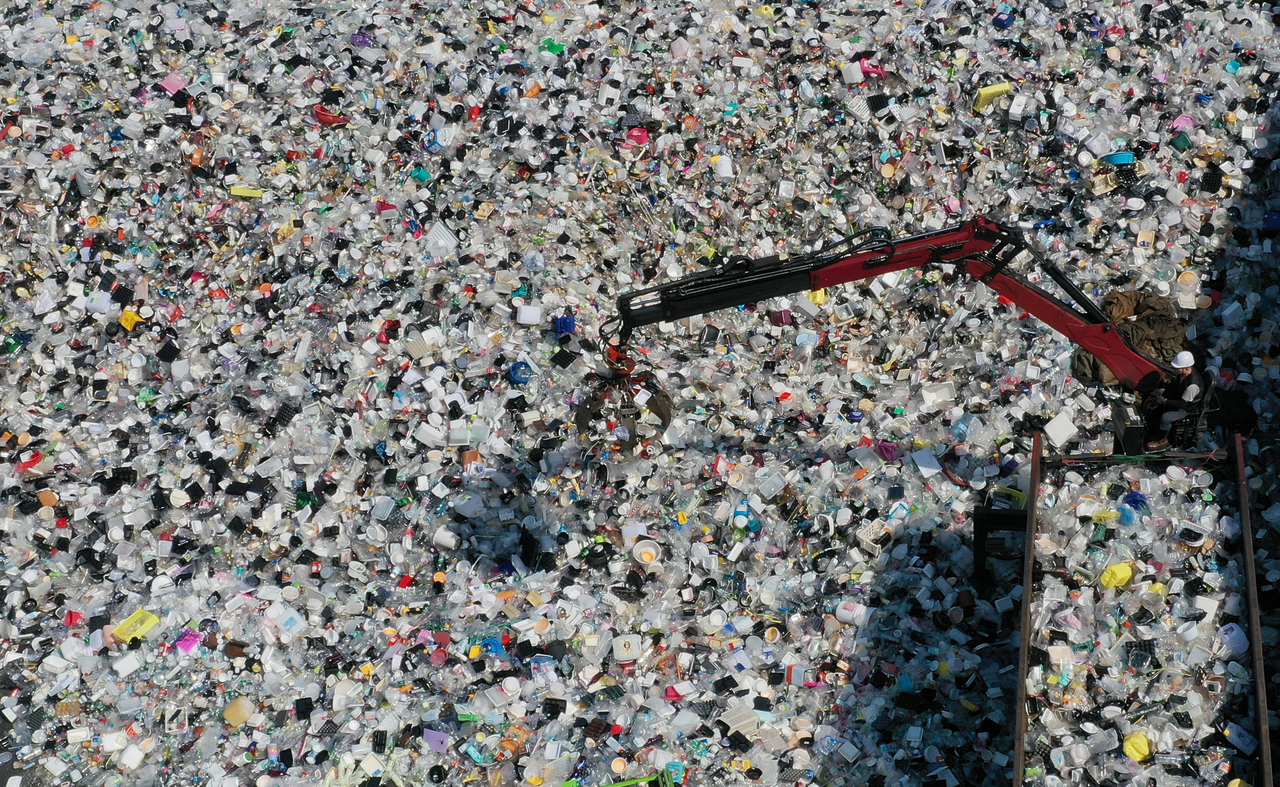
Jeong added that while Korea is a heavy consumer of plastics, it is also a global supplier of petrochemicals, which are among the top export earners, along with semiconductors, steel and cars.
“It seems like the Korean government is wary of imposing strict caps on plastic production not only because it’s a heavy consumer of such single-use products, but also because of its petrochemical industry that brings in hefty amounts in trade revenue,” Jeong added.
“That is why Korea has placed itself in the middle when it comes to its diplomatic stance against plastic production. It doesn’t side fully with high ambition states who call for strict, binding caps, but it also doesn’t side with petrochemical states that resist limits.”
Jeong further criticized that while Korea’s balancing act may help to temporarily preserve ties with both sides, it “also leaves Korea without a clear stance” when it comes to creating binding caps on plastic pollution.
“If Korea continues to hang back, it will lose influence over the international treaty and end up merely reacting to others’ proposals instead of shaping outcomes that balance both environmental and industrial needs,” Jeong said. “Rather than maintaining an unclear stance swayed by petrochemical interests, the government should set mandatory reduction targets for companies and support them with assistance where necessary.”
Challenging shift in daily habits
Even if the government were to push past industrial challenges and impose strict measures against plastic nationwide, another obstacle remains closer to home — the daily habits of people here who have gotten far too accustomed to single-use, disposable products. According to data provided by the Ministry of Environment in 2023, a single person was calculated to throw away up to 37 grams of single-use disposables per day, with plastic waste making up 40 percent of such numbers.
In countries like Germany, it is common for customers to hand over their own tumbler mugs at cafes, supported by the Pfand system — a deposit scheme where reusable takeaway cups at cafes and plastic bottles and cans purchased in grocery stores can be returned to receive the deposit back.
Similar efforts were launched in Korea in 2022, with a 300 won (22 cents) deposit placed on takeaway cups. Unlike the case with Germany, the program quickly faltered, weakened by the opposition of cafe owners and limited support from the public. Its move to regulate disposables in cafes and restaurants was met with similar reactions.
Failure in adopting these environmental policies uncovered an uncomfortable truth — in Korea, regulation is one thing, but shifting a culture built on convenience is another. Without a strong public willingness to change, even the most ambitious policies risk collapsing under resistance.

Despite the convenience of single-use items, Professor Yun Sun-jin of Seoul National University’s Graduate School of Environmental Studies said it is time for the government to “indefinitely shift away from plastics.”
“When you walk down the street in Korea, it’s far more common to see people carrying plastic cups than tumblers,” Yun told The Korea Herald. “Koreans have grown accustomed to the convenience of disposables, but it’s time for the government to guide society away from that.”
Yun stressed the need for policies that both discourage disposables and reward sustainable behavior. “We need a culture that shames single-use waste while also providing nationwide incentives for reusables,” she said. “For example, customers who bring their own cups should receive discounts, and the cup deposit system that was nearly introduced in 2022 must be revived nationwide. Shared cup networks could also allow tumblers to be borrowed and returned across multiple cafes.”
While some policymakers worry about backlash from sudden bans, Yun argued that Korea is already prepared.
“The country has been ready for a long time — many small business owners and individuals were prepared to act in 2022,” she said. “Government-led bans and policies would provide the push needed, and incentives would reward those already using reusables while motivating others to make the switch.”
lee.jungjoo@heraldcorp.com