BOK survey shows confidence back to precrisis levels, though risks from slowing exports remain
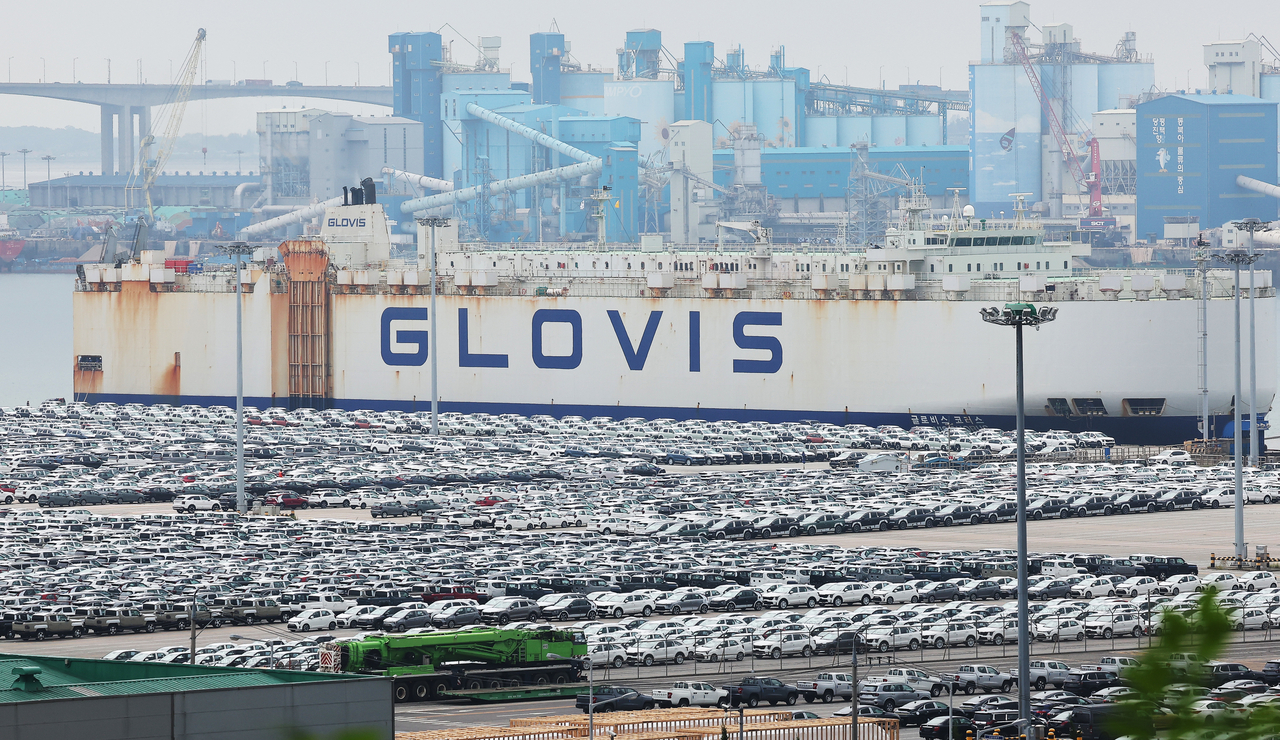
Business sentiment rebounded after two months of decline, climbing to its highest level this year, as policy support gained traction and tariff frictions with the US eased amid stronger-than-expected export growth, a Bank of Korea survey showed Wednesday.
The Composite Business Sentiment Index for all industries rose to 91 in August, up 1 point from July, reversing two straight months of losses, according to the central bank.
The CBSI gauges corporate prospects for business conditions, drawing on nine key measures — five in manufacturing and four in nonmanufacturing sectors.
Sentiment back to precrisis level
August’s reading was the strongest since November’s 91.8, before confidence slumped in the wake of December’s martial law declaration, signaling a return to precrisis levels.
Still, the index remains below the long-term average of 100, indicating more firms expect conditions to deteriorate than improve.
“Uncertainty in trade has eased following the tariff agreement, while exports remain strong, led by semiconductors and autos,” a BOK official said Wednesday, adding that the nonmanufacturing sector also benefited from the summer season and government-issued spending coupons.
The CBSI in nonmanufacturing hit a nine-month high, climbing 0.7 points on-month to 89.4 points, while manufacturing CBSI also surged 1.4 points to 93.3.
The outlook for September has also strengthened across sectors, with the CBSI climbing to 91.8 for all industries -- 92.1 for manufacturing and 91.5 for nonmanufacturing -- showing gains of 3.4, 1.1 and 4.7 points, respectively, from August.
Uncertainty eased, risks remain
Last month, South Korea and the US agreed on a 15 percent “reciprocal" tariff on all Korean exports to the US, down from the initially threatened 25 percent, along with a reduced 15 percent tariff on automobiles. Korea also pledged a $350 billion investment package in US industries and $100 billion in energy imports.
While higher tariffs may weigh on industries, the resolution of uncertainty through the agreement has eased pressure on companies, said Woo Suk-jin, an economics professor at Myongji University.
“What’s done is done. The higher tariffs are a reality, but with the rates settled, firms can now prepare measures to manage those new risks. The uncertainty that clouded their outlook has now been lifted with the concrete agreements,” Woo said.
The outcome of the negotiations was also a relief, he added. “Tariffs are comparative in nature. Since the US has raised them across the board, this is not a risk unique to Korean companies. A 15 percent rate is not particularly high compared to other countries, which leaves Korean firms in a stronger position than earlier this year.”
Domestically, Woo noted that some 13 trillion won ($9.3 billion) in relief payouts should also help businesses weather weak consumption.
Despite improving sentiment, Korea's trade-driven economy remains weighed down by forecasts of worsening exports. The economy has so far held up better than expected, with exports posting modest growth in the first half and the impact largely confined to shipments to the US.
Experts, including the central bank, warn the tariff burden on Korean exports will deepen in the months ahead, as inventories that helped cushion companies in the first half are exhausted. The state-run Korea Development Institute projected overall export growth in 2025 at 2.1 percent, a sharp slowdown from 6.8 percent in 2024.
jwc@heraldcorp.com