Korean art master Kim Tschang-yeul is known for his paintings of waterdrops that appear as real as photographs — as if they might burst if touched — yet relatively little is known about his artistic journey.
The retrospective "Kim Tschang-yeul" at the National Museum of Modern and Contemporary Art, Korea reveals the depth of the artist’s fascination with waterdrops, following the artist's path from post-Korean War (1950-1953) to New York and France.
Kim, born in South Pyeongan Province in today's North Korea, not only witnessed numerous deaths during the Korean War, but he also narrowly escaped death when a bullet passed right under his ear. The artist used to say “surviving the war was a miracle,” according to Seol Won-ji, who curated the MMCA exhibition.
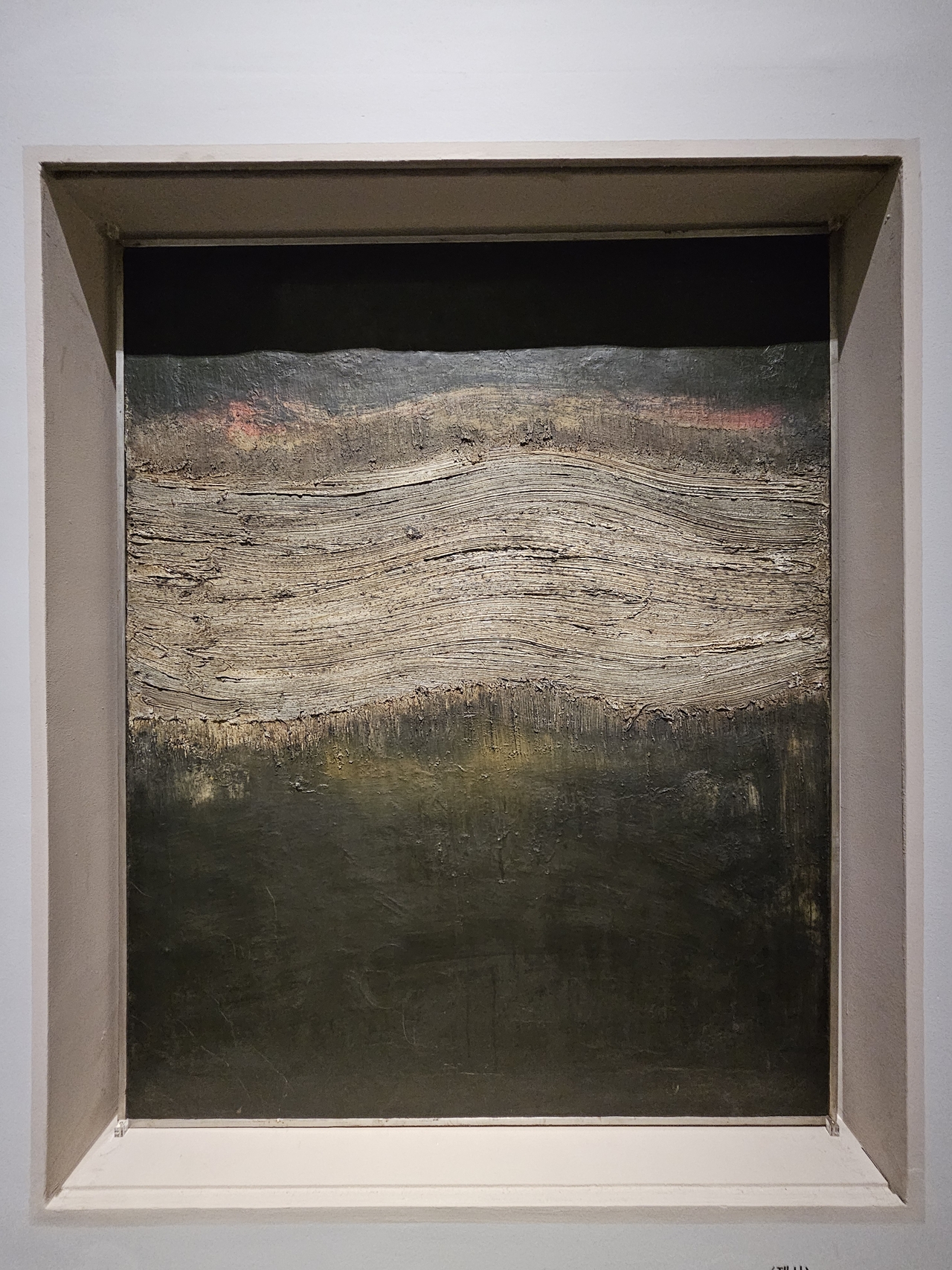
The exhibition starts by showing the back of the painting “Rite,” created in 1967. On the back of the canvas are the words “Flesh and Spirit.” The painting, featuring rough brushstrokes and dark-toned colors reminiscent of tank tracks, is displayed in the space alongside other early works of the informel, or informalism, movement.
“For the artist, informel became a language for articulating his inner trauma. Certain works recall bullet holes tearing through flesh. Wounds and trauma from the war ultimately evolve into the motif of the waterdrops later on,” Seol said.
For the first time, the museum collaborated with an overseas designer on spatial design; French designer Adrien Gardere, founder of Studio Adrien Gardere, worked with the MMCA curatorial team to visualize the storytelling.
At the center of the space, surrounded by informel paintings, is a group of glass sculptures of waterdrops titled “Ceremony." First created in 1993, it was recreated in 2025 for the exhibition, according to the museum.
“From the perspective of a designer, I felt it was important to persuade the curator that visitors should see images they are familiar with, while also conveying a storytelling element that anticipates how the artist’s art might unfold,” Gardere said.
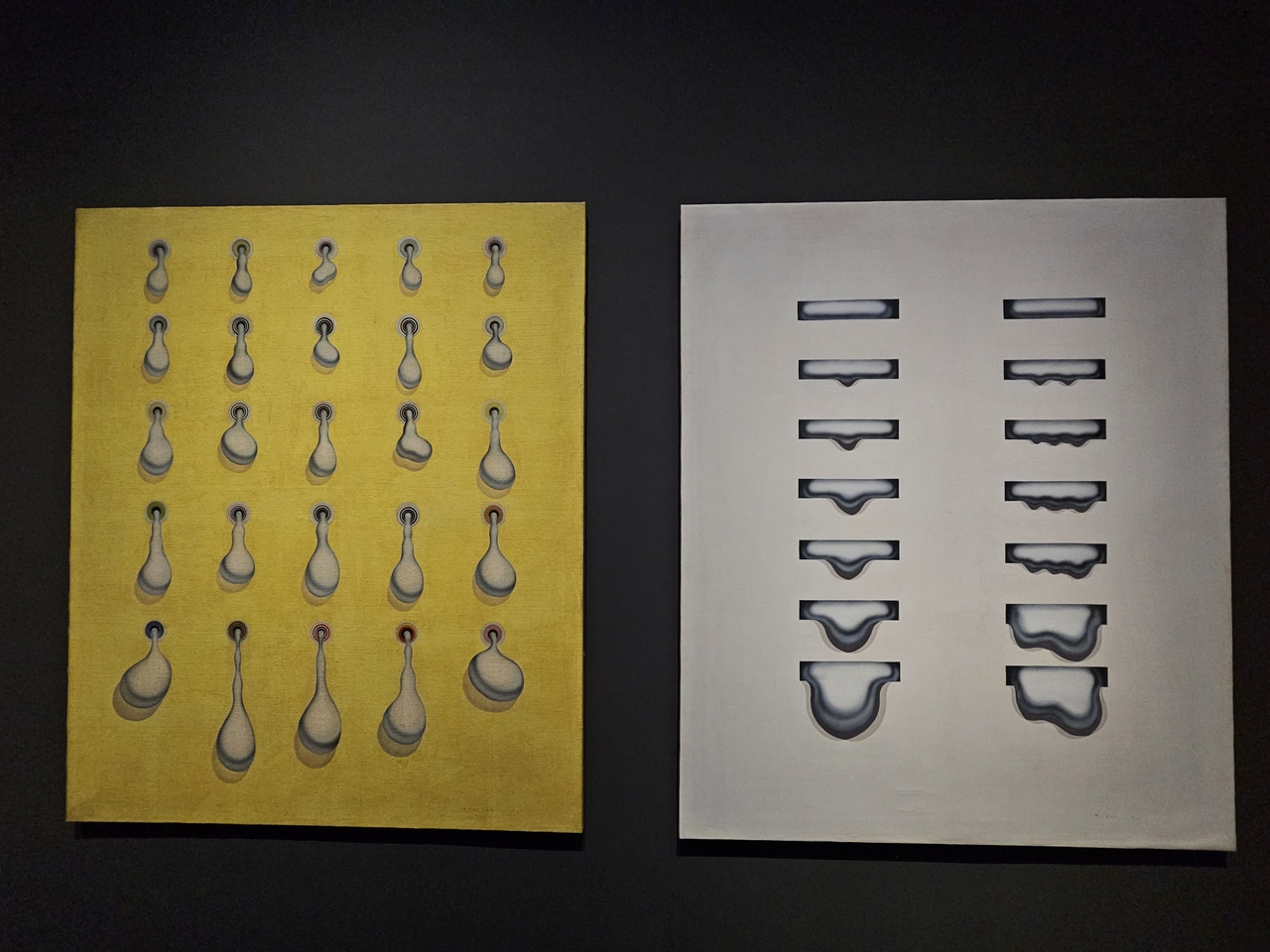
Walking down the staircase to the basement, visitors follow Kim’s journey to New York. He left for the city in 1965, following the recommendation of his mentor, artist Kim Whan-ki, and with the support of the Rockefeller Foundation.
His works in New York take a different style from his earlier works, featuring geometric form. The change in his artistic style was perhaps inevitable; informel had lost its appeal in the city as new artistic movements such as pop art gained fame.
“The image of a geometric circle that emerged at this time becomes the symbolic key form in Kim Tschang-yeul’s oeuvre,” Seol said.
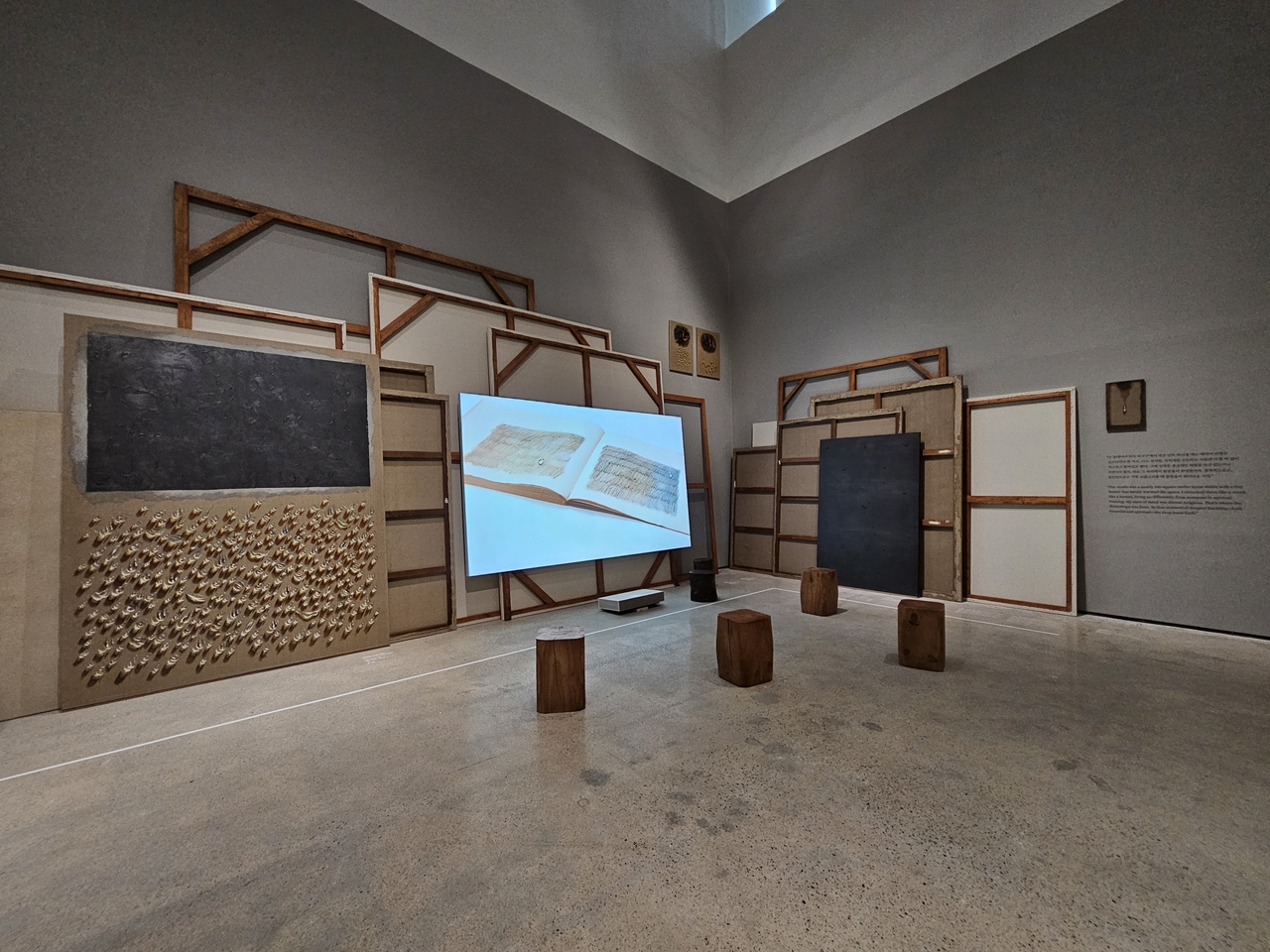
Exiting the room dedicated to the New York period, one encounters three paintings of a waterdrop in yellow, white and black hues. This space, set up like Kim's studio, sheds light on his time in France, where the artist started to develop the images of waterdrops into the iconic droplets for which he would become best known.
“The studio was a nearly 100-square-meter horse stable with a tiny heater that barely warmed the space. I crouched there like a monk, like a hermit, living no differently from someone in spiritual training. My state of mind was almost religious.
“That was where the ‘waterdrop’ was born. In that moment of deepest hardship — both financial and spiritual — the drop burst forth,” reads the artist’s words displayed on a wall.
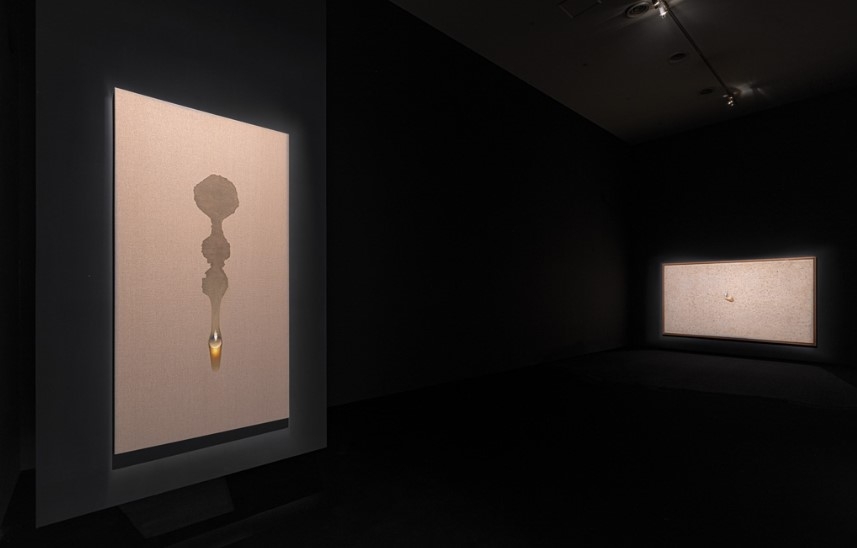
In a dark room, waterdrops painted on linen or hanji, Korean mulberry paper, seem to flow or to be on the verge of flowing, offering viewers a moment of meditation.
The exhibition continues on to the “Recurrence” series, which was begun in the mid-1980s. This was when Kim began incorporating text into his paintings. He adapted "Cheonjamun," or the Thousand Character Primer, for his paintings by repeating the characters across the canvas with the waterdrops juxtaposed on the characters.
The exhibition concludes with informel-like paintings on newspapers, created in his late years with yellow hues. These works are being shown to the public for the first time. Yellowish colors appear throughout his paintings, and the artist's color choices need to be further researched, the curator said.

The show is the first retrospective to explore the late artist's work on a major scale, according to the museum.
Kim died in 2021 at the age of 91, leaving the last words: "There are countless waterdrops I have yet to paint," according to the curator, quoting the bereaved family.
The exhibition runs through Dec. 21.

yunapark@heraldcorp.com