Controversial KHNP agreement faces backlash at home as leaders prepare to discuss nuclear energy cooperation
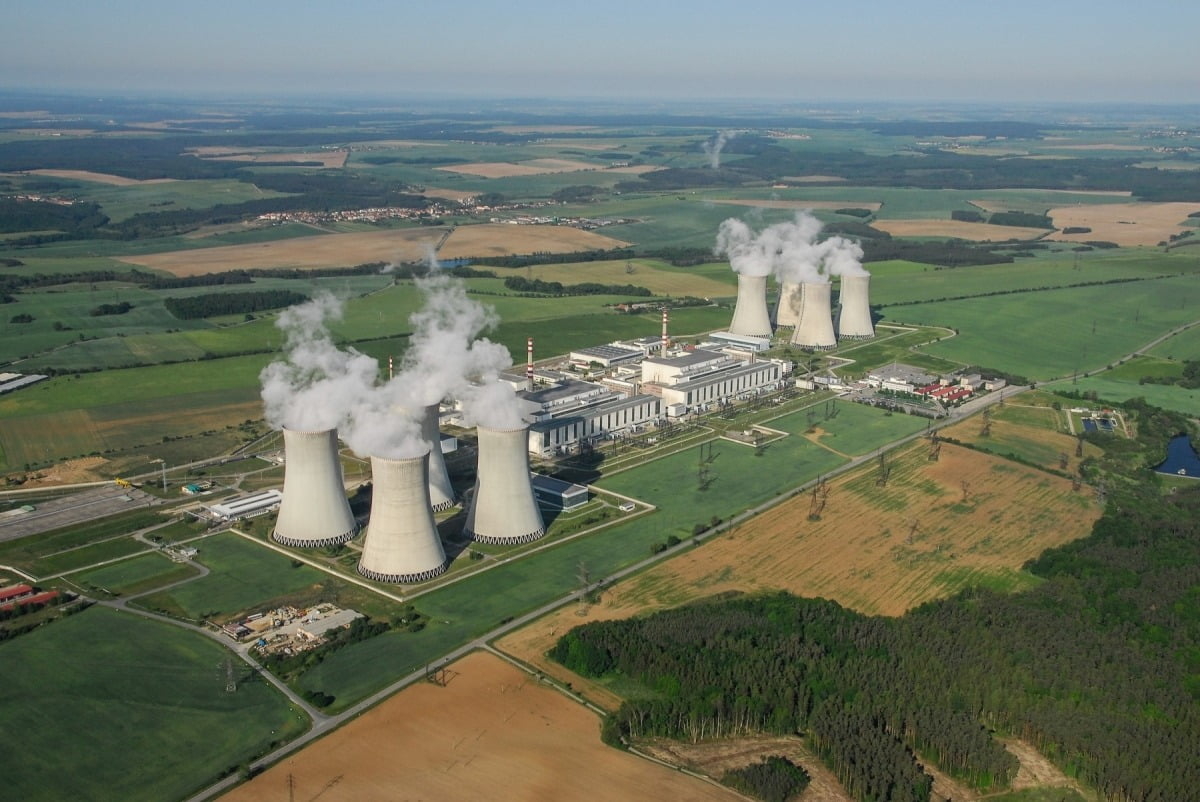
Escalating tensions over a deal between South Korean state-run energy firms and US company Westinghouse are complicating the agenda for the upcoming Korea-US summit, where nuclear energy cooperation is expected to take center stage.
South Korean President Lee Jae Myung and US President Donald Trump are scheduled to meet in Washington on Monday for their summit, with officials saying their nuclear partnership will be high on the agenda.
According to a local media report Wednesday, state-run Korea Hydro & Nuclear Power and Westinghouse, the two companies at the heart of the controversy, are preparing to form a joint venture to enter the US nuclear reactor market on the occasion of the upcoming summit. The report explained that since KHNP cannot independently access the US market, it plans to enter through a partnership with the American firm, while handling most of the construction work.
However, the South Korean government on Wednesday rejected assertions that the establishment of the joint venture would be included on the summit agenda. "The cooperation between KHNP and Westinghouse is a matter for the companies to discuss themselves and is not included in the cooperation agenda between the two governments," the Industry Ministry said in a statement.
The ministry added that KHNP is "considering various forms of cooperation" with Westinghouse, but noted that "no concrete details have been decided."
But broader nuclear energy cooperation is still expected to be discussed during the summit, given that the sector was part of South Korea’s $200 billion investment pledge in the US under the tariff deal announced last month.
President Trump has vowed to expand US nuclear energy capacity from 97 gigawatts to 400 gigawatts by 2050. Achieving this target would require constructing approximately 300 new 1,000-megawatt reactors. Industry observers view the US as eyeing Korean companies’ technological expertise and construction capabilities to meet this goal.
The plan comes amid controversy over a separate agreement that KHNP and Korea Electric Power Corp. struck with Westinghouse in January, sparking worries about potential summit implications.
The settlement resolved Westinghouse's claims that KHNP had violated its intellectual property rights by using licensed Westinghouse technology in the development of its APR 1000 and 1400 nuclear reactor designs.
The deal cleared the way for a KHNP-led consortium to sign an estimated 26 trillion won ($18.6 billion) contract in June to build two nuclear reactors in the Czech Republic, marking the country’s first overseas nuclear plant export since 2009.
But after details of the settlement came to light Monday following another local media report, the state-run company came under fire for agreeing to lopsided conditions to reach a swift deal, while burdening itself with hefty financial commitments.
According to the agreement, KHNP agreed to sign contracts for goods and services worth $650 million with Westinghouse for each export of a single nuclear reactor, and to pay an additional $175 million per reactor in technology licensing fees.
The 50-year deal also contains a provision requiring Westinghouse to verify the technical independence of Korean companies before they can bid on overseas nuclear reactor projects, including small modular reactors.
It also restricted KHNP to pursuing nuclear projects in only 12 designated countries — including the Philippines, Vietnam, Kazakhstan, Morocco, Egypt, Brazil, Argentina, Jordan, Turkey, United Arab Emirates, Saudi Arabia and South Africa — while barring it from new deals in North America, Britain, Japan, Ukraine and the EU, except for the Czech Republic.
Lawmakers blamed KHNP for bowing to US pressure to secure the Czech deal.
“It has been confirmed that the Yoon Suk Yeol government signed an unfair contract with Westinghouse to break the deadlock in the Czech project,” said Rep. Han Jeong-ae of the ruling Democratic Party of Korea at the National Assembly on Tuesday.
Amid the controversy, KHNP CEO Whang Joo-ho on Tuesday said the deal terms remain within acceptable limits, but he declined to provide detailed answers, citing confidentiality obligations.
“Westinghouse may hold the original technology, but it lacks the construction capacity to independently build reactors, which means Korean companies are likely to handle the construction in future projects,” said an industry insider on condition of anonymity. “Even if the deal is viewed as unfavorable, I believe it was inevitable if Korean companies are going to expand their overseas nuclear businesses.”
Amid growing backlash, the presidential office has ordered the Industry Ministry to investigate the deal to verify that the negotiations and contract process were carried out based on laws and regulations and in accordance with principles and procedures.
The controversy has rattled nuclear-related stocks two days in a row. Doosan Enerbility tumbled 3.53 percent to close at 57,400 on Wednesday, after plunging 12.6 percent on Tuesday. Other firms also declined, with Kepco E&C down 3.65 percent, Woori Technology off 3.03 percent and Kepco KPS slipping 2.21 percent.
sahn@heraldcorp.com