South Korea’s greenhouse gas emissions dropped around 2 percent in 2024 — the lowest in 14 years — but experts warn that the country remains far from meeting its climate pledge by 2030.
According to provisional data released Monday by the Greenhouse Gas Inventory and Research Center, under the Ministry of Environment, national emissions in 2024 stood at 691.6 million metric tons of carbon dioxide equivalent, when calculating the figures based on the 2006 Intergovernmental Panel on Climate Change guidelines. The figure marks a 2 percent decrease from 2023, or 14.2 million tons, and is also the lowest since 2010.
According to the research center, the power generation sector accounted for much of the decline and was also responsible for driving most of the nationwide decline.
Emissions from the energy conversion sector stood at 218.3 million tons, down 5.4 percent from a year earlier. Though electricity consumption levels rose by 1.3 percent amid record summer heat, the emissions from the energy conversion sector decreased due to a 9.6 percent fall in coal-fired generation and increased output from renewables and nuclear plants — up 8.6 percent and 4.6 percent, respectively.
Industrial emissions, however, edged up 0.5 percent to 285.9 million tons, reflecting increased output in the petrochemical and refining sectors and a lack of significant efficiency improvements.
Transport-related emissions decreased only 0.4 percent, adding up to 97.5 million tons in total.
Diesel car use fell by 4.2 percent, and the spread of zero-emission vehicles, such as electric vehicles, slowed. EV registrations dropped to 151,000 in 2024 from 168,000 in 2023, while hybrid vehicles surged by 32 percent, increasing reliance on gasoline and offsetting reduction goals.
The building sector also saw emissions decline by 2.8 percent to 43.6 million tons as warmer winters reduced natural gas consumption. Agriculture and fisheries emissions dropped 2.7 percent to 25.6 million tons due to reduced rice cultivation, while waste-related emissions fell 3.4 percent to 17.5 million tons as landfill volumes decreased.
Carbon absorption from forests also increased by 1.8 percent, reaching 40.2 million tons, as wildfire damage and deforestation eased.
Climate pledge in doubt
Despite steady progress, the government acknowledged that the pace of reductions falls short of Korea’s 2030 Nationally Determined Contributions — or NDCs — which are climate action plans submitted by each Paris Agreement signatory state outlining how they intend to reduce greenhouse gas emissions and adapt to the impacts of climate change.
South Korea, as part of its NDCs under the Paris Agreement, pledged to cut greenhouse gas emissions by up to 40 percent compared to its 2018 levels, which is when the country’s emissions peaked at 783.9 million tons.
When calculating the emissions under the 1996 IPCC guidelines, the Environment Ministry added that 2024 emissions totaled up to 638.9 million tons. To meet its 2030 target of 440 million tons, a further 202 million tons must be cut — equivalent to annual reductions of at least 3.6 percent, far higher than the recent pace.
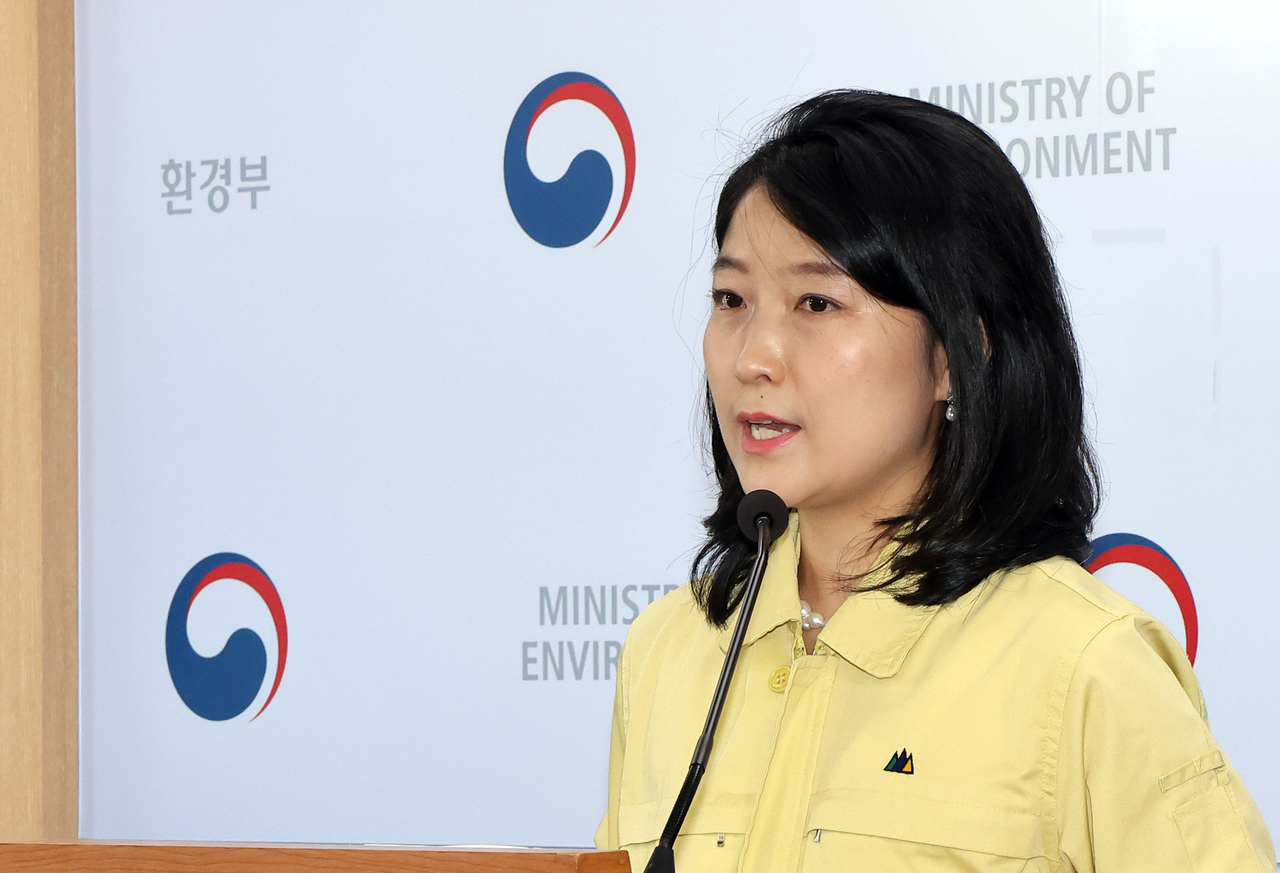
“Although greenhouse gas emissions in Korea have recently been on a declining trend, external factors such as the economic slowdown and rising average temperatures have had an impact,” Choi Min-ji, head of the Greenhouse Gas Inventory and Research Center, told the press during Wednesday’s press briefing.
“To achieve the NDC goals by 2030, the center recognizes that more intensive reduction efforts, including a significant expansion of renewable energy sources, are necessary.”
Meanwhile, climate advocacy group Solutions for Our Climate criticized the current emissions reduction status, saying that the government’s reduction pace is “far off target.”
“With its current annual reduction rate of 2 percent, achieving the NDCs by 2030 is impossible. Coal power plants need to be phased out by 2035, and the deployment of renewable energy from here must be accelerated by more than twofold,” said SFOC through an official statement.
lee.jungjoo@heraldcorp.com