For the first time on record, employees under 30 now make up a smaller share of the workforce than those aged 50 and above at South Korea’s largest companies.
According to data published Tuesday by Seoul-based research firm Leaders Index, workers under the age of 30 accounted for just 19.8 percent of employees across 124 major companies in 2024. In comparison, those aged 50 or older made up 20.1 percent.
It is the first time since tracking began in 2015 that younger workers have fallen behind their older counterparts in headcount. It is also the first time the under-30 share has dropped below 20 percent.
Leaders Index analyzed companies among Korea’s top 500 by revenue that publicly disclose age-specific employment data in sustainability or governance reports.
The decline in younger employees has been continuous and steep. In 2017, under-30s made up 31 percent of the workforce at these firms. That dropped to 21.9 percent in 2022, and slid further to 19.8 percent last year, or 221,369 workers. Over the same period, the share of employees aged 50 and older rose from 19.1 percent in 2022 to 20.1 percent in 2024, reaching 224,438.
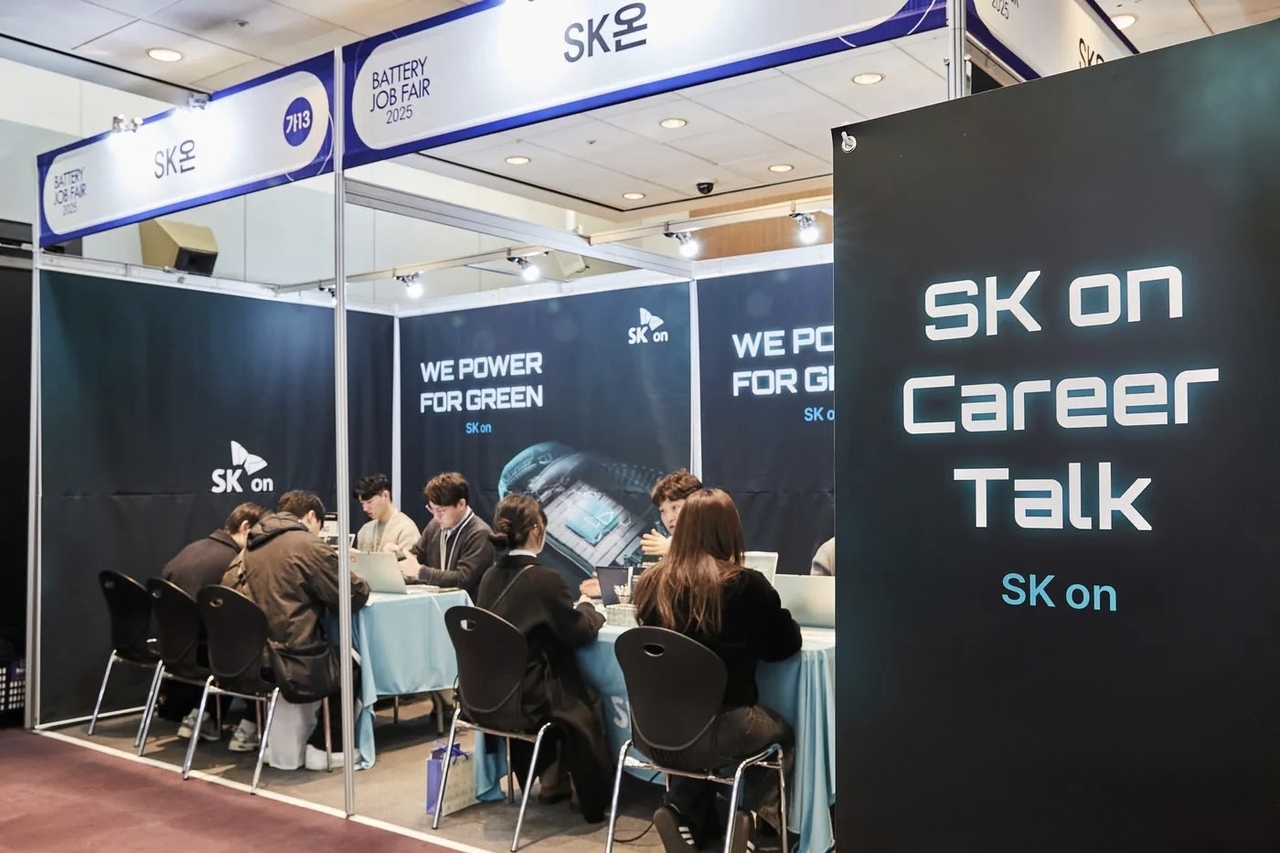
The drop has been especially pronounced in sectors that were once considered youth-driven, such as battery production. In the battery industry, the share of under-30 workers plunged nearly 10 percentage points in a single year, from 39.3 percent in 2022 to just 29.6 percent in 2023. Meanwhile, the proportion of workers in their 50s edged up from 6.2 percent to 7.3 percent.
Decadelong decline in entry-level hiring now reflected in data
Multiple structural factors are driving this reversal. First and foremost, the size of the younger population has been shrinking rapidly. The number of people in their 50s is now more than 50 percent greater than those in their 20s, based on 2024 population data from Statistics Korea.
Hiring practices have also changed. The country’s long-dominant model of “open recruitment,” where companies hire large groups of new university graduates at once, has been fading. Employers are increasingly turning to experienced workers or those with some work history.
According to the Korea Chamber of Commerce and Industry, 82 percent of job postings in the first half of 2025 were open only to experienced applicants. Just 2.6 percent were exclusively for new graduates.
“The drop in young employees isn’t sudden. It’s the result of long-term shifts that are only now showing up clearly in workforce data,” Park Joo-geun, head of Leaders Index, told The Korea Herald. “Most large companies have moved away from mass hiring of graduates. The trend now is recruiting mid-career professionals or so-called ‘experienced rookies,’ which naturally raises the average employee age.”
Park also pointed to the impact of generative AI and automation tools, which have rapidly spread across industries since 2023.
“In a slow-growth economy, there is already little demand for additional headcount,” Park said. “Now that even auxiliary work can be done with AI, the need to hire large numbers of new graduates has become even harder to justify.”
mjh@heraldcorp.com