Judges delay response to court reform bills, will revisit issue after election
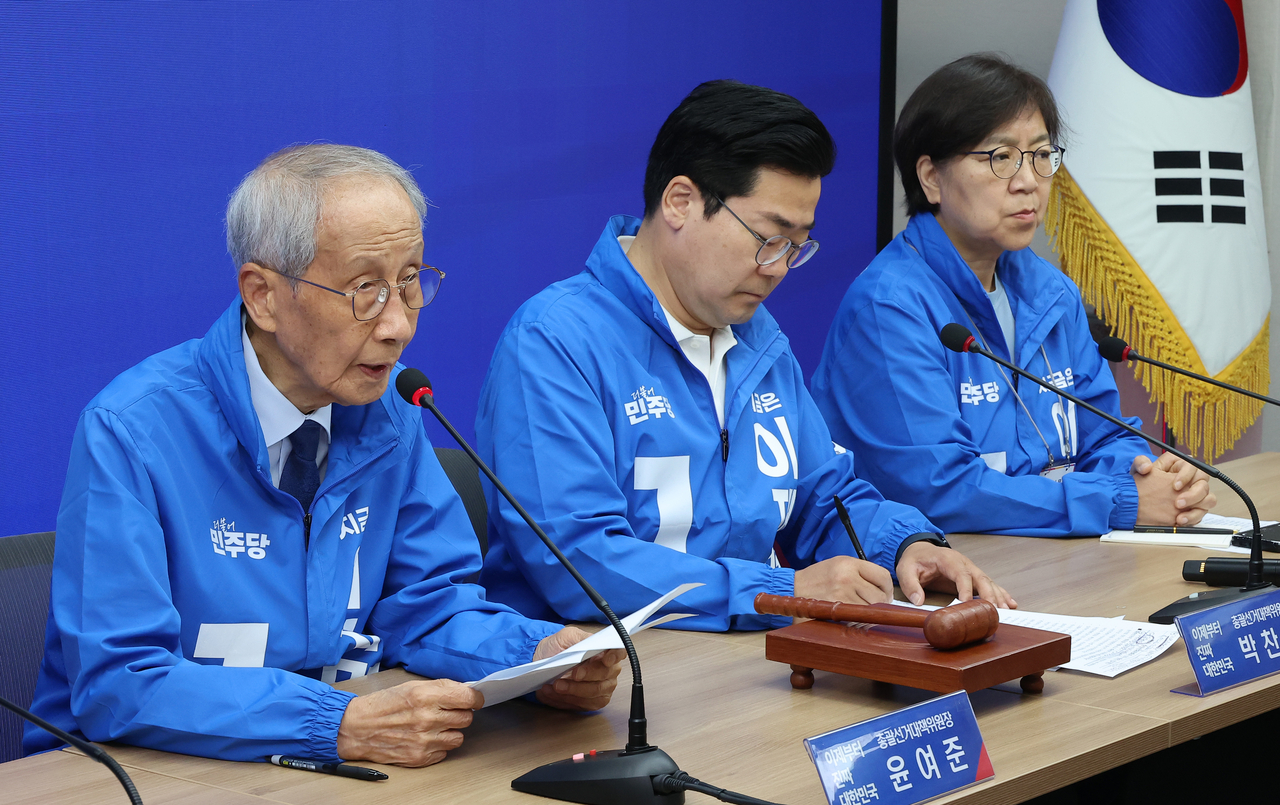
The Democratic Party of Korea decided Monday to withdraw two controversial bills, one increasing the number of Supreme Court justices to 100 and another appointing nonlawyers as Supreme Court justices.
According to the liberal party’s election campaign committee, it had instructed Rep. Jang Kyung-tae and Rep. Park Beom-kye, who had submitted the bills this month, to cancel their proposals.
The committee’s announcement can be seen as an effort to avoid additional controversy ahead of next week's presidential election.
While Jang had introduced the bill to amend the Court Organization Act on May 8, aiming to expand the number of Supreme Court justices from 14 to 100, Park had proposed another amendment to the same law to allow individuals with academic knowledge, moral integrity and extensive experience in various professional fields, including law, to be eligible for appointment to the Supreme Court on May 23.
The conservative People Power Party labeled the proposed bills as dangerous. They said they would shake the foundations of the rule of law and “attempt to create a pro-DP court system” for the liberal party’s presidential candidate Rep. Lee Jae-myung.
Lee, the front-runner presidential race, clarified that the bills were proposed by the individual lawmakers and they reflected neither the party’s opinion nor his personal stance on the Supreme Court.
“The idea of appointing nonlawyers as justices requires careful consideration,” he said in a press briefing on Saturday.
Chun Dae-yup, chief of the National Court Administration, also expressed concerns during a questioning session held by the National Assembly’s Legislation and Judiciary Committee in mid-May.
He contended that the public would suffer greatly if the number of justices is increased without other remedies, while trial delays would remain severe.
Though the Democratic Party decided to withdraw the two bills, the liberal party-led judiciary committee is yet to cancel three bills that call for a special counsel to investigate the Supreme Court, an increase of Supreme Court justices to 30 and a constitutional complaint against a court ruling that was unfavorable to Lee.
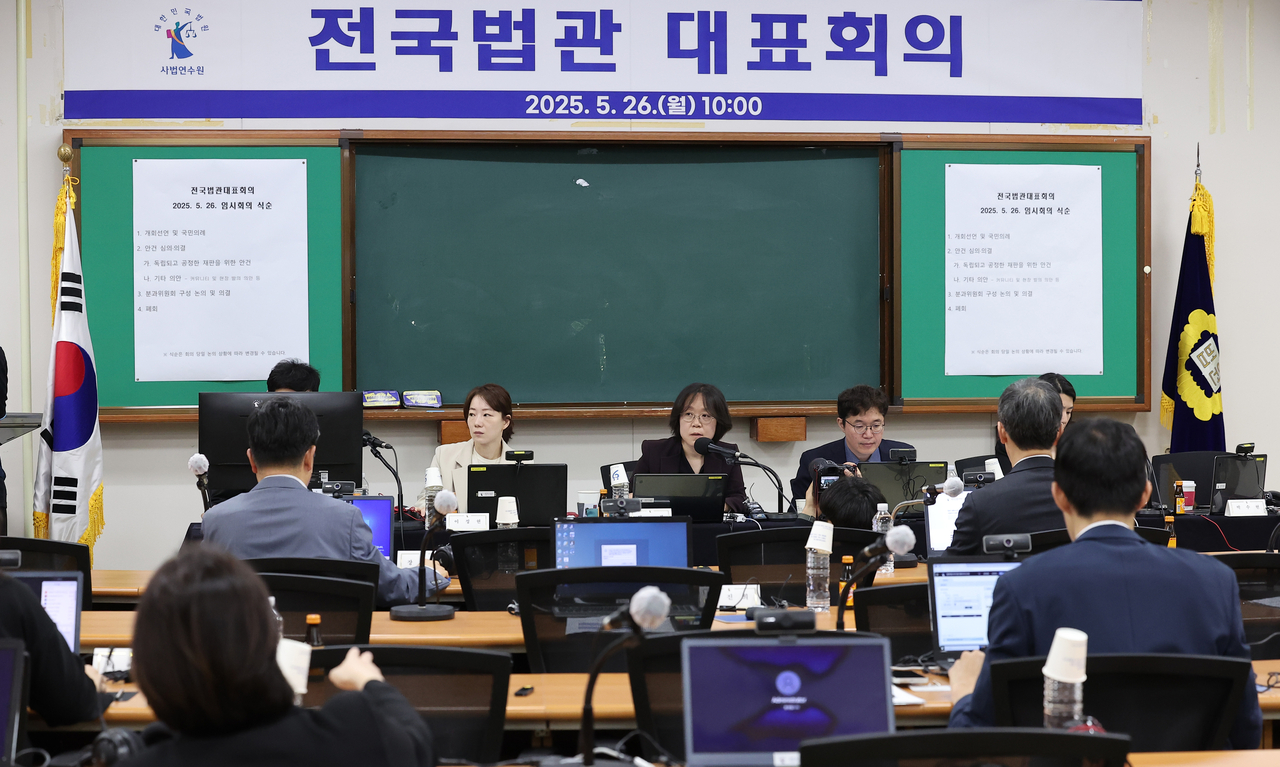
Meanwhile, judges nationwide held a special meeting Monday amid growing concerns over judicial independence sparked by the Supreme Court’s recent ruling in Lee’s election law violation case.
Though a total of 88 judges participated the meeting both online and in person at 10 a.m., allowing the meeting to be convened with majority attendance, they did not pass a specific resolution over the controversy surrounding Lee’s case.
The National Association of Judges official reportedly announced that the judges are set to resume discussion and vote on the agenda in a separate meeting, which will be held after the June 3 presidential election.
The judges were previously asked to attend the meeting and address suspicions over the court’s political neutrality and allegations the judiciary has suffered damage.
One of the two key issues on the agenda is whether judicial independence was undermined by Democratic Party lawmaker-led moves, including those to summon Supreme Court Chief Justice Jo Hee-de for investigation and to increase the number of Supreme Court justices.
Controversy surrounding the Supreme Court has been growing since it moved to review Lee’s case in a full bench session on April 22.
The justices held their first hearing in the case on the same day it was assigned to the court. A second hearing followed just two days later, on April 24. This is an unusually swift pace for cases referred to the full court, which typically convenes only once a month.
The controversy intensified on May 1, when the Supreme Court ruled to overturn Lee’s acquittal and sent the case back to the Seoul High Court for retrial, citing legal errors in the lower court’s decision.
Opposing views over the top court’s ruling came into conflict with one side claiming “judiciary’s intervention” in the election by reversing Lee’s not guilty verdict to guilty in an unusually swift trial and others arguing the court handled the election law case both promptly and lawfully.
The judges’ representative council official reportedly revealed that the next meeting would be held online. But the exact date for the meeting has yet to be decided.
sj_lee@heraldcorp.com