Tension likely to ease with Yoon’s fate determined, but political groups to remain on edge as early presidential election
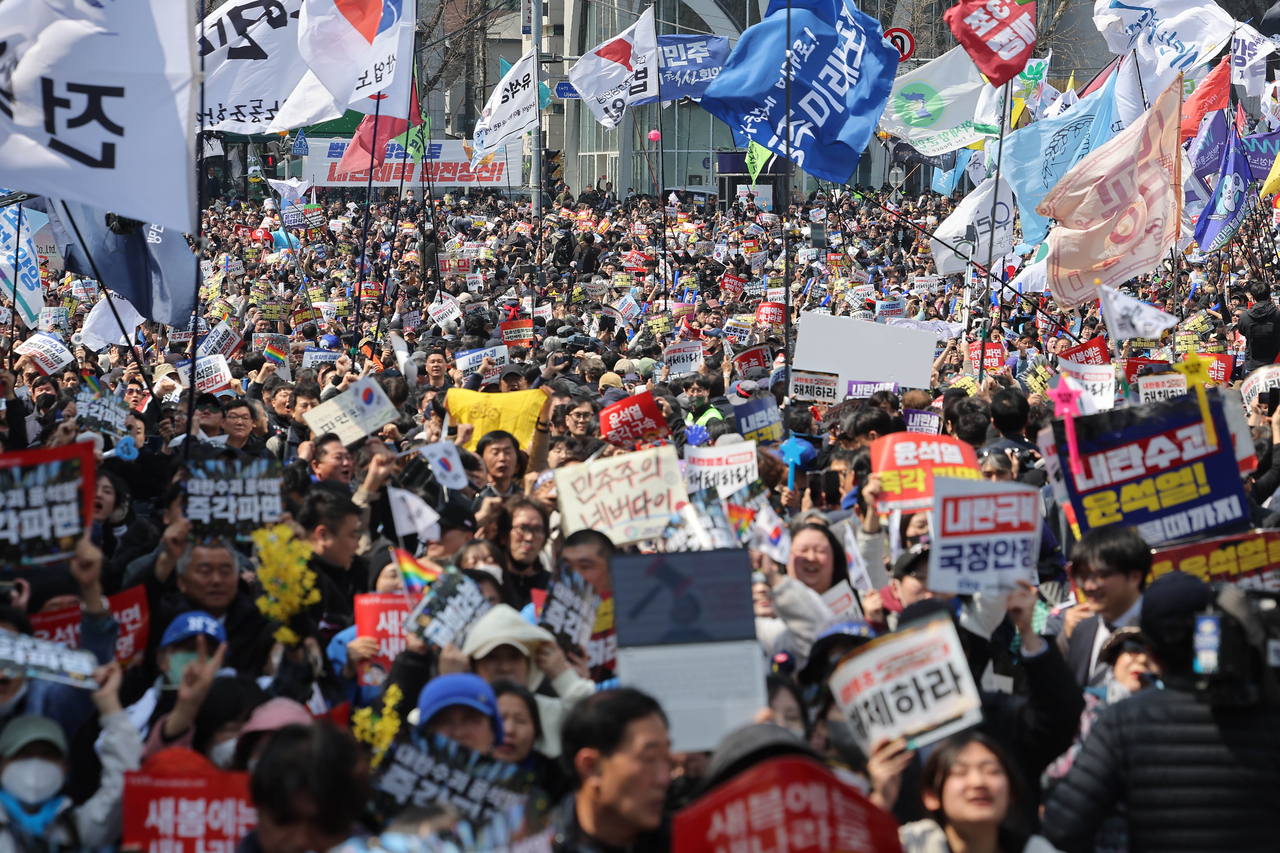
In a dramatic and polarizing moment in Korea's democracy, President Yoon Suk-yeol was officially dismissed from office Friday, just eight years after former President Park Geun-hye was ousted in 2017.
Political observers expect street-level confrontations over the impeachment to ease as attentions turn to the early presidential election due in just two months. But they warned that the country’s deep political and social divisions are far from resolved — and could worsen.
“Intense confrontation over Yoon’s impeachment is likely to subside for the time being,” said political commentator Park Chang-hwan, adding that the "election is right around the corner.”
According to the Constitution, a presidential election must be held within 60 days following a president’s removal from office. With the ruling issued on April 4, the latest possible election day is June 3.
“Politicians must now shift into full gear (to focus on) internal power struggles and the presidential race,” Park said. “It is difficult for them to mobilize conservatives for Yoon. And the presidential election is about expanding toward the center. Mobilizing only hardline conservatives won’t be enough.”
Park noted that public tensions seemed to peak in February, when pro-Yoon demonstrators clashed with authorities at the Seoul Western District Court.
“But we shouldn’t equate street protests with broader public opinion,” he added, pointing to polls that suggested support for Yoon’s return to office did not gain traction after that incident.
Public opinion ahead of Friday's Constitutional Court ruling appeared to favor Yoon’s removal. A joint survey by four polling agencies — Embrain Public, KStat Research, Korea Research and Hankook Research — conducted from March 31 to April 2 showed that 57 percent of respondents supported impeachment, while 35 percent opposed it.
Another poll, conducted by Media Tomato for News Tomato between March 31 and April 1, found that 60.2 percent of respondents opposed Yoon’s return to office. Even in the southeastern region of Yeongnam, which is considered a conservative stronghold, more than half of those polled were against his reinstatement.
After the Constitutional Court decided to remove Yoon from office, the ruling People Power Party said it "humbly accepts" the ruling.
Still, this does not signal the end of Korea’s political polarization. Experts caution that the impeachment could further entrench partisan divides that have evolved over decades.
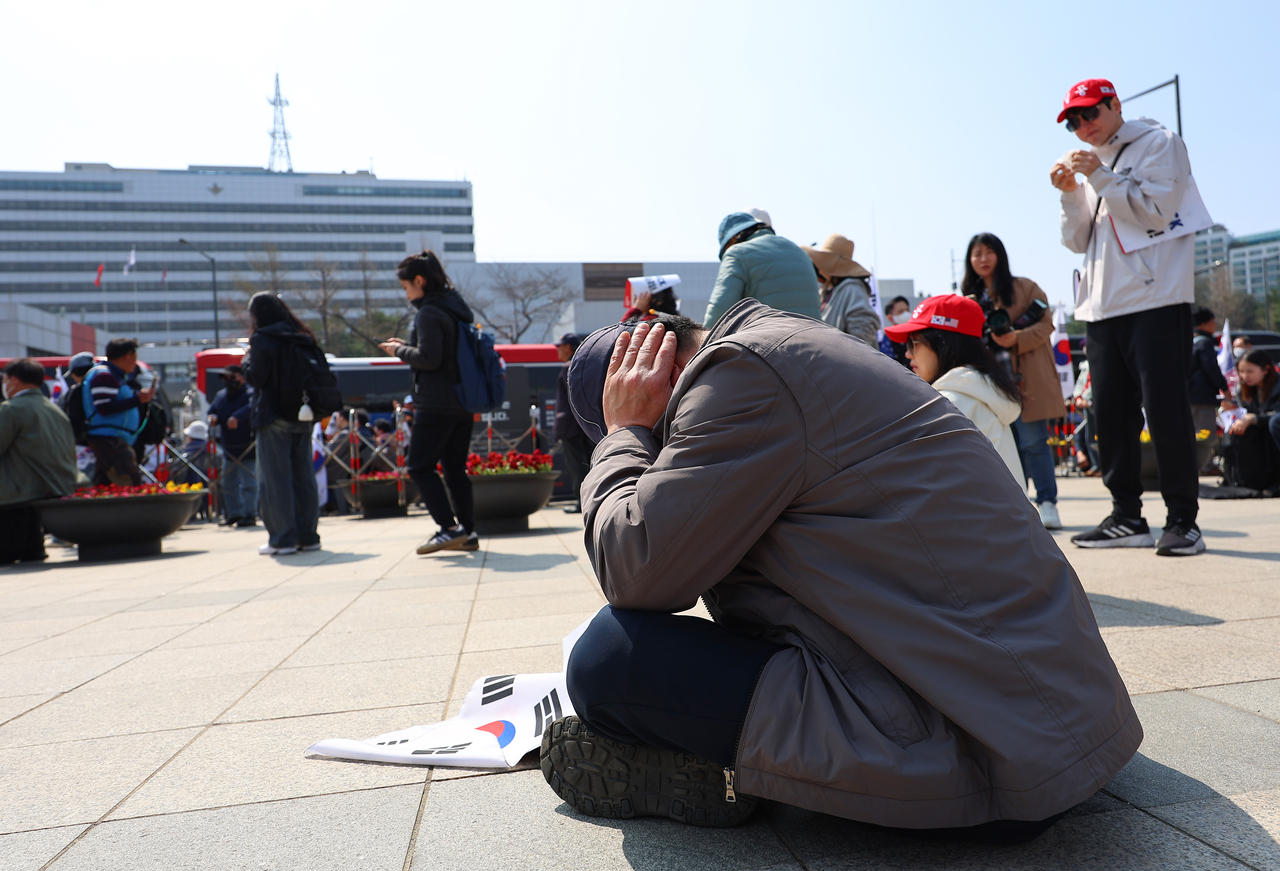
“Every time the word ‘impeachment’ enters the political arena in Korea, it shakes the entire (nation's) politics — regardless of whether it's upheld or dismissed,” said Shin Yul, a professor of political science at Myongji University.
“After President Roh Moo-hyun’s impeachment in 2004, the ruling and opposition parties even stopped socializing together. That’s when political polarization really began,” Shin said. “During Park Geun-hye’s impeachment, this polarization extended into society. People were divided. Now with Yoon’s impeachment, reconciliation may be nearly impossible. We’re heading toward a state of permanent division.”
According to a 2022 Pew Research Center survey, South Koreans were the most likely among 19 countries to perceive strong partisan conflicts. Nearly 90 percent said they saw serious political divides in their society, with 49 percent labeling them “very strong.”
More recently, the Economist Intelligence Unit’s 2024 Democracy Index reclassified South Korea as a "flawed democracy," citing a drop in its score from 8.09 in 2023 to 7.75. The report cited Yoon’s earlier attempt to impose martial law as exposing “institutional and behavioral weaknesses” in the political system. It warned that deep-rooted partisan acrimony and a refusal to compromise had increased the risk of political violence and social unrest.
Indeed, Yoon’s impeachment trial has been marked by extreme and tragic acts. Several individuals set themselves on fire in protest, and emergency responders were dispatched to the Constitutional Court and Gwanghwamun areas nearly 100 times in March alone. Far-right YouTubers spread conspiracy theories and encouraged violence, fueling an already volatile atmosphere.
“The real concern isn’t the chaos on the day of the verdict,” said Lim Seong-ho, an emeritus professor of political science at Kyung Hee University. “It’s that our already polarized politics may swing further toward extremes. For years, parties have demonized their opponents and equated moderation with hypocrisy. As a result, centrists have all but vanished from the political landscape. This black-and-white, us-versus-them mentality may deepen even more after the ruling.”
Seo Jung-kun, a professor at Kyung Hee University, pointed out that among developed economies, only the United States and South Korea maintain strong presidential systems. “A defining characteristic of the presidency is that it's a one-person institution,” he said.
While US polarization tends to revolve around specific issues like abortion, climate change, or gun control, South Korea’s divides are often centered around the president himself — or the person running for that office, he said. “That emotional intensity fractures our legislative and party system, and ultimately undermines the checks and balances on presidential power. If our democracy has created this polarization, it’s also up to us to reform it.”
shinjh@heraldcorp.com