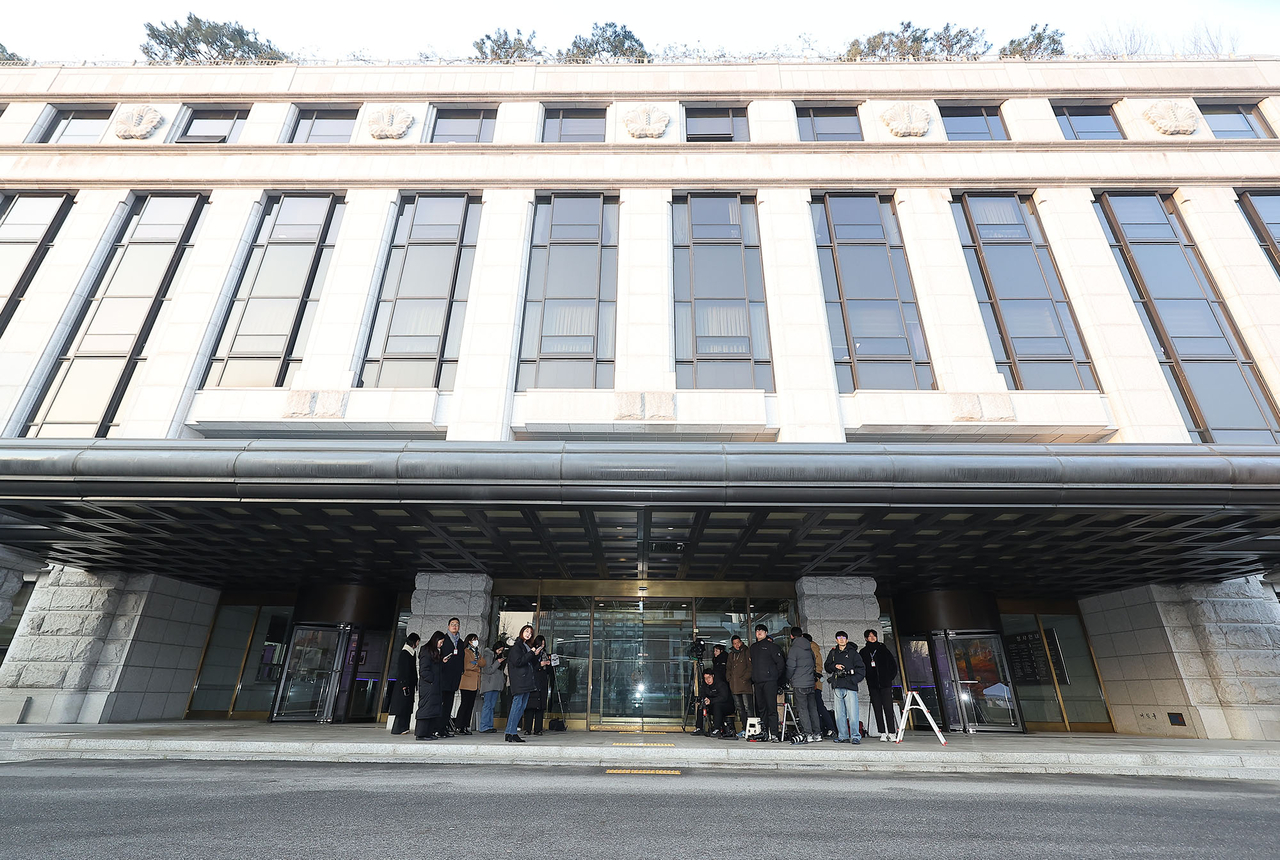
With South Korea’s acting President Choi Sang-mok appointing two new justices to the Constitutional Court of Korea on Tuesday, the impeachment trial of President Yoon Suk Yeol is set to speed up, despite one vacancy remaining on the nine-seat court.
The appointments give the court greater legitimacy in ruling on Yoon's case, while also eliminating perhaps the biggest obstacle to Yoon's impeachment, namely that with only six justices, to remove Yoon from office would require a unanimous ruling. With eight justices, there is a lower chance that his impeachment is overturned. The deadline for a ruling is June 10.
The appointments of the new justices, Jung Gye-seon and Cho Han-chang, nominated by the main opposition Democratic Party of Korea and the ruling People Power Party, respectively, come 75 days after the seats became vacant.
In the 2016 impeachment case against ex-President Park Geun-hye, an eight-member court ruled unanimously to remove her from office. This precedent is highly likely to weaken the alleged strategy of Yoon’s legal team to delay the hearing or possibly argue that the vacancies make the court's decision invalid.
With three seats vacant since October last year, there have been concerns about the legitimacy of the court in hearing Yoon's case. In October, former court chief Lee Jong-suk and two justices Lee Young-jin and Kim Ki-young retired after their six-year terms ended.
The court has argued that the vacancies on the bench do not prevent the case from proceeding, based on its response to a provisional injunction requested by Lee Jin-sook, chair of the Korea Communications Commission. However, the court has postponed decisions on pending cases while waiting for the bench to be filled.
Although it is widely expected that the court will speed up its work on Yoon's trial, controversies linger over the backlog of impeachment cases and the soon-to-expire terms of two other justices.
Currently, there are a total of 10 impeachment trials pending at the court -- the highest number in the court’s history -- that it is tasked with concluding in the designated timeframe of six months. The court previously said Yoon's case will be reviewed as a "top priority."
Also, with acting Chief Justice Moon Hyung-bae and Justice Lee Mi-seon nearing the ends of their terms on April 18, and their replacements to be directly appointed by the president, there is a possibility that Yoon’s legal team will use all its means to delay the trial and bring the number of justices back down to six.
The Constitutional Court Act stipulates that out of the nine justices, the National Assembly nominates three, the Chief Justice of the Supreme Court nominates another three, and the rest are up to the president. The seats currently held by Moon and Lee can be filled only by the president, which at the moment presents practical difficulties.
On Monday, acting President Choi deferred the appointment of Ma Eun-hyeok, one of two justice candidates nominated by the main opposition, due to the lack of a bipartisan consensus on his appointment.
Choi became acting president after Prime Minister Han Duck-soo, as acting president following Yoon's impeachment on Dec. 14, declined to appoint any of the three justice candidates.
ddd@heraldcorp.com