Conductor Chung Min, son of Maestro Chung Myung-whun, and Alberich veteran Samuel Youn lead all-Korean 4-year ‘Ring’ cycle, opening Dec. 18 with ‘Das Rheingold’
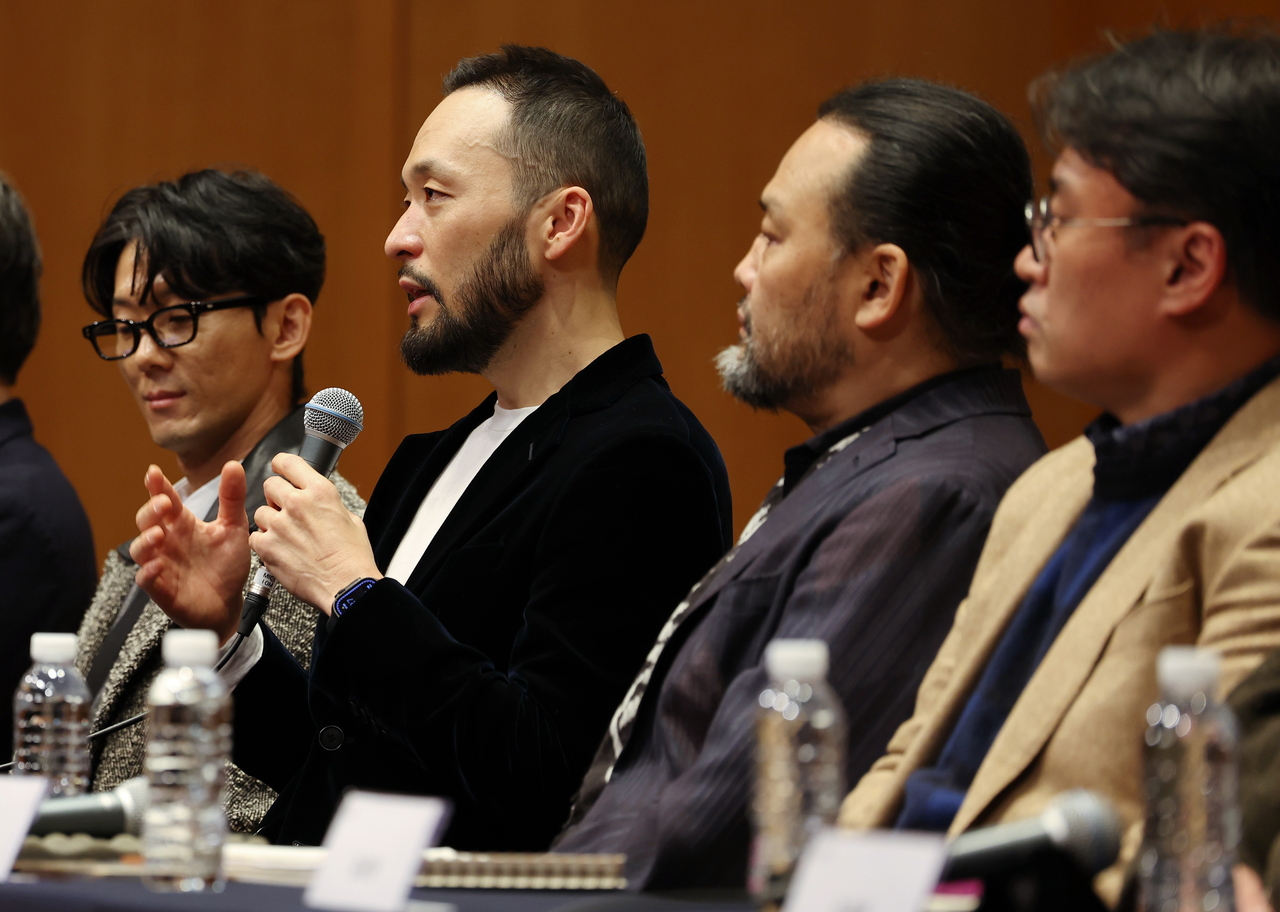
As the world marks the 150th anniversary of the premiere of Wagner’s “Ring” cycle, Korea has joined in with a highlights concert and the Korea National Opera’s “Das Rheingold.” Now a city on the east coast better known for its beaches and coffee wants to become “Korea’s Bayreuth.”
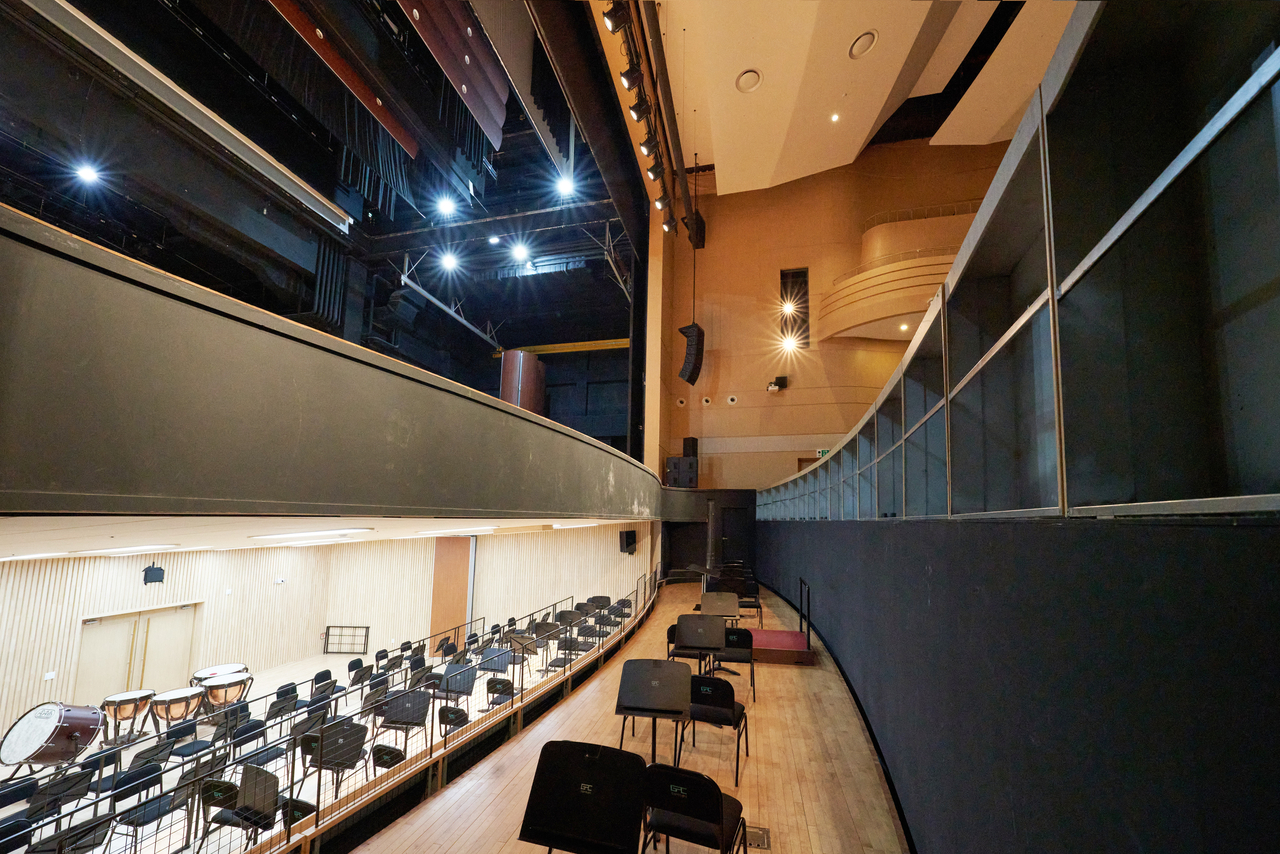
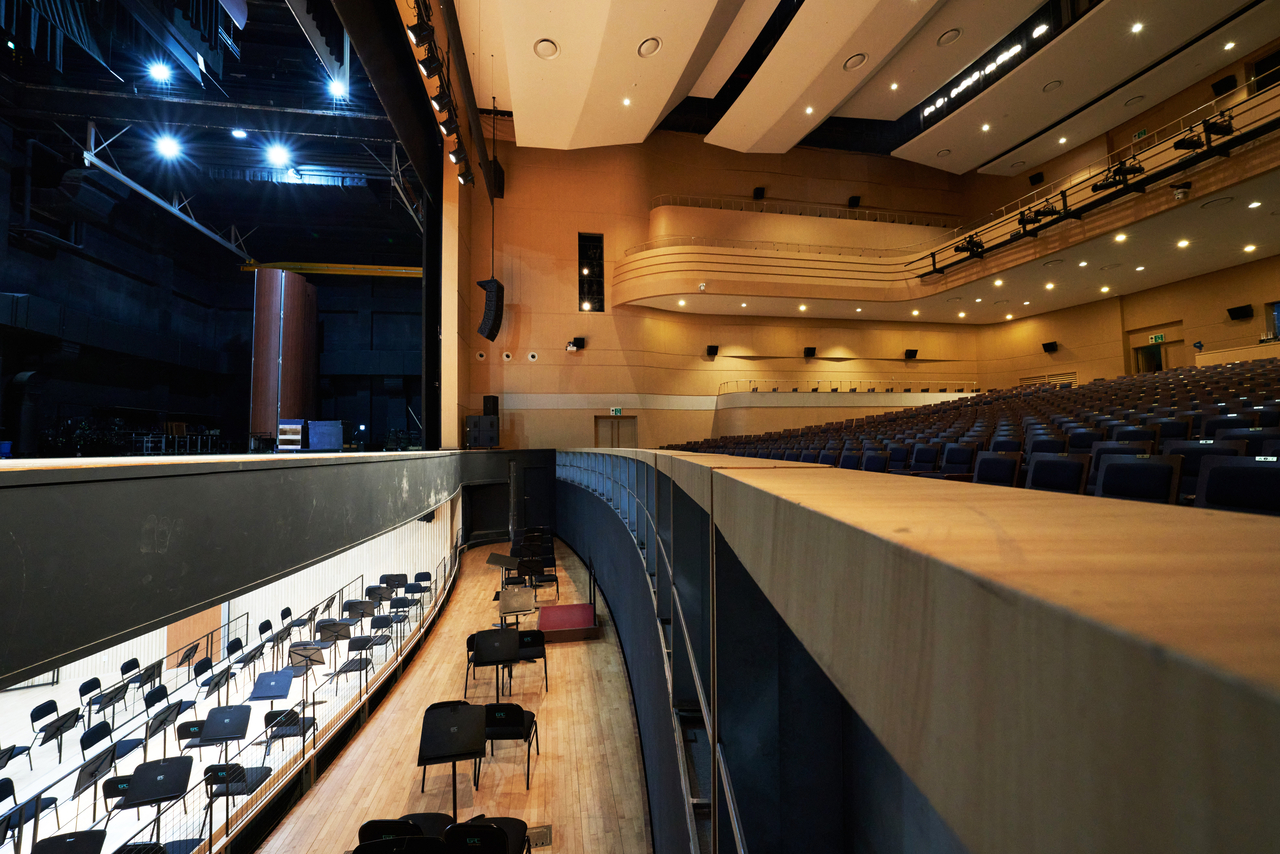
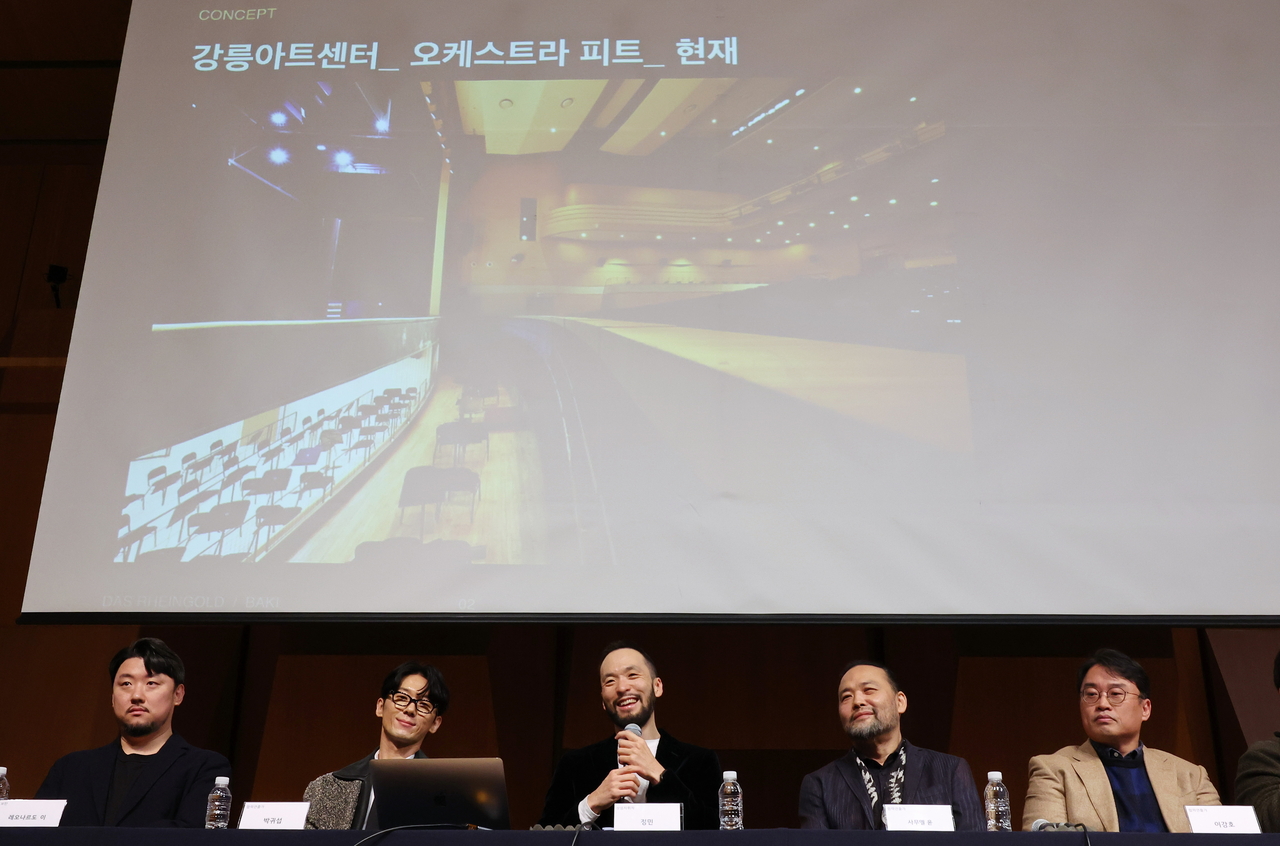
The Gangneung Symphony Orchestra, led by principal conductor Chung Min, the son of Chung Myung-whun, announced Tuesday that it will stage all four operas of the “Ring” over the next four years. It starts with “Das Rheingold” at the Gangneung Arts Center in Gangwon Province on Dec. 18-19. The catch: the arts center has already rebuilt its orchestra pit after the one at Bayreuth’s Festspielhaus.
Mystic abyss in Gangneung
Bayreuth's pit, which Wagner called the “mystic abyss,” steps down beneath the stage. The louder brass members sit deep inside so their sound blends under the strings, as the orchestra stays hidden from the audience. The Gangneung Arts Center found the room to build one: a space more than 5 meters deep under the stage, originally set aside for a stage lift. In 2024, it spent four months and 700 million won ($525,000) turning that space into a stepped pit.
The common denominator of this year’s three Korean “Ring” performances is bass-baritone Samuel Youn, who sings Alberich, the Nibelung dwarf who steals the Rhine gold, in each. He has sung the role more than 100 times since he began performing Wagner in 2003, though he says he has lost exact count.
Counting a performance with conductor Yannick Nezet-Seguin earlier in the year, Gangneung will be his fourth Alberich of 2026. At his peak, he gave some 250 performances a year, about 70 percent of them Wagner. “You could say 70 percent of my life has been Wagner,” he said.
The project began five years ago as something of a joke between Chung and Youn over coffee in Gangneung. Only after they decided to go ahead did they realize 2026 would mark the 150th anniversary.
Chung insisted it was not about personal ambition. “I didn’t even go to Gangneung thinking I’d raise the orchestra’s level,” he said. “I thought if I could be of even a little help, in a city I didn’t know, at a theater I didn’t know, I’d be satisfied.”
The chemistry was so good, he said, that bigger projects followed naturally. Before he took up the post, an interviewer asked whether there was a work his father had yet to tackle that he wanted to try. He blurted out “Ring.”
“That’s why I call it the ring of fate,” he said.
The front section still rises and lowers, so it can serve concerts as well as opera and ballet, where a softer orchestral blend also helps. The pit has already hosted a full-scale “The Rite of Spring” and several ballets, which Chung described as test runs. It cannot be tailored to other works the way Bayreuth’s is to Wagner’s, he said, “but once the construction is finished, the results should be quite good.”
For Youn, it is about Wagner’s ideal of the "Gesamtkunstwerk," or total work of art, realized entirely by Koreans.
“I wanted to show that Koreans can present total art, too — something more innovative and original than what you see at Bayreuth,” he said. Since returning to Korea, his goal has been to bring more Korean musicians back to the stage, which is why he joined as co-director to support the singers.
All-Korean 'Ring'
For Lee Kang-ho, an opera director on the production’s creative team, the project is also a test of where Korean opera stands, in an age when “people don’t watch opera or read the classics.”
Yet audiences’ ears have changed, he said. “Until a few years ago, concert halls and opera stages here focused on the classical repertoire. Over the past few years, ears have moved on to Mahler and late romanticism — and at the center of that is Wagner, who wanted to contain the whole universe.”
The production is staged by RtoG, short for “Road to Gangneung,” a trio of visual artists Park Kwi-sub, Lee and Youn.
Park, a former dancer with the Korean National Ballet, built the staging around light. “Because there was light, shadows were born, and within them, the desire called gold,” he said.
In the opening scene, lasers draw the surface of the Rhine, and Alberich walks into it as if wading into water. Dancers carrying lanterns play the Nibelungs. Wotan’s spear becomes a walking stick, fitting a ruler who “pretends to be a gentleman, pretends to keep order,” Park said. The ring itself is shaped like an eye, a symbol of desire awakening.
All 14 singers are Korean and will perform in a single cast, led by baritone Leonardo Lee as Wotan, with tenor Kim Sang-jin as Froh, soprano Han Ye-won as Freia and bass Jun Tae-hyun as Fasolt.
Productions built around visiting stars often get just three or four days of rehearsal in total, since “singers’ schedules are money,” according to an industry expert. Here, orchestra rehearsals begin Dec. 4 in Gangneung and move onto the stage from Dec. 7. That is unusually long in Korea, where a day or two of stage rehearsal before opening is common, Jun said.
An all-Korean team also brings stability to a four-year project — “stability of quality and the continuity of the series,” the expert said.
Keeping the same foreign cast together across four years would be difficult, which is why the two previous “Ring” productions brought to Korea staged all four operas in a single run. “What you see this time, you’ll be able to see the same way next year, the year after and the year after that,” the expert added.
Chung asked for one thing. “Don’t expect a perfect performance.”
“I can guarantee you there will be plenty of problems, plenty of awkward moments. The first time is always awkward,” he said. His measure of success lies elsewhere: the team, the spirit behind it and a theater reshaping itself to fit the work.
“I think Wagner would approve.”
gypark@heraldcorp.com